



African universities are undergoing a rapid digital transformation, with Learning Management Systems (LMS) at the center of this shift. The growing reliance on online and blended learning has made it essential for institutions to adopt platforms that are scalable, affordable, and tailored to regional needs.
Choosing the Best LMS for African Universities is more than a technology decision, it’s about ensuring quality education, improving administrative efficiency, and addressing challenges such as unstable connectivity and limited budgets.
For universities still navigating the digital shift, resources on the Vigilearn Blog highlight how institutions across Africa are leveraging technology to deliver better learning experiences.
Top LMS Platforms in 2025

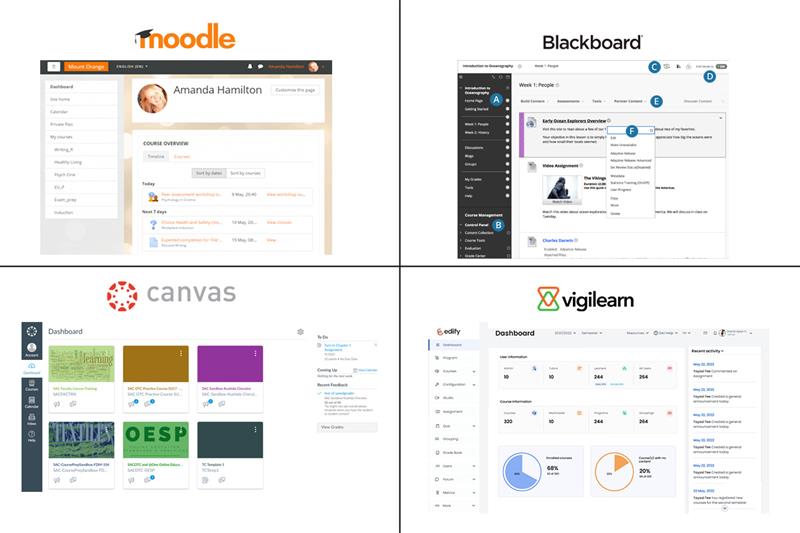
When it comes to an LMS comparison for higher education, several platforms stand out in 2025. Each brings unique strengths, but the key is finding what works best for African universities.
Moodle
Moodle remains one of the most popular open-source LMS platforms globally. Its flexibility, cost-effectiveness, and large developer community make it an attractive choice for African universities. Many institutions adapt Moodle locally to fit their curriculum needs and infrastructure challenges. The Moodle official website offers extensive documentation and support resources.
Blackboard
Blackboard is a commercial LMS with robust content management, analytics, and mobile support. While it requires a higher budget compared to open-source platforms, its enterprise-level features make it appealing for universities with large student populations.
Canvas
Canvas is widely recognized for its intuitive design and mobile-first capabilities. It integrates seamlessly with third-party apps and offers strong tools for collaboration and assessment, making it a reliable option for higher education institutions.
Vigilearn’s LMS
Unlike global LMS platforms, Vigilearn’s LMS is designed specifically for Africa. It focuses on mobile-first learning, offline access, affordability, and localized support, features that directly address connectivity and cost challenges faced by African universities. To see how it fits your institution’s needs, visit the Vigilearn homepage.
Key Features for Universities

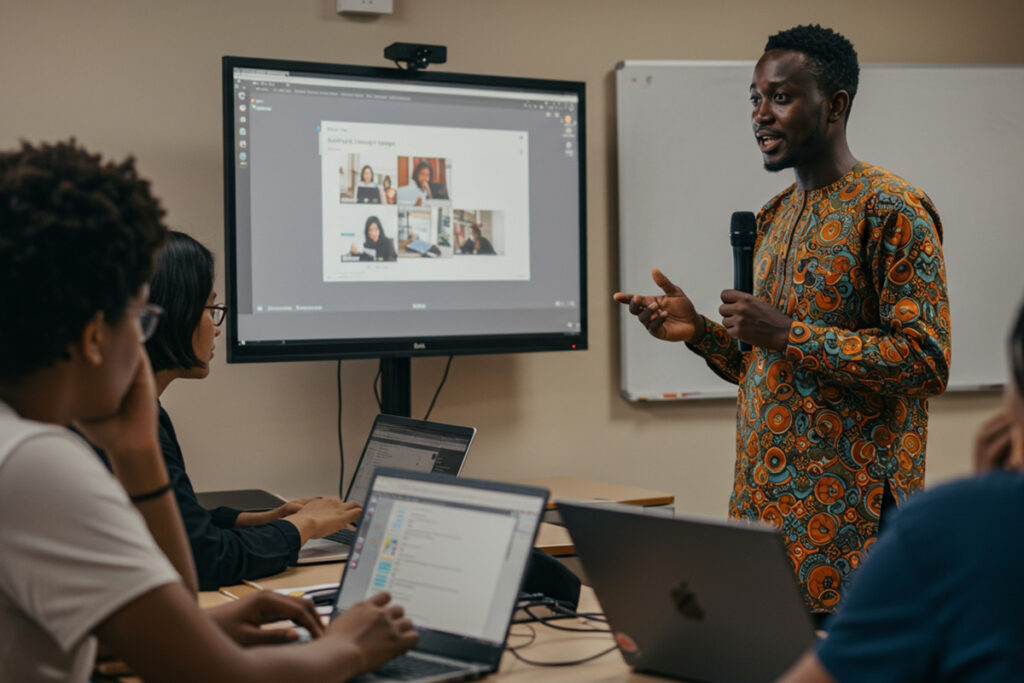
When universities are choosing a higher education LMS, it’s important to pick one that truly fits their unique needs, both for teaching and managing their growing student body. Here are some essential features to keep in mind:
- Scalability: African universities are seeing more and more students every year. A good LMS needs to handle thousands of users at once without slowing down. It should support large virtual classes, multiple faculties, and easily grow as new students enroll each semester. For example, Vigilearn’s LMS is built to handle big groups smoothly, so universities can focus on growth without worrying about technical hiccups.
- Data & Analytics: It’s not just about delivering course materials, universities also need a way to understand how students are doing. The Best LMS platforms come with dashboards that show attendance, assignment submissions, quiz scores, and participation. This makes it easier for lecturers to spot students who might be struggling and help them early on. Vigilearn, for example, offers detailed class analytics that help faculty identify students at risk of falling behind.
- Mobile Learning: Since most African students rely on their phones to access courses, an LMS that doesn’t work well on mobile won’t be very useful. The platform should have lightweight apps, allow offline use, and use minimal data. Vigilearn’s focus on mobile means students can access lectures and complete assignments even when internet connection is weak or limited.
By considering these factors, universities can choose the Best LMS for African Universities that matches their long-term vision.
Challenges and Opportunities in Africa
Universities in Africa face unique hurdles:
- Connectivity: Unstable internet remains a significant barrier in many regions.
- Affordability: Limited budgets make cost-effectiveness critical.
- Localized support: Institutions need LMS providers who understand the African education landscape.
Despite these challenges, success stories are emerging. Institutions leveraging platforms like Vigilearn report improved access, better student engagement, and measurable outcomes. This shows that with the right university LMS Africa, digital adoption is not just possible but transformative.
Case studies featured on the Vigilearn Blog show how institutions are creatively using LMS platforms to overcome infrastructure challenges, from blended learning to mobile-first solutions.
Future Trends in University LMS

The future of higher education will be shaped by emerging technologies that go beyond traditional e-learning. Here’s how higher education LMS platforms are evolving:
- Artificial Intelligence (AI): AI is transforming LMS platforms into intelligent teaching assistants. Imagine an LMS that automatically recommends study materials based on a student’s weaknesses, or predicts which learners are likely to drop out. By personalizing learning paths, AI reduces one-size-fits-all teaching and helps every student succeed.
- Virtual Reality (VR) & Augmented Reality (AR): VR and AR are redefining what “classroom engagement” means. Instead of just reading about historical events, students can walk through a 3D simulation of them. Science students can perform virtual experiments in a lab without needing expensive equipment. These immersive tools make learning more engaging, especially in fields that rely on hands-on practice.
These innovations promise to transform how African universities deliver education. To explore a solution already built with this future in mind, universities can connect directly through the Vigilearn Contact page.
Conclusion
Selecting the Best LMS for African Universities requires balancing scalability, affordability, and local relevance. Moodle, Blackboard, and Canvas remain strong global options, but Vigilearn’s LMS offers a uniquely African-centered solution that addresses the continent’s most pressing education challenges.
By embracing platforms that combine innovation with accessibility, African universities can stay ahead in the global digital education landscape. For broader perspectives, see reports from Educause, Times Higher Education on digital universities, and UNESCO on higher education in Africa.