



The Problem with Manual Admissions
Many universities around the globe still rely heavily on manual, paper-based admissions processes. Candidates fill out printed forms, mail or hand deliver documents, and admissions staff manually input application data into spreadsheets or legacy databases. Each step consumes hours, sometimes days, of human effort. Paper must be sorted, scanned, and verified; staff must chase missing documents and manual entry invites errors. For large institutions, the volume multiplies the time and cost. What’s meant to be a gateway into higher education becomes a bottleneck.
These delays are more than inconvenient. Manual workflows risk missing applicants entirely, losing documents, confusing statuses, or delaying decisions until too late for a student to commit. Data-entry errors can affect eligibility, misclassify applicants or delay scholarship processing. In a competitive global education market where students expect speed and clarity, slow processes undermine institutional reputation and yield. A recent study highlighted that 91 % of students believe their university’s digital services should be as strong as on-campus experience.
Universities must ask: What is the true cost of manual admission processing? Beyond paper, staff time, redundancy and error, there is the opportunity cost of delayed offers, lost applicants, and weaker data for decision-making. In this context, a digital admission system isn’t just a convenience; it is a strategic necessity.
What Is a Digital Admission System?
A digital admission system is a software-driven workflow that automates much of the admission cycle: from application submission to document verification, decisioning, enrolment and communication. Instead of paper forms and manual data entry, applicants fill out web-based forms, upload documents, and track status online. Admission staff use dashboards to manage applications, monitor progress, flag missing items, perform verifications, and communicate with applicants using email, SMS or chat. Data flows seamlessly into institutional systems, CRM, SIS, and finance without re-keying.
At Vigilearn Technologies, we deliver our own solution, Apply Portal. Apply Portal allows prospective students to apply online, submit required documentation securely, track their application status, receive notifications, and even make payments. On the institutional side, admission teams gain real-time visibility into completions, pending items and conversion metrics. The digital system also supports analytics, reporting and integration with other systems such as CRM and SIS. In effect, the digital admission system is the front door to the student lifecycle; smart, measurable and integrated.
The logic is clear: by replacing manual admissions with a digital system, you reduce delays, minimise errors, enhance transparency, capture better data and improve the applicant experience. The result is faster decision-making, less administrative burden and stronger institutional control.
Comparing Manual vs. Digital Admission Workflows


Manual Workflow:
- Paper-based application forms, printed or downloaded and submitted physically or scanned via email.
- Documents (certificates, transcripts, identification) arrive via physical post or email attachment, requiring manual sorting, verification and filing.
- Staff manually input applicant details into spreadsheets or basic databases, sometimes re-entering information from paper forms.
- Status updates (missing documents, payment confirmation, offer letters) are often communicated via email or letter; applicants may wait days or weeks for updates.
- Reporting is limited: data is fragmented across systems, manual reconciliation is required, and analytics are minimal or backwards-looking.
- High risk of document loss, data entry errors, delayed payments, slow turnaround, unhappy applicants and staff burnout.
Digital Workflow:
- Web-based application portal accessible 24/7; applicants complete forms online and upload required documents in digital form.
- Automated verification or Guided workflows reduce manual checking of completeness (some advanced systems even use AI/optical character recognition).
- Application data flows automatically into the admission management system; duplication of data entry is eliminated.
- Real-time tracking of application status; applicants receive notifications when documents are missing or payment is required. Staff can monitor dashboards of pending items, conversion metrics and funnel stages.
- Reporting and dashboards provide transparency: staff leaders can see pipeline volumes, time to decision, conversion rates and bottlenecks.
- Cost of processing per applicant drops, turnaround time shortens, applicant experience improves, and staff are freed from repetitive tasks.
When you compare the two models side by side, the message is clear: digital workflows deliver speed, transparency, data, and cost-efficiency.
Key Benefits of Going Digital

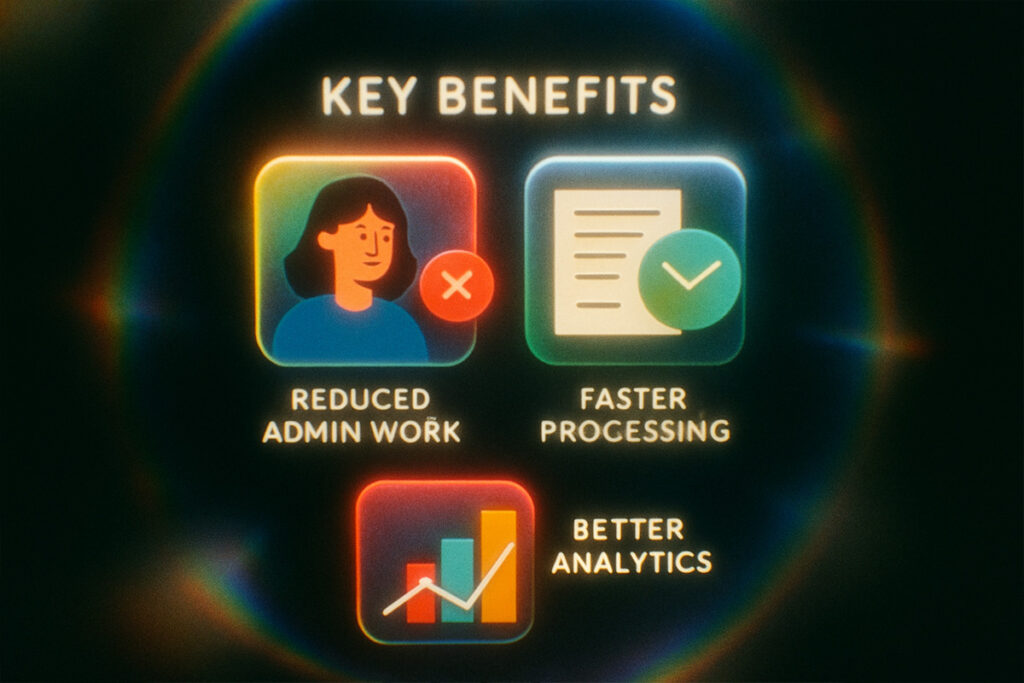
Reduced administrative burden
The time staff spend on sorting paper, interpreting handwritten forms, entering data and chasing applicants is substantial. By automating much of that work, institutions free staff to focus on high-value tasks: applicant engagement, recruitment events, personalised communications. Over time, this means fewer staff required for processing, lower overtime, fewer bottlenecks and reduced risk of burnout.
Improved applicant experience
Today’s students expect digital-first experiences. They want to apply online, receive immediate status updates, upload documents easily and get prompt responses. Data shows 91 % of students believe their university’s digital services should be as strong as their in-person experience. If an institution still uses manual methods, it creates friction, increases drop-off risk and harms reputation. A slick digital system shows a modern institution and enhances applicant satisfaction—which in turn supports brand and recruitment.
Better insights through analytics
Manual processes make it hard to measure throughput, time-to-decision, conversion rates, drop-off points or cost per applicant. A digital system logs every event: application submitted, document uploaded, payment processed, offer sent. This data can feed dashboards and analytics tools so leadership can ask and answer questions: why are applicants dropping off at document upload? Which channels yield higher conversion? Which programmes need more marketing support? Analytics drive continuous improvement and strategic decisions rather than reactive firefighting.
Faster processing and improved accuracy
Once the process is digital, turnaround times drop dramatically. Faster decisions mean students can commit earlier, reducing the risk of them choosing another institution. Improved accuracy means fewer errors in eligibility, fewer manual corrections, and fewer unhappy surprises.
Cost savings and ROI
While digital systems require investment in technology, training and change management, the ROI is strong. A guide on admissions software notes that ROI should include time saved, improved efficiency, better communication, scalability, happier applicants and staff. When applied at scale, the cost per application drops, fewer errors lead to fewer remediation costs, staff time is better spent, and conversion rates improve, all of which enhance institutional revenue and reduce waste.
Case Studies
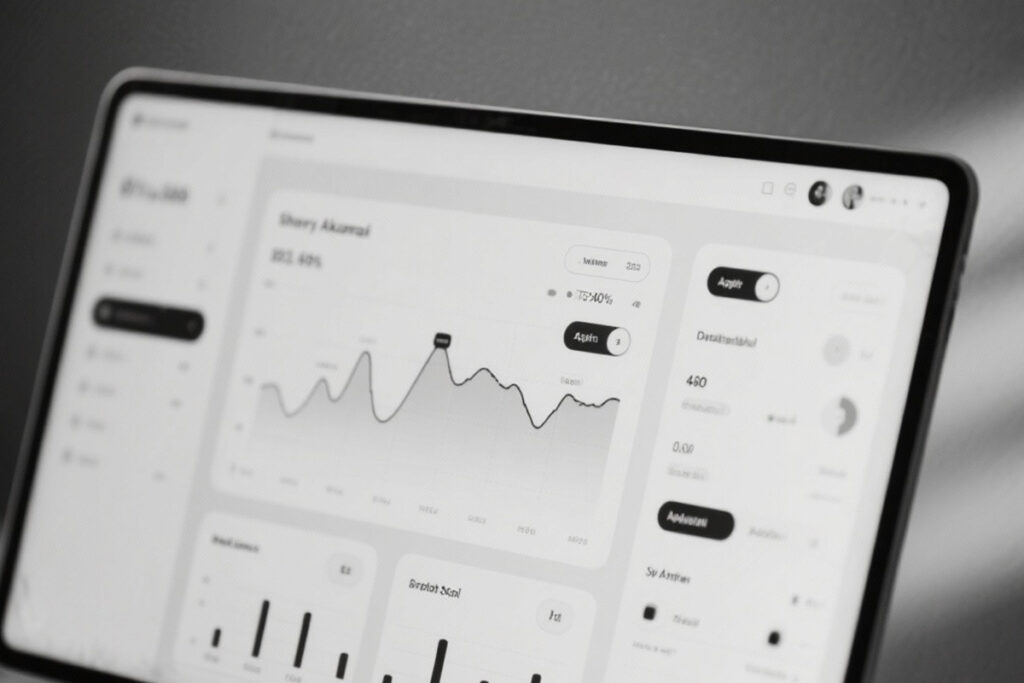
Let’s look at tangible metrics from institutions that shifted from manual to digital admissions workflows.
One college using digital admission management software achieved the following: application processing time reduced by 60 %, inquiries (inbound leads) increased by 45 % due to automation of follow-up, and admission conversion rate improved by 30 %. That is a strong triple benefit: time, lead volume, and conversion all improved.
Ahmadu Bello University Distance Learning Centre (ABUDLC) is a strong local example of digital admissions success. The centre uses Vigilearn’s Apply Portal to manage its entire application and document verification workflow digitally. Instead of dealing with multiple email attachments, in-person submissions, or scattered databases, their admissions team now has a unified platform where prospective learners apply, upload documents, receive status updates, and complete onboarding online.
This has improved applicant experience, reduced processing time, and provided better pipeline visibility for administrators. With thousands of candidates applying from across Nigeria, the Apply Portal helps ABU-DLC streamline processing and scale without proportionally increasing staff workload. The institution benefits from real-time dashboards, automated communication, and better reporting, which in turn supports quicker decision-making and stronger conversion into enrolment.
Thus, the business case for a digital admission system is compelling: lower cost, faster process, better applicant experience, stronger data and improved institutional performance. The next step is actionable: how do you move from manual to digital?
Making the Move: What to Do Next
- Evaluate your current workflow. Map each step: application submission, document upload, payment, review, decision, and enrolment. Identify manual tasks, bottlenecks, error risks, and applicant pain-points.
- Define what you want a digital system to achieve. Faster processing? Better communication? Higher conversion? Better analytics? Use the metrics above (time reduction, labour hours saved, conversion lift) to set targets.
- Select an appropriate digital admission system. Look for features such as a web-based application portal, document upload and verification, payment gateway, dashboard and analytics, integration with CRM/SIS, mobile responsiveness, data security and a user-friendly applicant interface. Our Apply Portal at Vigilearn is one example of a system built for this.
- Plan change management. Rolling out a new system requires training your admissions team, updating processes, migrating data, ensuring applicant communication is clear, and managing transition risks. Staff must understand the benefits, and applicants must be supported during the change.
- Measure and iterate. After implementation track metrics: application processing time, number of documents missing, applicant drop-off rate, conversion rate, staff time spent, cost per application. Use analytics to tweak workflows, messaging and process.
- Communicate the improved experience. Use the digital system as part of your marketing message: quicker decisions, transparent status tracking, fewer hassles. This helps with applicant attraction and institutional brand.
In the context of the increasingly competitive and globalised higher education market, where students expect digital-first experiences and institutions must demonstrate efficiency, agility and data-driven decisions, the move from manual to digital is not optional. It is essential.
At Vigilearn Technologies, we understand these realities. Which is why Apply Portal is designed to help institutions shift from manual admissions to agile, transparent, integrated digital workflows. If your admissions office is still stuck in paper, spreadsheets and slow turnarounds, now is the time to act. A digital admission system will save your staff hours, reduce mistakes, improve conversion and give applicants a better experience.
Take the next step: review your admission workflow, set clear digital goals, deploy a system, measure results and advocate your progress. The gains are real and measurable. The institutions which embrace this transformation will not only save time and money, they will also position themselves with a stronger competitive edge and better student satisfaction.