


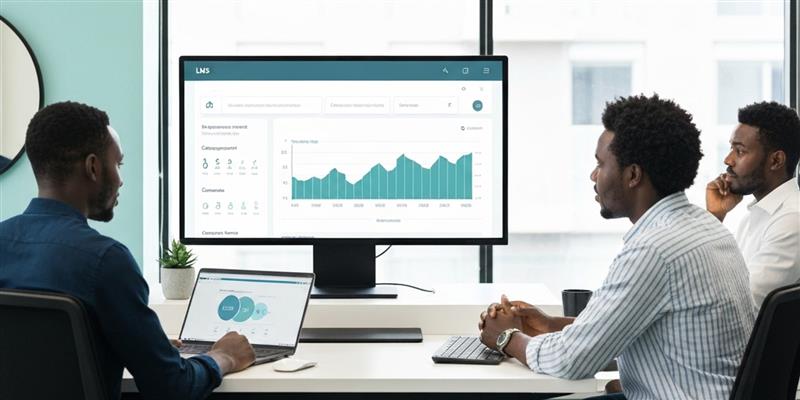
A learning management system (LMS) is a powerful tool. Not only does it streamline how an organisation trains its people, but it also serves as a catalyst that can bring about significant growth. When used effectively, an LMS helps businesses scale onboarding, deliver compliance training, or roll out up-skilling programs from a single platform. It keeps learning materials centralised and accessible anytime, on any device, helping businesses stay compliant, save costs, enhance employee performance and boost organisational productivity.
Studies show that 92% of employees feel that good training boosts their engagement, and personalised training tailored to career goals helps retain employees. These benefits make it clear why a learning management system matters for modern workforce development.
Read: The ROI of Investing in Employee Training Through an LMS
However, as with most things, an LMS is only as good as how you use it. Without smart planning, fresh content, feedback from learners, and data to guide you, an LMS can just sit there collecting dust.
Let’s walk through the most common learning management system mistakes companies make and how to avoid them.
Learning Management System Mistakes That Hurt Employee Training
Poor Planning Undermines Results
An LMS is powerful, but it’s not magic. Without clear goals, it won’t deliver. A common pitfall is treating an LMS as a quick cure rather than a long-term strategy. Many implementations fail because they lack alignment with company objectives. Only 12 per cent of learners say they apply the training to their jobs, and just 38 % of managers believe their programs meet learners’ needs. The cost of ineffective training adds up; companies lose an estimated $13.5 million per year per 1,000 employees because of poor training.
When companies skip strategy work, they often fail to ask: What are our training goals? Do we need to speed up onboarding? Reduce compliance risk? Close a specific skill gap? What metrics will show we’re succeeding?
Without measuring adoption, completion rates, or feedback, they simply don’t know if the LMS is helping or hanging there unused.
Common LMS Mistakes That Lower Training Effectiveness
Let’s look at specific pitfalls:
- Overloading the LMS with HR data: birth dates, every single certification, even preference fields that aren’t related to training. This clutters the system and makes admin staff stumble when managing learners. It’s better to keep only what matters, like department, role, or course history.
- Ignoring user experience and interface: If the interface is slow, confusing, or mobile-unfriendly, learners stop before they truly begin. A clean, intuitive app or web portal makes a surprising difference.
- Using generic, text-heavy content: Learners don’t want to read long paragraphs. They want engaging, real-world examples. Visuals, scenarios, quizzes, these keep people involved. That’s why content should feel relevant, short, and dynamic.
Why African Businesses Need Tailored Corporate E-Learning Strategies
We must not forget that business environments in Africa vary greatly. Language diversity, cultural norms, internet stability, and job requirements differ widely.
An LMS that doesn’t respect these factors falls flat. You need a system that works smoothly on low bandwidth, allows local languages, and features examples that make sense locally. That helps employees engage, understand, and retain training.
If training feels foreign or irrelevant, the best LMS won’t help.
Why Overloading Your Learning Management System With Content Backfires


Course Overload Causes Overwhelm
When you log into an LMS and see hundreds of course titles: compliance rules, strategy updates, safety modules, product manuals. Where do you start? What is essential?
That’s what learners feel when an LMS is overloaded. They don’t know what to choose. They procrastinate. Training doesn’t happen.
Curate, Don’t Dump
Instead of dumping everything, build a curated library. Choose the most useful modules. Keep them short. Stats show that microlearning, short modules of 3–10 minutes, can lead to 80 % completion rates, compared to just 20 % for longer courses. Microlearning also boosts knowledge retention by up to 60 % and improves productivity by around 130 %.
Match Learning Paths With Roles
Employees in finance need accounting updates. Sales staff need product pitches. Warehouse teams need safety drills. If you mix it up, you’ll waste their time and dilute the message.
What to do:
- Audit your course library.
- Identify top roles (e.g., sales reps, production staff, managers).
- Pick or build role-matched microlearning modules.
- Launch in phases: test a few, get feedback, then scale.
Ignoring Employee Feedback in LMS Software: A Costly Error

Feedback Powers Improvement
If you never ask “What did you like? What didn’t work?” you’ll keep missing opportunities to improve. Feedback is the voice of learners. It tells you what’s boring, what’s irrelevant, and what hits the mark.
It tells you where to tweak content, add examples, shorten videos, or add interaction before learners leave mid-course.
Ways to Collect Feedback Directly in the LMS
You can make feedback feel easy and natural:
- After each course, include one quick rating: thumbs up or down, or a star score.
- Ask a quick question: “Was this helpful?” Let them tick yes or no.
- Include a short open field: “What would make this better?”
- Use short polls: “Too long? Too many slides? Clear examples?”
- Offer anonymity. If learners can’t feel judged, they’ll answer honestly.
Feedback doesn’t need to be long. Even one or two smart questions give real insight.
Companies That Improved Through Feedback Loops
We’ve seen African companies benefit from listening closely. One financial institution had long onboarding videos that nobody finished. They added a quick poll after each video. Learners reported a preference for shorter, role-based clips. The company then split long videos into three five-minute modules. Completion rates rose by over 30 per cent.
Novatia Consulting, a Nigerian management consulting firm, shared an example of a telecommunications company that improved its participation strategy by prioritising employee feedback. The company introduced regular surveys that gave staff a chance to share their thoughts on workplace conditions and company policies. Management acted on the feedback, leading to noticeable gains in employee satisfaction and retention.
Not Using Learning Management System Analytics to Improve Performance

Analytics Show Corporate E-Learning ROI
Without data, you’re flying blind. To prove an LMS is worth using, or to know which courses are working, you need solid numbers. Analytics track engagement, completion, assessment performance, and time spent.
That’s how you prove corporate e-learning ROI. You can show leadership that training is improving performance or closing knowledge gaps.
Key Metrics to Track in an LMS Software Platform
Here are the most useful statistics:
- Course completion rate: the percentage of learners who finish a module.
- Assessment scores: how well learners did on quizzes or exams.
- Time to completion: how long it took on average.
- User engagement: clicks, revisits, forum posts.
- Feedback ratings: satisfaction scores, comments.
Dashboards make these easy to follow. They help you spot problems fast, like a low completion rate or low assessment scores, and act before performance suffers.
Make Data-Driven Improvements
Say you spot a course with only 40 per cent completion. That’s a red flag. It might be too long or boring. You can split it into smaller chunks, add visuals, or shorten it.
Or you might see that assessments are consistently failing. Maybe the content doesn’t align with what they’re tested on. You can fix the gap. Analytics let you test improvements and measure whether they help. Over time, training becomes sharper, smarter, and more effective.
Best Practices for Getting the Most from Your Learning Management System
Train Managers to Use LMS Well
Even the best system fails if administrators don’t know how to use it. That includes your HR staff, line managers, or training leads. Offer hands-on training. Show how to upload courses. Teach how to view analytics. Coach on creating learning paths, gathering feedback, and sending reminders. Managers who understand the platform become champions. They help employees see training as helpful, not just another task.
Keep Courses Updated and Relevant
Training isn’t one-and-done. Policies change. Job tools upgrade. Processes evolve. A course from last year may now be outdated. Set up a review schedule. Every six months or annually, ask: “Is this module still accurate?” “Are examples outdated?” “Do we need an update based on new market trends?”
Courses that reflect current reality feel useful. Stale content gets ignored.
Leverage Gamification for Engagement
A little friendly competition and recognition go a long way. Gamification, badges, points, and leaderboards make learning more fun and shareable.
Badge learners when they finish courses. Put up a monthly leaderboard. Offer small incentives like “Quiz Master of the Month.” That helps build engagement, especially when training can feel routine.
Why EdiifyLMS Stands Out as a Game Changer for Businesses
If you’re looking for a platform that supports these best practices: easy admin tools, built-in analytics, mobile-first design, gamification and more, EdiifyLMS does all of that, quietly. It includes course management, simplified feedback collection, and intuitive dashboards that help you avoid all the common LMS mistakes without needing a tech degree.
Need help getting started or evaluating your current setup? Explore how EdiifyLMS aligns with good practices, or reach out for a demo via our contact page.