



The most fragile part of the admission funnel is the moment a prospective student shows interest. A young professional browsing programmes after work, a high school senior comparing universities, a parent researching options for their child, all these leads have one thing in common: they are time sensitive. An inquiry left unanswered for hours quickly becomes a lost opportunity. Research shows that organisations responding to leads within minutes are far more likely to convert them than those that wait hours or days; in fact, response time can be the difference between converting and losing a lead entirely.
Yet many school admissions teams still rely on manual processes: spreadsheets with scattered contact info, counsellors juggling calls and WhatsApp messages, and reminders relying on memory rather than systems. These setups fail in one predictable way; they create friction where clarity and speed are critical. Prospective students pick the path of least resistance. If your team isn’t reaching out quickly and consistently, someone else will.
Read more: LMS vs CRM for Universities: What Each System Actually Does in 2026
This reality creates both a problem and an opportunity. Manual follow-ups kill conversions, not because schools lack effort, but because human workflows struggle to keep up with the speed and volume of inquiries in 2026. The good news is that education CRM automation exists specifically to solve that, transforming slow, inconsistent outreach into an engine that drives steady engagement and higher enrolment.
Why Manual Follow-Ups Kill Conversions


Imagine this scenario: a student fills out an online inquiry form late in the evening. The next morning, your admissions team arrives to 50 new emails, WhatsApp messages, and form submissions on your website, all waiting for attention. In the real world, someone on that team has to manually sort each point of contact, assign leads to counsellors, and then reach out individually.
This delay matters. InsideSales research shows that responding to a lead within five minutes makes that lead nine times more likely to convert. But manual calling means delays, counsellors might not check messages until hours later, or worse, only respond when they’re physically available to make a call or type a reply.
And here’s the underlying issue: manual systems don’t scale. A counsellor responding to each WhatsApp message, email, and missed call individually is as slow as it sounds. Missed calls rarely get retried. Follow-up schedules disappear into sticky notes or memory. Spreadsheets fail to show engagement history or context. Leads sit idle, impatient, and eventually disengage.
Spreadsheets might capture names and contact details, but they don’t track engagement, who was contacted, when, how, or with what message. They don’t alert teams about follow-ups, prioritise hot leads, or capture nuanced interactions across email, phone, and messaging apps. This is why manual follow-ups are one of the biggest hidden obstacles to improving conversions in admissions.
What Education CRMs Actually Automate
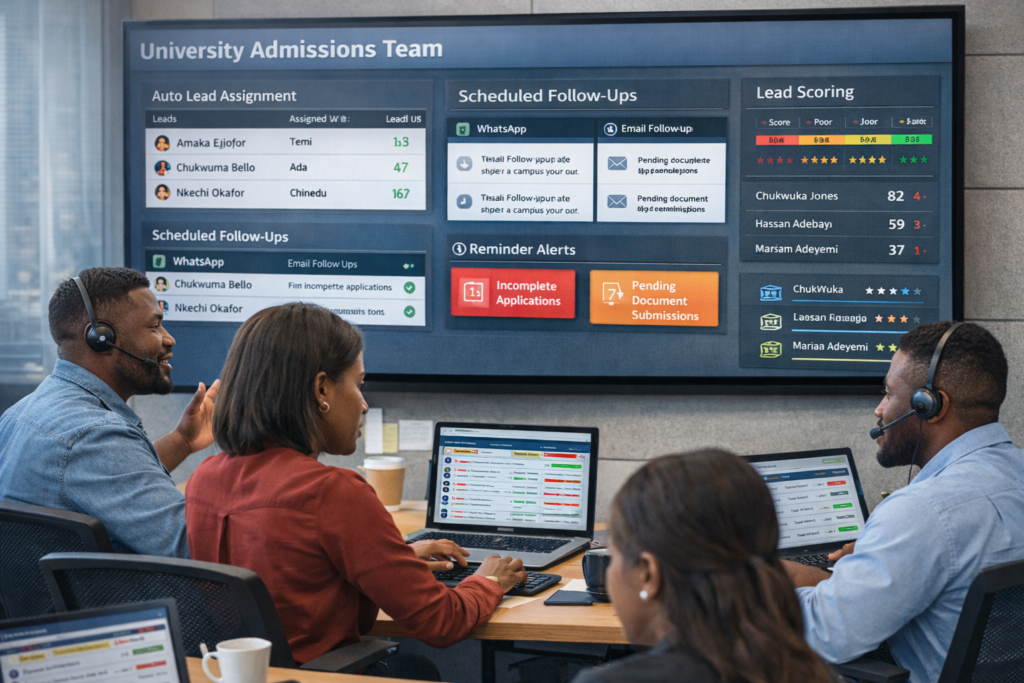
A modern admissions CRM is not just a glorified contact list. It’s a purpose-built platform that automates repetitive tasks that used to require manual attention, freeing teams to focus on strategy, personal engagement, and closing enrolment gaps. Here’s what they automate:
Lead capture
From digital ads and campus events to website forms and third-party portals, CRMs automatically ingest and centralise leads as soon as they arrive. No manual entry. No lost inquiries.
Auto-assignment of leads
You can configure rules so that leads are instantly routed to the most suitable counsellor based on criteria like programme interest, geography, or counsellor workload. This removes bottlenecks and ensures rapid first contact.
Scheduled follow-ups
Rather than relying on a counsellor to remember to call, email, or message a lead, the system schedules and executes follow-ups across channels like SMS, email, WhatsApp and integrated calling. The result is consistent engagement that reflects each student’s journey.
Automatic status updates
As a student moves through the funnel, inquiry, application started, documents uploaded, and interview scheduled, the CRM updates stages automatically, providing transparency for both the admissions team and the student.
Reminders for incomplete steps
Students often abandon applications when they hit a step they don’t understand or forget what’s required next. CRMs can send reminders for incomplete forms, missing documents, or outstanding payments without human intervention.
Lead scoring
Systems can score leads based on behaviour, such as visiting program pages, opening emails, or responding to messages, allowing teams to prioritise leads who are most likely to convert. This is where education sales funnel automation adds real strategic value, not just operational support.
Platforms like HubSpot CRM, Zoho CRM, Salesforce for Education, and Freshworks CRM all support these automation patterns, but education-specific implementations ensure the language, stages, and triggers reflect school workflows rather than generic business sales steps.
Read more: Why Manual Admission Processes Are Costing Universities Time and Money
CRM vs Spreadsheets for Admissions Teams

At first glance, spreadsheets seem like a simple, low-cost solution. They capture basic information. They’re familiar. But simplicity is a double-edged sword: it hides complexity until it’s too late.
Instant response vs manual check
A CRM triggers responses immediately, a thank-you message, an acknowledgement, a next-step prompt, the moment a lead enters the system. Spreadsheets rely on a human checking them first before anything happens. That lag erodes student interest.
Full engagement history vs fragmented notes
In CRMs, every touchpoint, call logs, emails sent, and messages received are stored under the student profile. This context follows the lead across counsellors and teams. Spreadsheets, on the other hand, rely on manual notes in cells, impossible to track and easy to misinterpret.
Scalability vs breaking under volume
A spreadsheet with a few dozen entries is fine. With hundreds or thousands of leads, common for schools with multiple intakes or campuses, spreadsheets become sluggish, error-prone, and overwhelming. CRMs, by design, scale with volume without losing performance or clarity.
Collaboration vs isolated work
CRMs allow team members to see who did what, assign follow-ups, and collaborate. In spreadsheet workflows, if one person forgets to update a cell or communicate a change, the whole process stalls.
The difference is not just technical, it’s experiential. CRMs create a predictable, measurable admissions workflow; spreadsheets create chaos that only shows up under pressure.
How Vigilearn’s Apply Portal Automates Student Flows
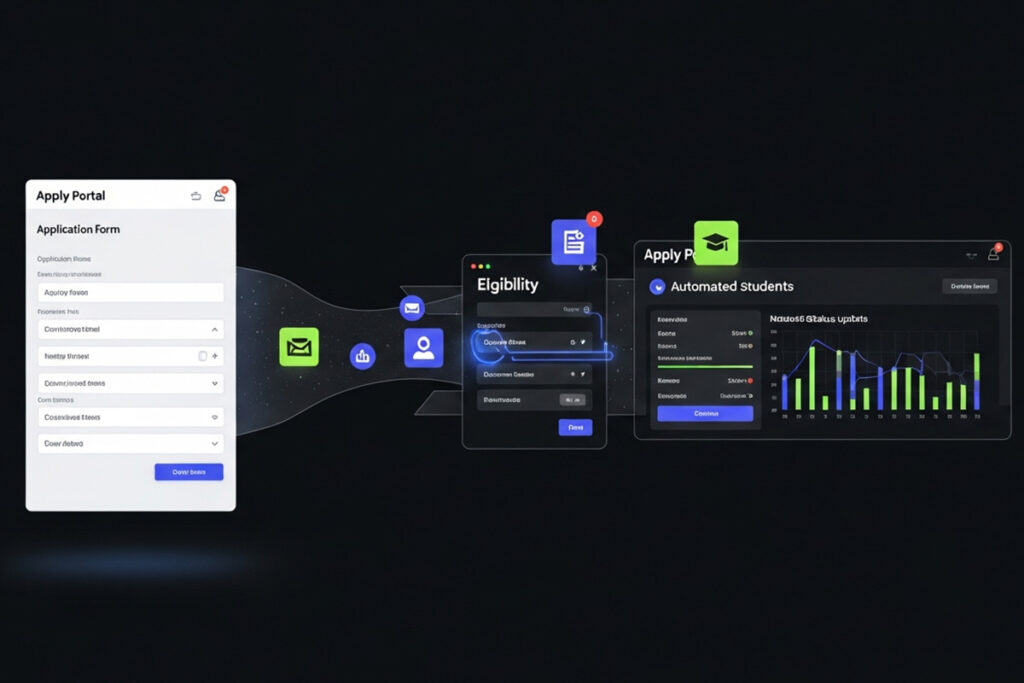
At Vigilearn, we understand that admissions is more than a checklist; it’s a student journey. Our Apply Portal is designed to automate the parts of that journey that traditionally cause friction, while seamlessly syncing with your CRM so nothing slips through the cracks.
Structured application capture
Unlike generic form builders, the Apply Portal captures structured application data that aligns with your CRM’s fields. This ensures data is clean and ready for automated processing from the moment it’s submitted.
CRM sync
Every inquiry, application, and interaction captured by the portal flows directly into your admissions CRM. This means no manual imports or mismatched data, just real-time insight into where every student is in the funnel.
Early eligibility checks
The system can apply early eligibility rules so students see clear guidance on requirements before advancing too far into an application, reducing frustration and abandonment.
Document uploads with validation
Students upload supporting documents through an intuitive interface. The system validates formats and notifies students if they need to correct or complete submissions. No endless email threads chasing attachments.
Real-time progress tracking
Counsellors and admissions leaders see exactly where a student is in the application journey, with visual indicators for completed steps. This real-time view reveals bottlenecks and opportunities for timely intervention.
Automated student updates
From “application received” to “documents verified” to “offer letter issued,” students receive clear, automated notifications. This reduces anxiety and builds trust; students feel informed rather than left waiting.
These features transform what used to be manual, inconsistent tasks into dependable, accelerated steps in a well-orchestrated process.
Tracking Team Performance with CRM
Automation does more than streamline tasks; it generates data that helps you improve. With built-in dashboards and analytics, admissions leaders can measure performance at the level of individual counsellors and the team as a whole.
Counsellor response time reports
See how quickly each team member responds to new leads or messages. Fast engagement correlates with higher conversions, and visibility enables coaching where needed.
Lead-to-application conversion rates
Understand which channels and follow-up sequences produce the best results. This data helps admissions teams prioritise high-impact activities during peak seasons.
Application-to-enrolment insights
Track where students commonly drop off, is it after the interview? During document submission? When deadlines approach? Knowing this helps you refine messaging and support strategies.
Follow-up logs per counsellor
Detailed activity logs reveal who followed up when, on which channel, and with what outcome. This level of detail shows trends and training needs.
Daily and weekly performance dashboards
Visual dashboards give admissions leaders a clear sense of team productivity, forecasted enrolment, and areas needing attention.
Data-driven coaching
Instead of subjective judgments about performance, your coaching conversations are grounded in data: response times, conversion rates, and engagement patterns. This fosters accountability and growth.
If you’re ready to move beyond spreadsheets and inconsistent follow-ups, explore how Vigilearn’s solutions can help your team convert more leads into enrolled students.