


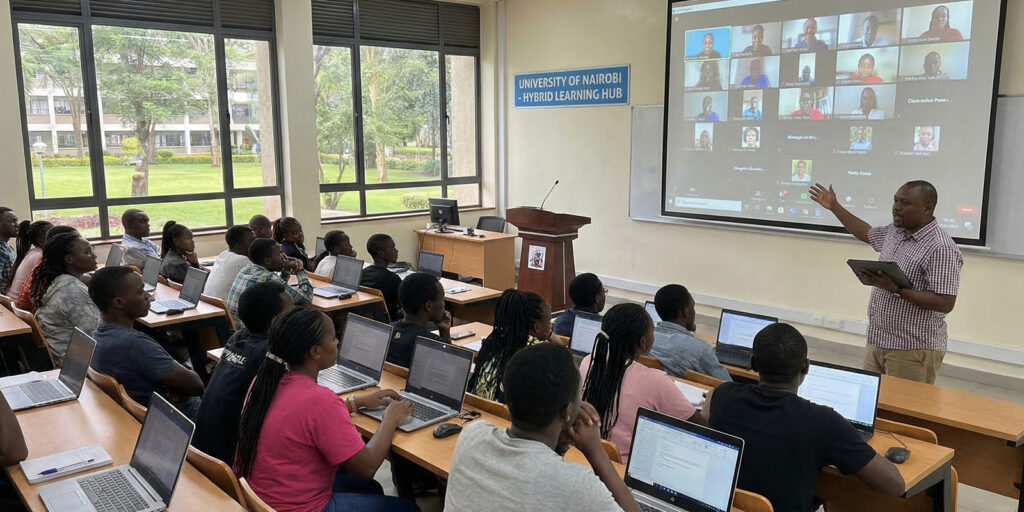
How can universities deliver education that works for today’s students without abandoning what makes campus life meaningful? The answer is hybrid learning. Hybrid learning in universities represents a considered response to a generation of students who want flexibility without losing connection, and institutions that have begun to master it are seeing real dividends in access, engagement, and resilience.
The trajectory is unmistakable. According to the National Centre for Education Statistics (2024), 33% of undergraduates are now engaged in some form of distance education, reflecting the steady growth of hybrid models in the years since the pandemic forced the first, often chaotic, experiments with digital instruction. What has changed since those early days is intention. Institutions are no longer improvising. They are designing flexible learning environments with strategy, infrastructure, and pedagogy working in concert. The question is no longer whether hybrid learning belongs in higher education. It is how to do it well.
Read more: University Admission Management System: A Complete Guide
Hybrid Learning in Universities Explained

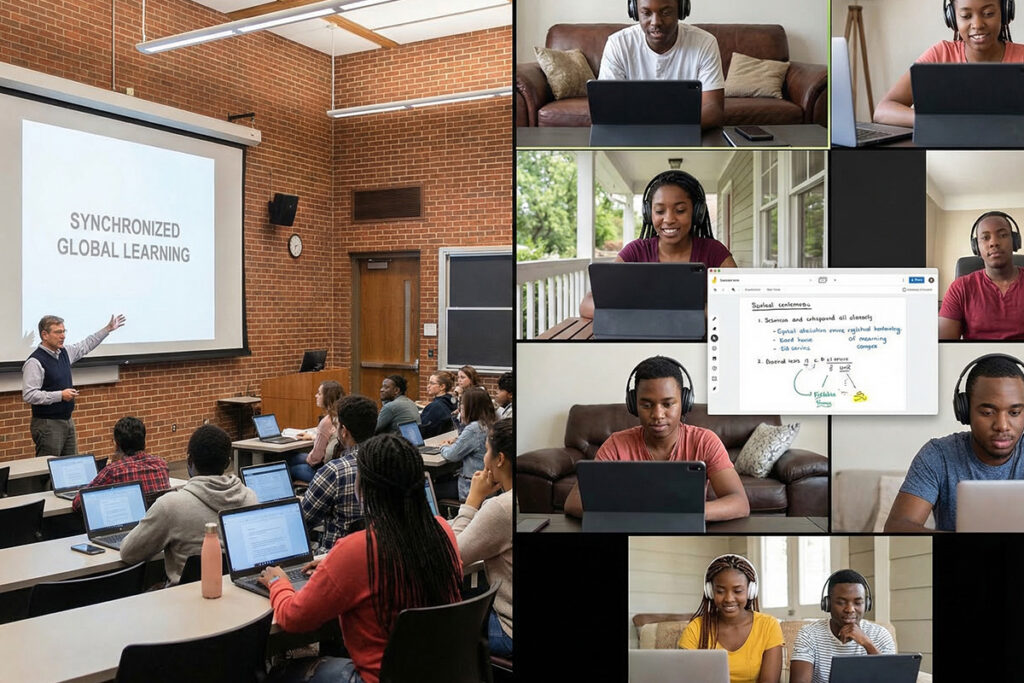
Hybrid learning in universities refers to an educational model that deliberately blends in-person classroom instruction with online learning, whether synchronous or asynchronous, into a single, coherent student experience. It is distinct from fully online education in that campus attendance remains part of the design, and distinct from traditional face-to-face teaching in that digital tools and environments carry a substantive share of the learning.
The demand for this model has grown from multiple directions at once. Students want the flexibility to balance education with work and personal obligations. The CHLOE 9 report (2025) confirms that students are gravitating toward hybrid learning models precisely because they offer autonomy over schedule without severing the human dimensions of university life. Meanwhile, institutions are recognising that blended learning in higher education also expands their reach, allowing them to serve working professionals, international students, and learners in geographically remote areas who could not otherwise attend.
How Hybrid Learning Models Work in Universities
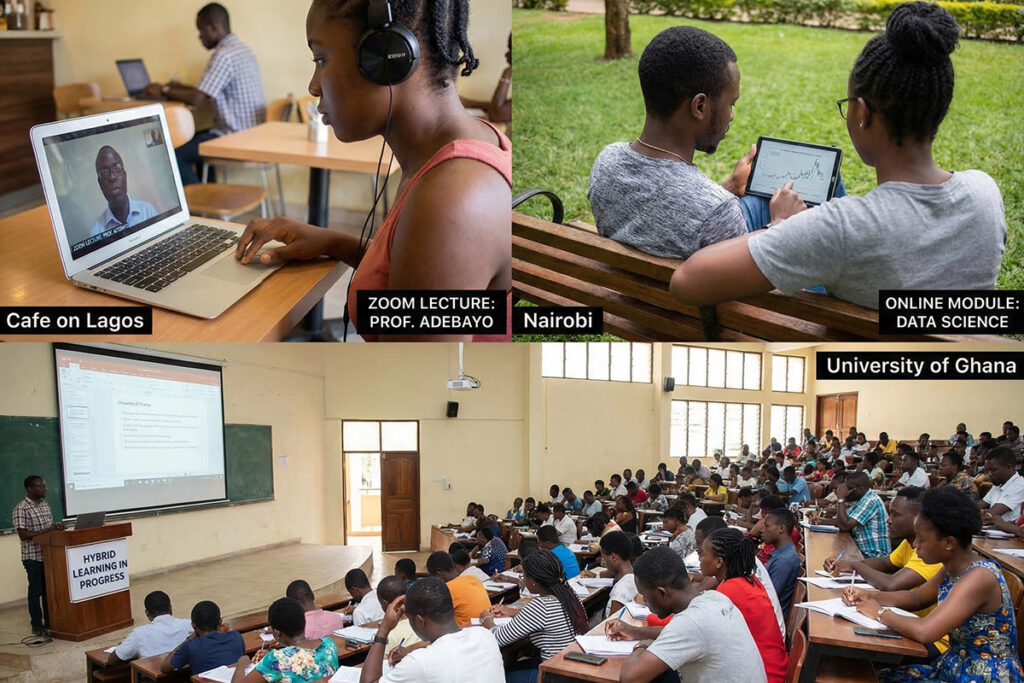
Hybrid learning models are not monolithic. Universities can structure it in several distinct ways, depending on their student population, course content, and available infrastructure.
The most common formats include:
- Alternating in-person and online sessions: Students attend on-campus classes on scheduled days and complete structured online work independently on other days. This is common in programmes with strong lab or studio components.
- Synchronous hybrid delivery: Instructors teach in a physical classroom while remote students join via video conferencing in real time. Both groups participate simultaneously, though managing equal engagement between them requires careful facilitation.
- Asynchronous online combined with in-person intensives: Students work through recorded lectures, readings, and digital tasks on their own schedule, then come to campus periodically for workshops, seminars, or assessments. This format suits adult learners and postgraduate programmes particularly well.
Read more: Building End-to-End Student Automation from Lead to Graduation
As EDUCAUSE’s 2024 Higher Education Trend Watch notes, institutions are now offering multiple modalities simultaneously, with a deliberate shift from reactive adaptation towards structured improvement of hybrid systems. The terminology has even multiplied: HyFlex, blended, flipped, and hybrid formats are all variations on the same underlying principle, and universities are working to standardise definitions internally to ensure clarity for both staff and students.
Benefits of Hybrid Learning for Universities
The case for investing in hybrid learning models is strong, and it extends well beyond the immediate preferences of any single student cohort.
Flexible learning for a diverse student body. Hybrid models accommodate students who juggle employment, caregiving, or health challenges alongside study. When a student can attend a Thursday seminar remotely because of a work commitment, that flexibility is often the difference between continuing and withdrawing.
Better use of physical resources. Institutions that stagger in-person attendance across hybrid formats can optimise classroom usage, reducing pressure on campus space without reducing the quality of the academic experience.
Expanded access. Blended learning in higher education widens the pool of prospective students. Institutions that invest in flexible learning environments can recruit more broadly, including from international markets and among non-traditional learners returning to education mid-career. The Education Dynamics 2025 Landscape Report recommends that institutions invest in online and hybrid modalities explicitly to meet the demands of the modern learner.
Institutional resilience. Universities that had invested in hybrid infrastructure before disruptions, whether from pandemics, extreme weather, or campus closures, were dramatically better positioned to continue delivering education without significant interruption. EDUCAUSE research identifies institutional resilience as one of the primary drivers behind continued investment in hybrid and flexible learning arrangements.
Technology Required for Hybrid Learning Environments
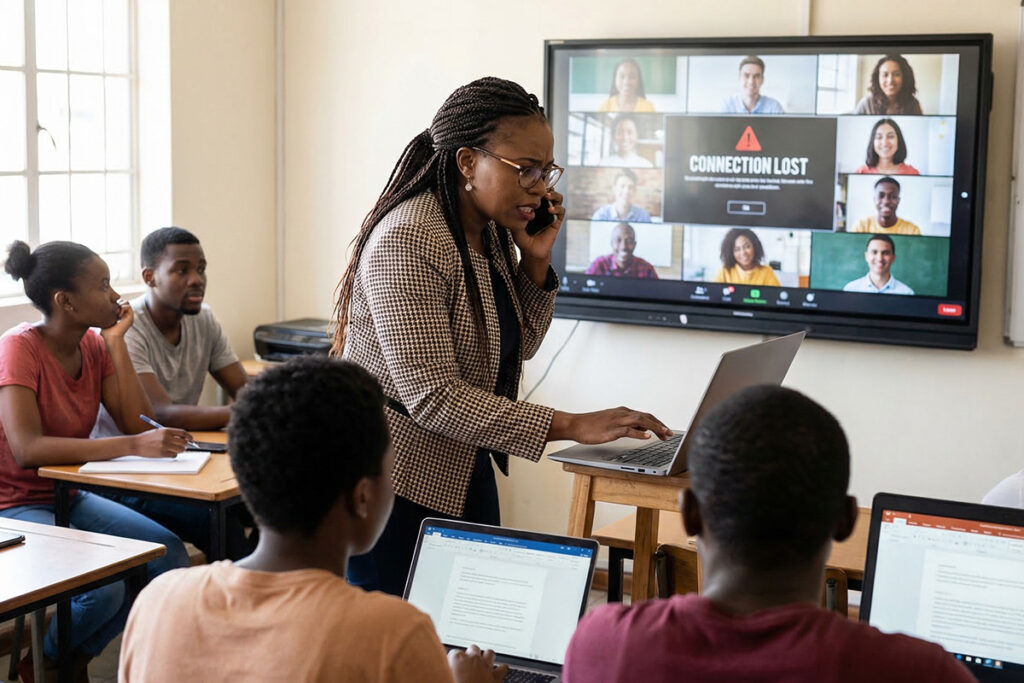
Getting the technology stack right is not optional. Flexible learning environments only function well when the underlying systems are integrated, reliable, and genuinely easy for both staff and students to use.
The essential components include:
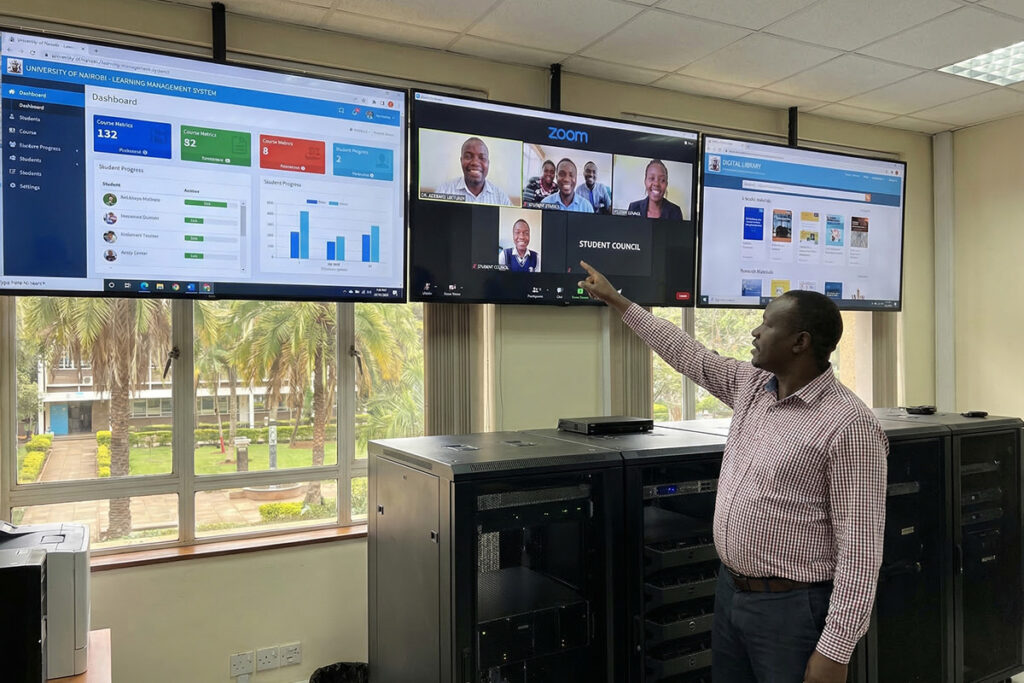
- A learning management system (LMS): The operational core. An LMS centralises course content, assessments, grades, and communication in one place, giving students access regardless of whether they are on campus or remote.
- Video conferencing tools: Essential for synchronous hybrid sessions. Reliability, screen-sharing capability, and ease of recording are non-negotiable features.
- Digital content platforms: Tools that allow faculty to create, host, and update course materials, including video, interactive modules, and multimedia resources.
- Communication and collaboration tools: Discussion forums, messaging functions, and group work environments that facilitate meaningful interaction beyond the classroom.
Read more: Learning Management System for Universities: What to Look For
The critical issue is integration. Platforms that do not communicate with each other create friction for students and an administrative burden for staff. EDUCAUSE’s trend research highlights that institutions are increasingly prioritising technology infrastructure that supports seamless connection across modalities, devices, and locations.
Challenges Universities Face in Managing Hybrid Learning
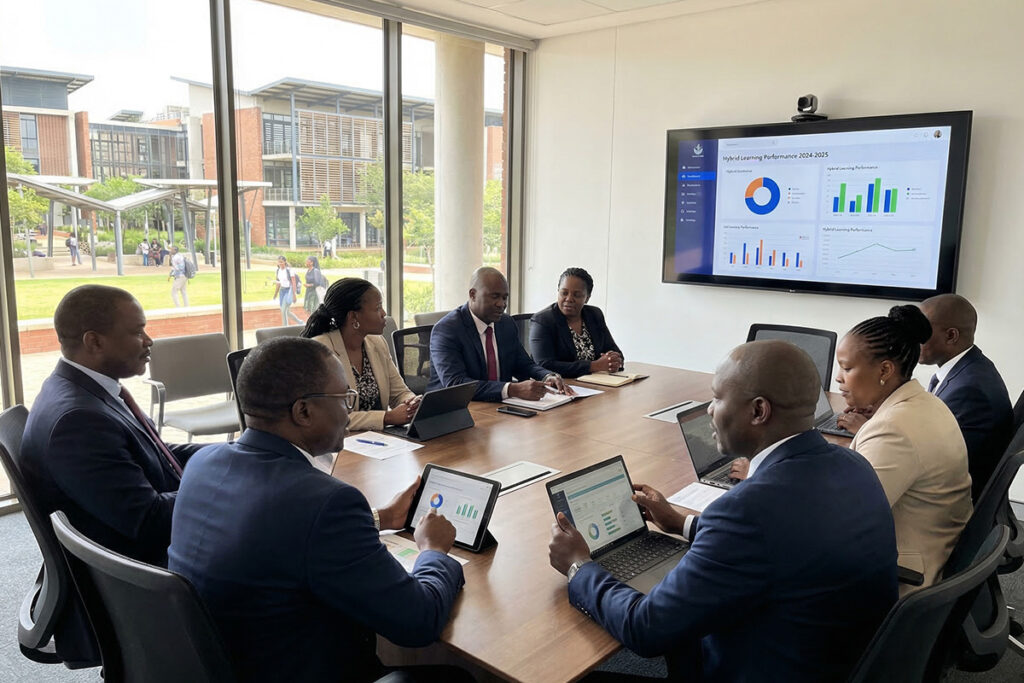
Honesty matters here. Hybrid learning in universities, when poorly planned or under-resourced, creates real problems.
Equity of experience. The single most persistent challenge in synchronous hybrid delivery is ensuring that remote students are not passive observers of an in-person session. Without deliberate facilitation design, the on-campus experience dominates, and remote participants disengage.
Maintaining consistent learning quality. Blended learning in higher education requires coherence across both the physical and digital components of a course. When they are designed in isolation, students receive a fragmented experience.
Faculty readiness. According to research published on EDUCAUSE Review, 70% of faculty are concerned about their ability to deliver engaging, high-quality learning experiences in online and hybrid settings. A systematic literature review published by MDPI (2025) found that targeted training and support are critical to improving both the technical competence and the pedagogical confidence of university teachers in hybrid environments.
Infrastructure gaps. Not every classroom is equipped for simultaneous in-person and remote delivery. Cameras, microphones, and display systems require capital investment, and smaller or less-resourced institutions often face significant gaps.
Strategic planning is not a luxury in this context. It is the minimum requirement for hybrid learning to work.
Strategies for Successful Hybrid Learning Implementation
Universities that manage hybrid learning well tend to share a set of deliberate institutional practices.
Develop a hybrid-ready curriculum from the ground up. Rather than adapting existing in-person courses for partial online delivery, effective institutions design courses with both modalities in mind from the start. Content, interaction, and assessment are all planned for the hybrid student simultaneously.
Train faculty for hybrid teaching methods. This is perhaps the highest-leverage investment an institution can make. Faculty who understand how to facilitate engagement across physical and digital spaces, how to use the LMS effectively, and how to design assessments that work for all students will drive outcomes across every course they teach.
Integrate digital learning platforms. Choosing an LMS that supports both online and classroom workflows in a single environment eliminates the fragmentation that undermines student experience. When everything lives in one place, the model becomes far easier to manage and far easier for students to navigate.
Monitor engagement and performance metrics continuously. Analytics matter enormously in hybrid contexts because the usual visual signals of engagement, the student nodding in a lecture, the raised hand, are partially or wholly absent. Data on login frequency, assignment completion, and participation in discussions gives instructors and administrators the visibility they need to intervene early when students are struggling.
How Vigilearn Supports Hybrid Learning in Universities
Vigilearn Technologies offers a suite of products that address the practical demands of hybrid learning directly, without requiring institutions to stitch together disconnected tools.
Ediify LMS serves as the operational core. Faculty can deliver content, schedule live classes, manage course materials, and facilitate student discussion in one place. Built-in big data analytics give instructors and administrators visibility into participation and performance, enabling timely intervention when students begin to disengage.
Studio handles synchronous hybrid sessions. It is a cloud-based video conferencing platform that supports screen sharing, live chat, and session recording, so remote and in-person students share the same experience. Recorded sessions are accessible afterwards, which matters in a model where not every student can attend every live class.
The Examination Portal brings consistency to hybrid assessment. With support for diverse exam formats, a built-in question bank, and straightforward import and export of results, institutions can administer examinations fairly across both on-campus and remote cohorts without operational strain.
Used together, these tools give universities a coherent, scalable infrastructure for hybrid learning rather than a collection of workarounds. Explore the full product offering at vigilearn.com/products, or visit the Vigilearn blog for further guidance on building effective digital learning environments.