



Every admission season tells a story.
It begins with ambition. Thousands of prospective students filling out forms late at night, uploading documents from cybercafés or home WiFi, refreshing inboxes for updates. On the other side, admission officers stare at spreadsheets that grow heavier by the hour. Emails pile up. Documents go missing. Phone lines ring without pause.
As application volumes increase globally, the pressure on institutions intensifies. According to research and digital transformation insights shared by EDUCAUSE, higher education institutions are under growing pressure to modernise administrative operations to meet student expectations shaped by digital-first experiences. Students expect transparency, speed, and clarity. Universities need structure, accuracy, and control.
Read more: Student Enrolment Automation in Universities
This is where a university admission management system becomes not just helpful, but essential.
If you are evaluating how to digitise or improve your admissions workflow, this guide will help you understand what a university admission management system is, why manual processes struggle to keep up, what features truly matter, and how to assess the right solution for your institution.
University Admission Management System Explained

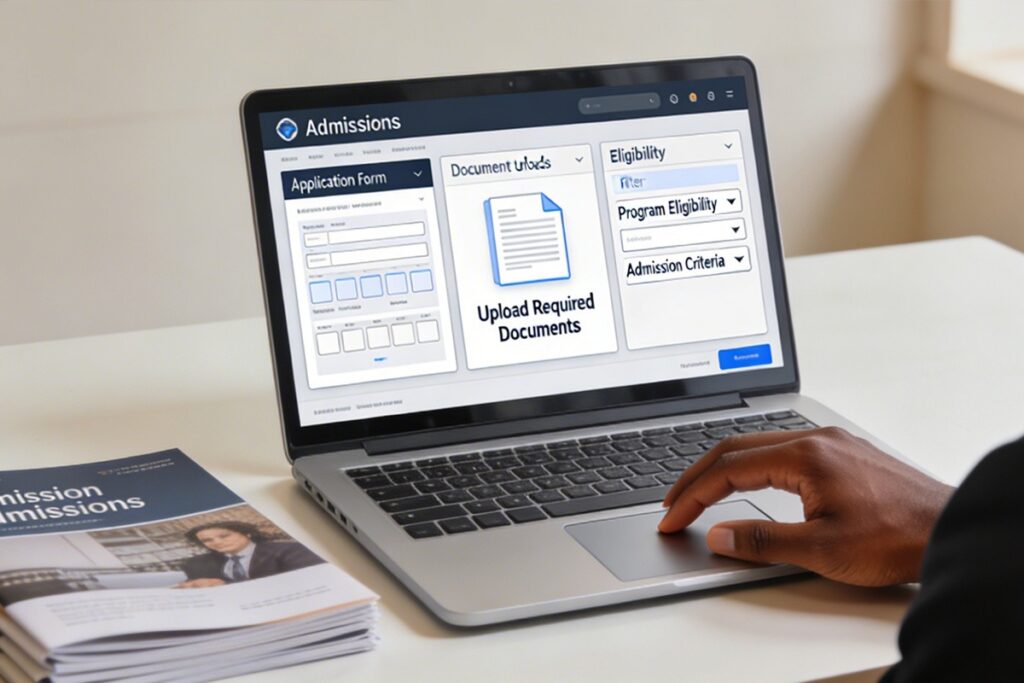
A university admission management system is a centralised digital platform designed to automate, track, and manage the entire admissions lifecycle, from application submission to final enrollment.
At its core, it replaces fragmented tools, spreadsheets, email chains, and paper-based processes with a structured, traceable workflow.
Admissions have become more complex over the past decade. Universities now handle:
- Multiple intake periods
- International applicants with varied documentation requirements
- Diverse entry pathways and eligibility criteria
- Scholarship and financial aid assessments
- Regulatory reporting obligations
Manual processes struggle under this weight. Spreadsheets cannot enforce workflow rules. Emails do not provide real-time visibility. Shared folders do not prevent duplication. And paper files certainly do not scale.
A digital admission system introduces automation and accountability into the process. Instead of chasing files, your team monitors dashboards. Instead of manually checking eligibility criteria, the system applies rules automatically. Instead of responding to repetitive status inquiries, applicants track their progress online.
A strong online admission platform does more than collect applications. It structures your entire admission strategy.
Read more: How Universities Can Reduce Admission Processing Time
Core Functions of a University Admission Management System

When evaluating a university admission management system, it is important to move beyond surface features. The real value lies in how well the system supports your operational realities.
Here are the core functions every robust platform should offer:
1. Application Form Creation and Customisation
Every university has unique programs, entry requirements, and departmental nuances. Your system should allow you to create customizable application forms per program or faculty.
This includes:
- Conditional fields based on applicant responses
- Multiple intake configurations
- Local and international applicant variations
- Program-specific requirements
An effective admission management software allows admissions teams to update forms without relying heavily on developers.
2. Document Upload and Verification
Transcripts, identification documents, recommendation letters, and certificates. These must be uploaded, verified, and stored securely.
A reliable digital admission system should:
- Accept multiple document formats
- Flag incomplete submissions
- Enable staff-side verification tagging
- Maintain audit trails
This reduces back-and-forth emails and ensures compliance.
3. Eligibility Filtering and Automated Screening
One of the most time-consuming tasks in admissions is screening applicants against program requirements.
A well-configured university admission management system can automatically:
- Check minimum grade thresholds
- Validate prerequisite subjects
- Flag incomplete or ineligible applications
- Route applications to appropriate reviewers
This shifts your team’s energy from manual screening to qualitative evaluation.
4. Application Tracking Dashboards
Transparency matters. Both for staff and applicants.
Administrators should be able to view:
- Applications by program
- Stage distribution
- Pending reviews
- Acceptance rates
Applicants should see real-time status updates through the online admission platform, reducing uncertainty and repetitive inquiries.
5. Communication Automation
Admissions generate massive communication loads.
A good admission management software enables:
- Automated acknowledgement emails
- Status update notifications
- Conditional messaging
- Bulk communication segmented by program or status
This ensures consistency and timeliness.
Problems With Manual Admission Processes

Before selecting a solution, it helps to understand what you are solving.
Many institutions operate hybrid systems, part digital, part manual. The cracks show quickly.
Read more: How Universities Can Manage High Application Volume
Data Duplication
Application data often gets entered multiple times. Once into a form, again into a spreadsheet, and later into a student database. Each re-entry introduces error risk.
Lost or Incomplete Applications
Paper documents are misfiled. Emails buried. Attachments overlooked. These are not minor inconveniences. They directly impact applicant trust.
Email Overload
Admissions officers often spend hours responding to status inquiries. Without a digital admission system, there is no centralised visibility for applicants.
Lack of Status Transparency
Applicants feel left in the dark. Staff members struggle to answer queries without digging through folders.
Delayed Decision Cycles
When files are moved manually between reviewers, bottlenecks form. A delayed decision impacts enrollment planning, budgeting, and resource allocation.
According to digital transformation insights highlighted by Gartner, automation in administrative workflows is increasingly viewed as a strategic necessity, not just operational convenience. Universities that digitise core processes position themselves for long-term resilience.
A university admission management system directly addresses these structural inefficiencies.
Features to Look for in Admission Management Software
Not all admission management software is built equally. When evaluating options, leadership teams should prioritise strategic capabilities, not just basic form collection.
Role-Based Access Control
Admissions involve multiple stakeholders: reviewers, department heads, finance teams, and registrars.
Your system should allow:
- Granular permission settings
- Secure document visibility controls
- Reviewer-specific dashboards
This protects sensitive data and maintains operational integrity.
Workflow Automation
The strength of a university admission management system lies in its workflow engine.
Look for:
- Stage-based progression rules
- Automated routing between departments
- Deadline enforcement
- Conditional triggers
Automation reduces dependency on manual follow-ups.
Real-Time Status Tracking
Transparency improves applicant experience and internal coordination.
A well-designed online admission platform ensures that every application has a visible stage, timestamp, and responsible party.
Reporting Dashboards
Leadership teams need insights, not raw data.
Effective reporting should include:
- Application volumes by intake
- Conversion rates from application to enrollment
- Drop-off points in the funnel
- Demographic breakdowns
A powerful digital admission system transforms admissions into a data-driven function.
Multi-Campus Configuration
If your institution operates multiple campuses or faculties, the system should support configurable workflows per unit without creating operational silos.
Integration With Other Institutional Systems
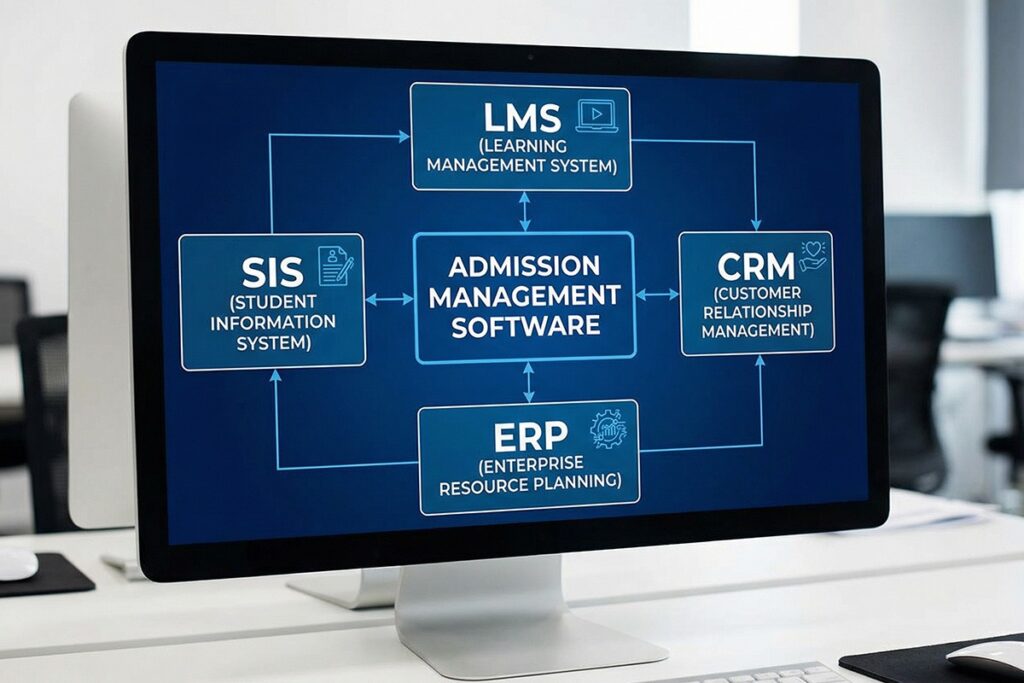
Admissions do not operate in isolation. Your university admission management system should integrate seamlessly with:
Student Information Systems
Once an applicant is admitted, data should flow automatically into the Student Information System. Manual re-entry defeats the purpose of digitisation.
Admitted students should transition smoothly into academic platforms without redundant onboarding steps.
ERP and Finance Modules
Application fees, tuition deposits, and scholarship disbursements must connect to finance systems for accuracy and compliance.
CRM Systems
Institutions increasingly use CRM tools for pre-application engagement. Integration ensures that marketing and admissions teams operate from shared data.
When systems communicate effectively, institutions reduce errors and create cohesive student journeys.
Reporting and Leadership Visibility

Admissions data is strategic. A comprehensive university admission management system should empower leadership with:
- Application volume insights by program
- Acceptance and enrollment conversion tracking
- Department-level performance metrics
- Intake forecasting tools
Forecasting is particularly critical. Understanding likely enrollment numbers supports staffing decisions, accommodation planning, and financial modelling.
With an integrated admission management software, admissions becomes a predictive function rather than reactive.
How Vigilearn Supports Admission Management
At Vigilearn, we understand that admissions is not just about collecting applications. It is about building structured, transparent systems that scale with institutional growth.
Our approach to university admission management system design focuses on:
Structured Workflows
Institutions can configure admission stages aligned with their policies, from submission to screening, review, approval, and enrollment.
Centralised Application Dashboard
All applications are visible in a unified dashboard. No scattered spreadsheets. No hidden email threads.
Automated Communication Triggers
Applicants receive timely updates as they progress through stages, improving transparency and reducing administrative workload.
End-to-End Process Visibility
Administrators gain full insight into where each application stands, who is responsible, and what action is pending.
Through our broader ecosystem, which includes Learning Management and Student Information capabilities, Vigilearn ensures that admissions flow seamlessly into academic and administrative operations.
For more insights on digital transformation in education, you can explore additional resources on our blog.