



Admission processing time is one of the quiet, costly frictions in higher education: applicants wait weeks for updates, staff juggle paper or siloed digital files, and enrolment teams scramble to salvage yields. For university leaders, every extra day between application and decision is a moment when an applicant’s attention can drift, confidence can fall, and another institution can make a faster offer. The result is measurable: lower conversion rates, more calls to the help desk, and staff burnout from repetitive follow-ups.
The problem is not just candidate impatience. Long processing windows expose inequities, students with fewer resources are less able to chase fragmented requests, and they force admissions teams into reactive firefighting instead of strategic recruitment. Research shows that long waits can widen access gaps and reduce trust in institutional responsiveness.
Read more: Applicant Drop-Off After Form Submission
But this is also one of the most solvable problems on a university’s operations list. With clear stages, defined ownership, and targeted automation, you can turn an opaque, week-long slog into a predictable, applicant-friendly workflow. This article explains why admission processing time stretches out, what a faster admissions process looks like in practice, and which technologies and design changes make the biggest difference, with practical steps you can act on this term.
Admission Processing Time Is a Major Bottleneck

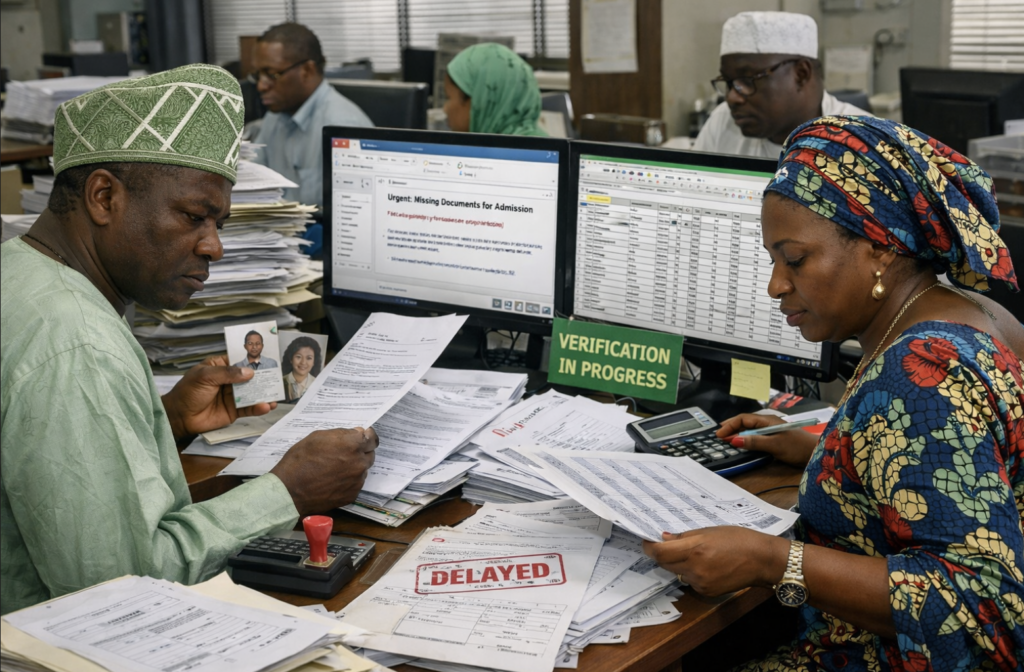
When processing moves slowly, consequences ripple through the institution. Applicants file repeated inquiries, enrollment managers chase incomplete documents, and offices downstream, financial aid, housing, and registrar, receive late notice. That cumulative friction depresses enrollment yield and raises the cost-per-enrolled-student. Admissions teams often admit this pain in informal conversations: many reviews are still executed manually, and tracking is patchwork at best.
Universities that have digitised core components report clear wins: turnaround times shrink, staff spend less time on clerical checks, and applicant satisfaction improves. Case studies across higher education illustrate that timely decisions are a competitive advantage: students are more likely to commit to schools that respond quickly and transparently.
Why Admission Processing Time Is So Long


There are four recurring issues behind extended admission processing time:
Manual document verification. Many institutions still rely on manual matching of transcripts, references, and supporting documents. Every manual check adds minutes that scale into days when multiplied by thousands of applicants.
Multiple approval layers. A typical file might need departmental review, committee signoff, and a final enrolment-office approval. If reviewers work sequentially, small delays compound into long bottlenecks.
Disconnected systems. Application portals, student information systems, and document repositories often don’t talk to each other. That forces staff to toggle between screens, re-enter data, or worse, email documents back and forth.
No real-time visibility. Without a central dashboard, neither applicants nor managers know where files sit. This visibility gap leads to repeated status checks from applicants and reactive task-shifting among staff.
Impact of Long University Admission Delays
Long university admission delays are more than an annoyance. They cause applicant frustration, encourage prospective students to accept faster offers, and increase administrative workload through repeated follow-ups. For international applicants or transfer students, slow processing can interrupt visa timelines or cause missed enrollment cycles. The human cost is also real: students from disadvantaged backgrounds are less likely to persevere through repeated document requests, which worsens equity outcomes.
What a Faster Admissions Process Looks Like

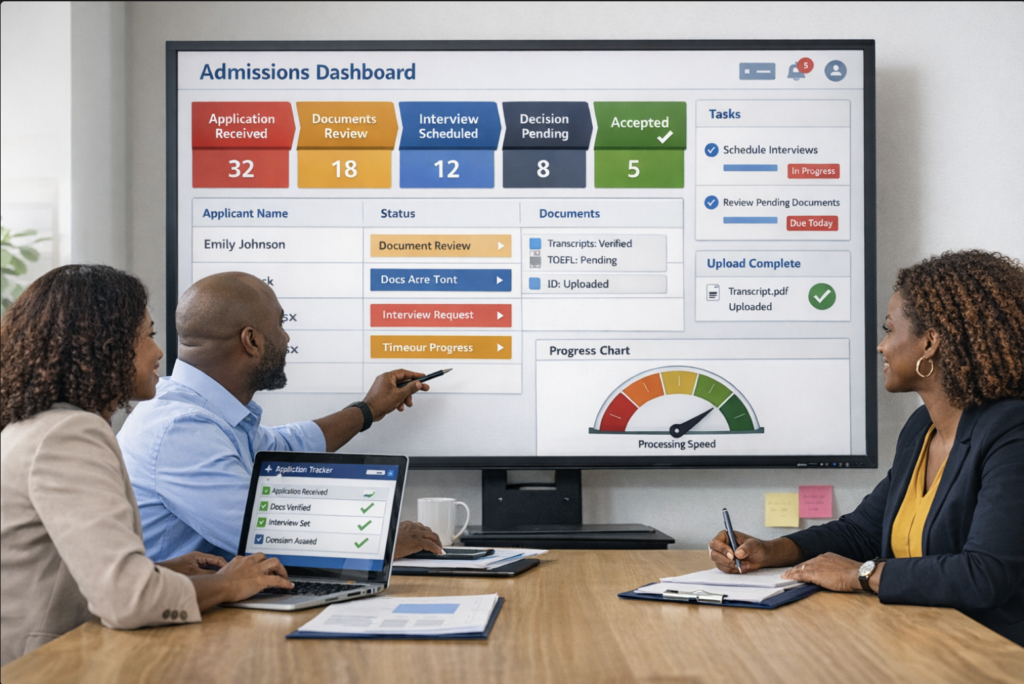
A faster admissions process is not magic. It is the result of design choices that make the experience predictable for applicants and efficient for staff:
Clear application stages. Map the lifecycle: submission, verification, departmental review, decision, and enrolment. Make those stages visible to applicants and staff.
Parallel document reviews. Where possible, allow different reviewers to work in parallel instead of sequentially. For example, finance and academic vetting can occur concurrently once core documents are present.
Automated status updates. Use automated messages for common milestones: “document received,” “under review,” “decision posted.” That reduces inbound queries and builds trust.
Defined ownership. Every file should have a named owner responsible for moving it to the next stage. Clarity in hand-offs removes the “nobody’s task” problem.
These elements together create momentum: files don’t stall, and applicants see predictable timelines, which reduces follow-up volume and improves yield.
Read more: Spreadsheet-Based Admissions Tracking
Technology That Improves Admission Processing Time


The right tools don’t automate admissions decisions; they remove administrative friction so reviewers can focus on judgment. Key technology patterns to prioritise are:
Central application system
A single source of truth for application data and documents reduces duplicate entry and lost files. This also makes reporting simpler and more accurate. EDUCAUSE and other higher-education research bodies emphasise the value of consolidated platforms to improve responsiveness.
Automated workflows
Workflow engines can route files automatically based on rules, trigger parallel reviews, and escalate stalled items to managers. Institutions that implement imaging and workflow solutions report large efficiency gains in processing times.
Real-time dashboards
Give managers at-a-glance metrics: time-in-stage, bottleneck queues, and daily throughput. Visibility enables targeted coaching and resource shifts before backlogs grow. Process improvement literature shows dashboards are critical to cyclical admissions performance monitoring.
Faster internal coordination
Integrations between the application portal, SIS, and communication systems allow automated triggers: once a decision is posted, financial aid and housing workflows begin without human hand-offs. That shortens the path from decision to enrollment.
How Vigilearn Reduces Admission Processing Time
At Vigilearn, we designed Apply Portal to address these exact pain points with practical features schools can use right away: structured workflows, live application tracking, and automation that cuts manual back-and-forth.
Structured workflows: Apply Portal supports customizable, rule-driven workflows, so files move automatically to the right reviewer. That means fewer “where is this?” queries and more time for evaluative work. Learn more about the product on the Vigilearn Apply Portal page.
Live application tracking: Applicants and staff see status in real time, reducing repeat inquiries and building trust. Public-facing status bars and internal dashboards align expectations.
Automated reminders and updates: The portal sends reminders for missing documents and notifies reviewers when items need attention, shrinking stagnation in common bottlenecks.
These features, when combined with process re-design, such as parallelising reviews and defining ownership, deliver measurable reductions in admission processing time.
For more institutional insights and case studies, explore our blog.
Practical Roadmap: 90-Day Sprint to Cut Processing Time
- Week 1–2: Map your current admissions workflow. Document each stage, hand-off, and average time-in-stage. Identify obvious serial steps that could be parallelised.
- Week 3–4: Quick wins. Add automated status messages, set document checklists in the portal, and assign clear owners for open files.
- Month 2: Introduce workflow rules. Use a central system to route files by program, international status, or scholarship type. Start with simple rules and iterate.
- Month 3: Measure and optimise. Use dashboards to track reductions in time-in-stage. Tackle the slowest 10 per cent of files first; these usually account for most delay.
This sprint balances immediate improvements that don’t need heavy IT projects with medium-term automation that provides durable gains.