


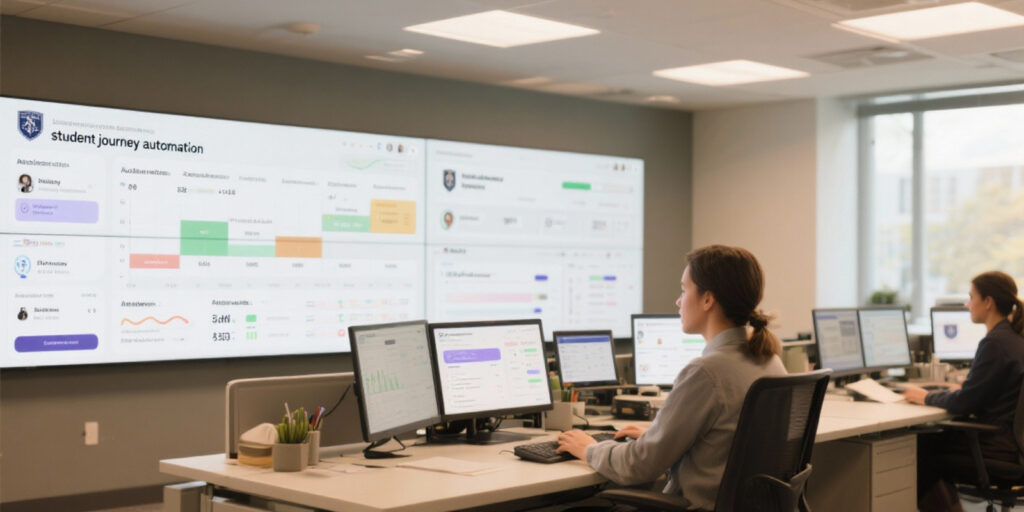
In 2025, universities around the world accelerated their adoption of student journey automation to keep pace with mounting pressures on admissions and student services. As institutions compete for talent, rising expectations from both prospective students and regulators have made manual, paper-based processes increasingly untenable. The focus shifted from simply processing applications to managing a seamless, data-driven journey from inquiry to enrolment and beyond.
The pressure came from multiple fronts. First, demographics and globalisation meant more applications from diverse geographies, including international students who expect fast, transparent communication. Second, the cost of student acquisition rose sharply, pushing universities to convert leads more efficiently. Finally, operational costs and staffing limitations forced institutions to rethink how they could do more with less. In this context, automation emerged not as a luxury but as a necessity.
Automation has become the driver of faster conversions, richer engagement, and improved communication. Rather than relying on manual email loops or paper files, universities could deploy integrated systems that update students in real time, alert staff to bottlenecks, and systematically route tasks to the right teams. By reducing friction and responding quickly, institutions saw better conversion rates and more satisfied applicants and laid the groundwork for a more modern, student-centric operation.
Read More: From Application to Graduation: Automating Student Journeys with Apply Portal
What Student Journey Automation Includes in 2025

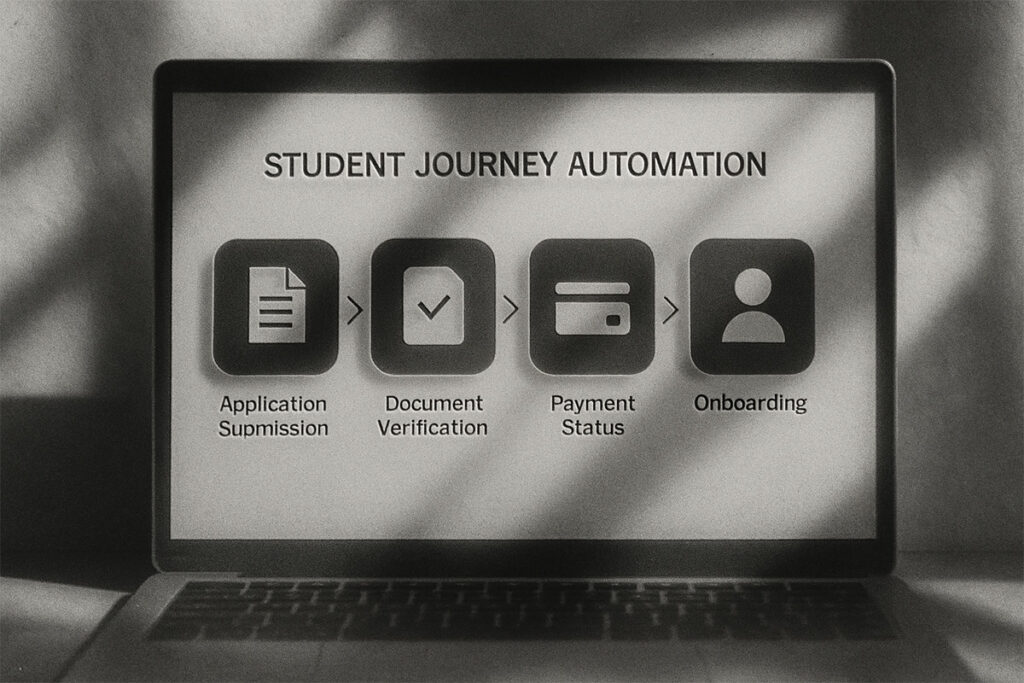
In 2025, student journey automation covers the entire lifecycle of a student’s interaction with a university from first inquiry through application, admission, onboarding, payment, and ongoing support.
1. Application Automation
Prospective students submit their applications via online portals. These portals validate data in real time, check formats, and trigger reminders when parts are incomplete. Documents like transcripts, identification, or recommendation letters are uploaded digitally. Automated tools can OCR (optical character recognition) or tag files, so staff know exactly what is missing or needs verification.
2. Screening and Document Review
Once documents arrive, automated workflows flag missing items, send alerts, or assign applications to the right reviewer. Machine-assisted validation helps detect inconsistencies, while human reviewers can batch-approve or reject items from a dashboard. This frees staff from manually checking every document one by one.
3. Onboarding and Enrollment
After admission decisions are made, automation takes over onboarding. Students receive auto-generated offer letters, personalized welcome emails, and “next-step” instructions like how to set up their portal account, attend orientation, or access course registration. The system triggers task assignments and internal workflows so administrative offices know exactly where each student is in the process.
4. Payment and Finance
Integrated payment gateways connect with the system. When a student pays an enrolment deposit or tuition fee, the automation engine records it, updates their status to “paid,” and sends receipts or reminders. For missed payments, automated nudges go out via email or SMS. Finance teams see real-time dashboards of outstanding balances and payment activity.
5. Support and Communication
A CRM-style automation layer centralises student data, giving teams a holistic view of the student’s journey. Chatbots and ticketing systems answer common questions, log inquiries, and escalate when necessary. Automated status updates (e.g., “application under review,” “financial aid approved,” “ready to register”) go out proactively to students so they’re never left wondering.
6. Analytics and Dashboards
Everything is tracked in a centralised dashboard. Teams gain visibility across all touchpoints: admissions, finance, onboarding, and support. Staff can monitor funnel conversion rates, spot drop-off points, and intervene where needed. Predictive analytics and early-alert systems help institutions anticipate where students might get stuck or disengage.
Taken together, these features enable universities to operate with far greater clarity and responsiveness, and to treat each student not as a transaction, but as an individual progressing through a journey.
Challenges Universities Faced Before Automation
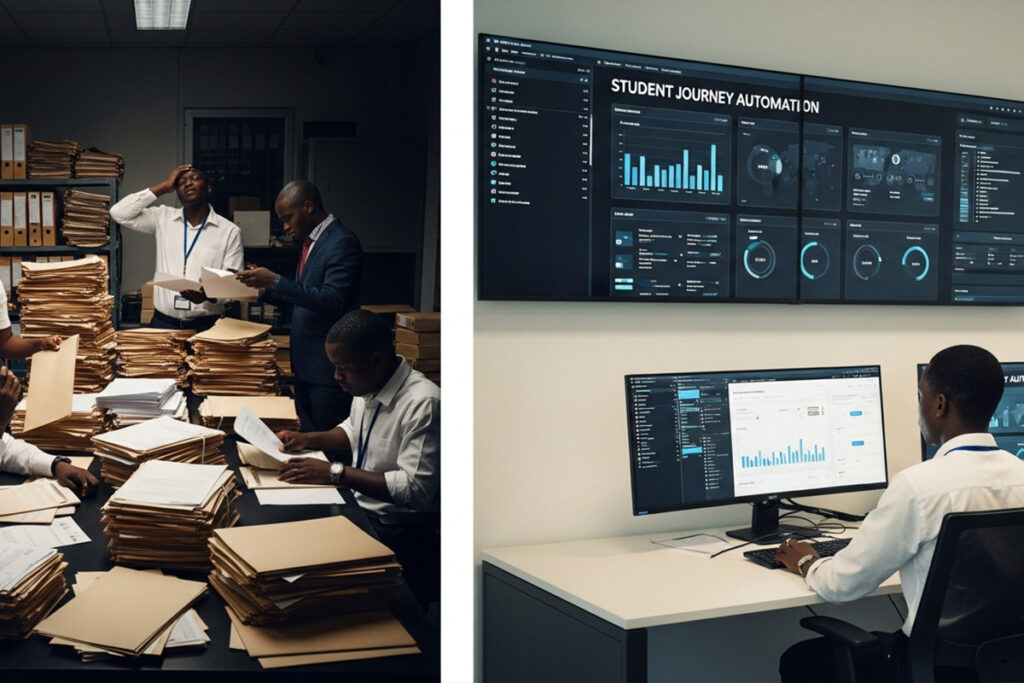
Before automation became widespread in 2025, many universities relied heavily on manual operations, and this presented serious challenges.
Slow Responses and Backlogs
Admissions offices often had huge backlogs. Staff manually processed application forms, reviewed physical documents, and sent offer letters by batch. Prospective students waited weeks, sometimes months, for status updates. That delay led to frustration, abandoned applications, and lost enrolment opportunities.
Fragmented Systems and Lost Files
Without centralised systems, data was siloed. Different teams used spreadsheets, email chains, or paper folders. Files would go missing. An admission officer might not know which applications had incomplete documentation. Departments did not share status easily. This lack of coordination meant inefficiencies and a higher risk of human error.
Low Completion Rates
Because communication was inconsistent, students sometimes failed to submit missing documents, pay their fees, or complete required steps. Many simply dropped off. The lack of automated reminders and coordinated follow-up led to lower conversion from application to enrolment.
Staff Burnout and High Operational Cost
The manual burden on staff was high. Admissions officers worked overtime to catch up with email inquiries, manually verify documents, and chase students. Support and finance teams struggled to keep up with payment reminders and onboarding tasks. The result: high operational costs, inefficiencies, and reduced capacity to scale.
Poor Student Experience
Applicants were left feeling uncertain. They did not always know where they were in the process. A lack of transparency led to anxiety or disillusionment. That poor experience could affect the institution’s reputation and student satisfaction.
These problems constrained enrolment growth, eroded trust, and limited how much a university could scale without adding headcount.
How Vigilearn’s Automation Tools Solved These Issues in 2025

In 2025, Vigilearn’s Apply Portal, Enroli SIS, and Ediify LMS became the backbone of automated student journey management for universities. Each tool addressed a critical gap that manual workflows could not solve.
Apply Portal simplified admissions from start to finish
Applications, document uploads, screening, and status updates all moved into one automated system. As soon as a student submitted a form or document, the portal validated it, organised it, and triggered notifications for both the applicant and the admissions team. Automated reminders reduced drop-offs, and integrated payment workflows ensured students could complete fees without manual follow-up. This created faster processing times and far fewer backlogs.
Enroli SIS gave universities full visibility and control.
Instead of scattered spreadsheets and email trails, Enroli centralised all student data. Admissions, finance, and academic teams could now track each student’s progress from application to enrolment. If a student delayed payment or onboarding, Enroli flagged it. If a document was missing, teams saw it instantly. This transparency reduced errors and helped departments collaborate more effectively.
Ediify LMS connected enrolment directly to learning.
Once a student was admitted and activated in Enroli, Ediify automatically created their learning profile. Course access, onboarding materials, and welcome instructions were delivered without manual setup. The LMS monitored student engagement and sent automated nudges when attendance or participation dropped, helping institutions support learners early.
Together, these tools helped universities reduce admission delays, cut processing errors, and maintain consistent communication. Institutions saw higher completion rates because applicants got timely updates, students were onboarded faster, and staff focused on real support instead of chasing paperwork.
Why Automation Became a Long-Term Priority in 2025
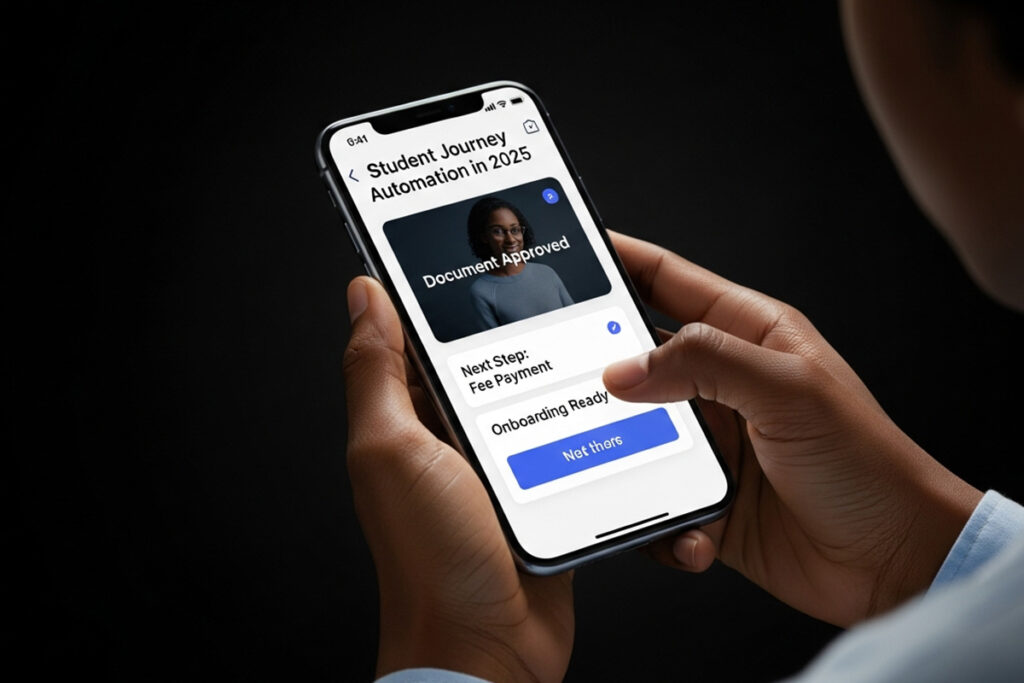
By mid-2025, student journey automation had moved from pilot projects to a strategic priority for many institutions. Several long-term advantages became clear:
1. Operational Efficiency
With repetitive tasks automated staff time was freed for higher-value work. Admissions teams no longer spend hours chasing documents. Finance teams automated billing and reminders. Support teams handled fewer repetitive queries. The efficiency gains translated into cost savings and better use of human resources.
2. Enhanced Student Service
Students enjoyed a smoother, more transparent experience. They got real-time status updates. They received reminders at the right times. Their onboarding felt guided, not chaotic. This improved satisfaction boosted the institution’s reputation and reduced drop-offs at every stage.
3. Higher Conversion and Enrolment Pipeline
Automated lead nurturing and status tracking allowed universities to convert more prospects into applicants and more applicants into enrolled students. Institutions saw stronger conversion metrics. With timely communications and fewer bottlenecks, more students made it all the way to enrolment.
4. Reduced Staffing Pressure
Automation helped universities scale without exponentially increasing headcount. During peak admission cycles, the system handled the bulk of communication, verification, and reminders. Staff could focus on relationship-building, high-touch advising, and strategic recruitment rather than repetitive administration.
5. Strategic Expansion into Other Areas
By late 2025, forward-thinking institutions began expanding automation beyond admissions. They started exploring automation for exams, coursework, and ongoing student support. For instance, early-alert systems flag students who might be at risk in their coursework. Automated triggers intervene with outreach or counselling. Institutions laid plans to integrate automated grading, attendance tracking, and even self-service portals for academic support.
If you are a university leader or administrator looking to modernise your operations, learn more about how Vigilearn Technologies can support your journey. Visit the product page to explore our tools. You can also read more insights on our blog or reach out to our team directly through our Contact Page.