Why do employees often feel their potential remains untapped despite development efforts? Have you asked yourself why so many forward‑thinking companies are investing in a Learning Management System (LMS) for employee training? What if traditional classroom sessions don’t equip your workforce with the agility they need? These questions are more relevant than ever as businesses shift toward digital learning.
The Growing Demand for LMS for Employee Training
Business leaders now face new pressures: remote or hybrid workforces, rapid skills change, and the need to deliver learning “in the flow of work.” The challenges are many, scheduling in-person training across locations, ensuring content relevance, measuring impact, and keeping everyone engaged.
That’s why the shift to digital platforms is accelerating. More businesses adopt scalable, measurable, and tailored solutions. However, enterprises often struggle with adoption resistance, lack of integration, or content that misses the mark.
Enter the corporate learning management systems: centralised software built to manage training, monitor progress, personalise paths, and deliver certifications, all from one dashboard. The modern LMS is no longer just a training library; it’s a productivity and culture-building engine.
Why This Scaling Shift Is Happening
Businesses are scaling their training infrastructure to match workforce evolution. This trend is driven by a combination of demographic, technological, and economic forces:
- Nearly universal adoption: 98% of corporations had planned to use e-learning for employee training by 2023, making online learning effectively universal in corporate L&D.
- Market growth: The global eLearning market is projected to grow from about $245 billion in 2022 to over $462 billion by 2027, showing corporate LMS demand rising.
- Higher retention: Digital learning boosts knowledge retention to 25-60%, compared to just 8-10% in traditional classroom learning.
- Talent expectations: Millennials and Gen Z workers, who now dominate the workforce, expect digital-first, self-paced learning options.
Companies that fail to evolve risk losing not only productivity but also top talent. The pressure is real, and the solution is clear: invest in a high-performance LMS for employee training.
Key Features to Look for in an LMS for Employee Training

Not all LMS platforms are created equal. To fully benefit from corporate learning management systems, businesses must ensure their chosen platform includes:
- Mobile accessibility: Whether your team works in offices, on the field, or remotely, your LMS must support learning on the go. Employees should access training modules, assessments, and video resources from their mobile devices with ease.
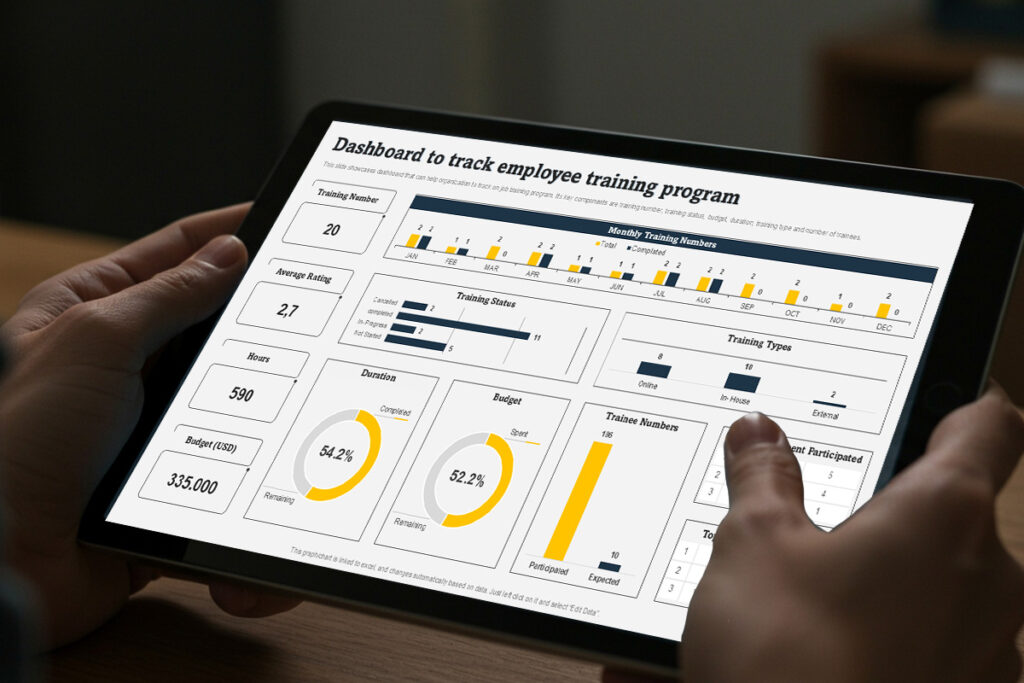
- Progress tracking & advanced analytics: Dashboards that show course completion, assessment scores, time spent learning, and engagement levels help managers monitor learning effectiveness. The best LMS platforms allow you to track learning against key performance indicators.
- Certification and compliance management: Especially in highly regulated industries such as healthcare, finance, and manufacturing, an LMS must automate compliance training and offer tools for issuing and tracking certifications.
- Interactive content modules: Modern learners expect more than static PDFs or video lectures. Interactive modules with quizzes, simulations, infographics, and drag-and-drop exercises increase attention and retention.
- Personalized learning paths & AI recommendations: Using machine learning, many LMS platforms now recommend courses based on employee roles, skill levels, and career goals. This personalization reduces wasted time and boosts engagement.
- Integration with HR systems: Your LMS should integrate with your human resource management system (HRMS), single sign-on tools, and performance review software. This seamless integration ensures data consistency and saves time.
- Gamification elements: Leaderboards, achievement badges, and progress scores turn learning into a motivating, game-like experience that drives higher adoption.
Benefits of Using an LMS for Employee Training

Adopting an LMS for employee training offers both immediate and long-term benefits:
- Significant Cost Savings
Traditional training is expensive. Between travel, venues, printed materials, and instructor fees, costs can spiral quickly. E-learning eliminates these expenses. According to IBM, they saved nearly $200 million after switching to e-learning.
- Scalability Across Teams and Borders
A cloud-based LMS allows organizations to train teams across different regions with standardized content. Whether you have five employees or five thousand, an LMS grows with your business without requiring proportional increases in trainers or infrastructure.
- Personalized and Adaptive Learning
Employees can learn at their own pace, revisit content, and choose formats that suit their learning style. Adaptive learning paths powered by AI adjust content difficulty based on learner performance.
- Measurable Outcomes and Performance Tracking
Training is no longer a black box. Businesses can now see the impact of learning on performance, skill acquisition, and productivity. Detailed analytics and reports allow for continuous improvement and better decision-making.
- Boosted Engagement and Retention
A LinkedIn Learning report showed that 94% of employees would stay longer at a company that invested in their development. An engaging LMS experience contributes to employee satisfaction and loyalty.
- Faster Onboarding
New employees can hit the ground running with standardised training modules. An LMS can streamline onboarding workflows, reducing ramp-up time and ensuring consistency in brand values and compliance training.
- Continuous Learning Culture
An LMS encourages upskilling and reskilling as part of the workplace culture. This culture of growth is essential in today’s economy, where skill demands evolve rapidly.
Companies Succeeding With LMS for Employee Training
Real-world success stories further illustrate the value of corporate LMS platforms:
- Deloitte created a global LMS system to deliver training in multiple languages across its workforce. The firm reported better knowledge retention and faster course completion rates.
- Laing O’Rourke, one of Australia’s largest construction firms, used LMS-delivered microlearning via TikTok-style videos. They moved from training dozens to reaching over 700 employees monthly.
- McDonald’s uses a combination of in-house LMS and microlearning to train thousands of employees daily on customer service, hygiene, and kitchen protocols.
These success stories demonstrate that a well-deployed LMS for employee training creates a measurable, repeatable impact at scale.
Challenges in Deploying LMS for Employee Training
Despite the advantages, deploying an LMS isn’t always a smooth ride. Common barriers include:
- Resistance to Change
Longtime employees or leadership may be hesitant about replacing face-to-face learning. Clear internal communication and showing early wins can mitigate this.
- Content Creation and Localisation
Developing high-quality, role-specific, and localised training materials can be time-consuming. Many organisations overcome this by using LMS content marketplaces or hiring instructional designers.
- Integration Complexity
Without proper planning, integrating an LMS with legacy HR systems can be a roadblock. Businesses must map out integration workflows during procurement.
- Low Engagement
Poor design or irrelevant content leads to low LMS engagement. Gamification, content variety, and management involvement are key to boosting interest.
- Maintenance and Scalability Issues
As the business grows, training needs diversify. LMS platforms must be flexible and constantly updated with new features and content to remain effective.
How EdiifyLMS Solves Training Challenges for Businesses
At Vigilearn Technologies, we understand the nuanced needs of modern businesses. That’s why EdiifyLMS is built to offer:
- An intuitive, mobile-first design: Employees can learn from their phones, tablets, or desktops. The user interface is designed for both digital natives and those new to e-learning.
- Interactive course builders: Admins can create quizzes, upload videos, embed documents, and schedule learning paths without needing coding skills.
- Real-time analytics: Track employee performance, progress rates, and training impact through visual dashboards.
- Automated certification management: Create compliance-based training cycles, re-certification reminders, and audit-ready reports.
- Deep HR system integration: Sync training records with employee profiles and performance systems for a unified view of growth.
- Personalised learning journeys: Employees receive AI-curated content recommendations based on their roles, previous scores, and career goals.
- Gamification and social learning tools: Learners earn badges, join peer groups, and participate in discussion boards to make training more engaging.
- Scalable hosting and support: Whether you’re training 50 or 5,000 people, our cloud infrastructure ensures fast, reliable delivery with 24/7 support.
Clients using EdiifyLMS have reported a 40% improvement in training participation and a 25% faster onboarding process. From micro-enterprises to large institutions, EdiifyLMS empowers businesses to build smarter, future-ready teams.
Curious how this could work in your business? Request a personalized LMS demo today or explore more on our homepage.
