
Across Africa, the conversation around digital education and workplace learning has shifted from “if” to “how fast.” Schools, universities, and corporations are realising that in a continent where the median age is under 20, learning cannot remain bound by traditional classroom walls or outdated training manuals. Digital transformation is no longer optional; it’s becoming the foundation for how Africans will access education and skills in the years ahead.
Consider the numbers: Africa’s e-learning market is expected to grow from $3.4 billion in 2024 to $7.7 billion by 2033, a compound annual growth rate of 9.1%. This surge is driven by increased smartphone adoption, improved connectivity, and governments’ efforts in pushing for curriculum digitisation. Yet growth brings new challenges. Schools often operate with tight budgets, while corporations must train workforces spread across cities, countries, and sometimes continents.
That’s why affordability and scalability matter. The most promising solutions for Africa are not the flashiest or most expensive, but rather those that strike a balance between cost-effectiveness and scalability. A school in rural Nigeria may start small with a single digital class module and later grow to serve thousands of learners. A bank in Kenya might begin with compliance training for staff and expand into continuous professional development for multiple subsidiaries. Without scalability, early investments in technology quickly become obsolete.
What Is an LMS and Why Does It Matter?

An LMS, or Learning Management System, is software that delivers, manages, and tracks learning experiences. Think of it as a digital classroom and training manager rolled into one. It allows institutions to upload courses, monitor progress, evaluate learners, and generate reports all in a single hub.
For schools, LMS platforms simplify teaching. A teacher can create lessons, share assignments, host quizzes, and give feedback online. Even in blended classrooms where students combine face-to-face lessons with digital work, an LMS ensures consistency. Learners benefit from access to resources anytime, anywhere, and teachers save time on administrative tasks.
For corporations, the benefits are equally powerful. From onboarding new employees to delivering compliance training, LMS tools reduce costs and improve consistency. A sales team in Lagos and another in Accra can access the same training module on product updates, ensuring a unified message across markets. Companies also get detailed analytics to measure training effectiveness; a level of insight traditional workshops rarely provide.
Without an LMS, schools and businesses rely on scattered tools: emails, WhatsApp groups, and paper manuals, which may work short-term but lack structure and scalability. Over time, this patchwork system drains resources and diminishes learner engagement. When designed for African contexts, an LMS can serve as both a cost-saver and a growth enabler.
Why Affordability and Scalability Matter in Africa
Affordability and scalability are not optional in Africa; they are survival factors. Governments in the region spend an average of 3.7% of GDP on education, and households cover nearly 39% of total education costs in low- and lower-middle-income countries, compared with just 16% in high-income countries. That leaves schools and families operating with thin margins, where every extra dollar spent must directly improve access and outcomes.
Corporations face similar pressures. Training budgets often contract during economic slowdowns, forcing HR and L&D leaders to maximise value from smaller allocations. Scalability ensures that as needs grow, the system grows with them. Imagine a school that pilots LMS use with one grade level. If the platform is scalable, it can later support all grades without needing to reinvest in a new system. Or a Pan-African company that expands from 500 to 5,000 employees, a scalable LMS architecture ensures seamless onboarding without system overload.
Affordable LMS Options for Schools
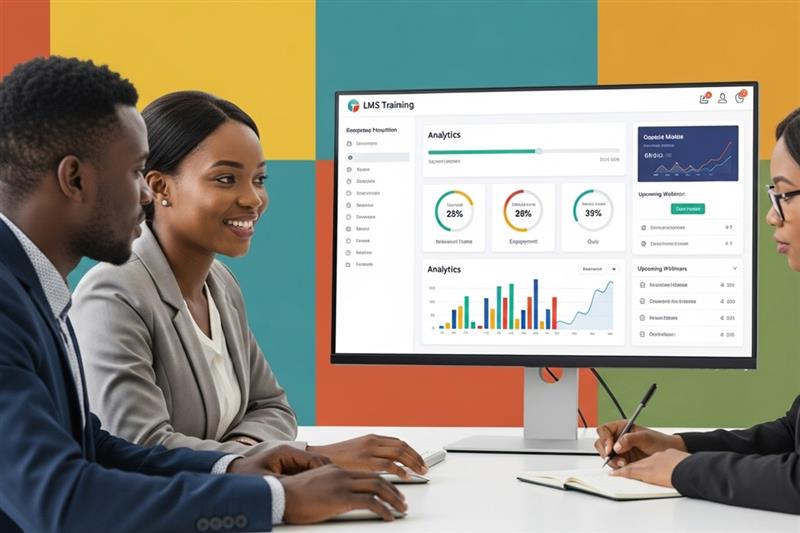
Simple Solutions for Budget-Limited Schools
African schools often face resource shortages: few devices, inconsistent connectivity, and limited IT staff. For these institutions, affordability is about more than just licensing fees. It includes ease of setup, minimal maintenance, and compatibility with existing devices.
Open-source platforms like Moodle provide flexibility without heavy costs. Localised platforms such as Learn Afrique or LMS for Africa have emerged to address context-specific needs, such as offline functionality and multilingual interfaces.
A growing number of schools are also adopting cloud-based platforms that require zero to minimal infrastructure. For example, cloud hosting eliminates the need for expensive servers or on-site technicians, reducing overhead significantly. EdiifyLMS, for instance, runs on a secure cloud environment, making it an attractive choice for schools with limited IT budgets but high growth potential.
Improving Student Engagement
An affordable LMS does not mean a stripped-down system. Even cost-friendly platforms can include interactive features that keep students engaged. Tools like gamified quizzes, multimedia lessons, and discussion forums foster active learning.
Case studies across Africa prove this point. In Malawi, tablet-based digital learning programs helped students achieve 4.2 months of literacy gains in just 13 months, delivering a social return of $106 for every $1 spent. While tablets are not LMS platforms, they show how even modest digital interventions can yield extraordinary impact when aligned with learner needs.
Blended learning also shines. Schools that use LMS platforms to combine in-person lessons with online assignments often report better learner satisfaction and improved academic results.
Scalable LMS Solutions for Corporations
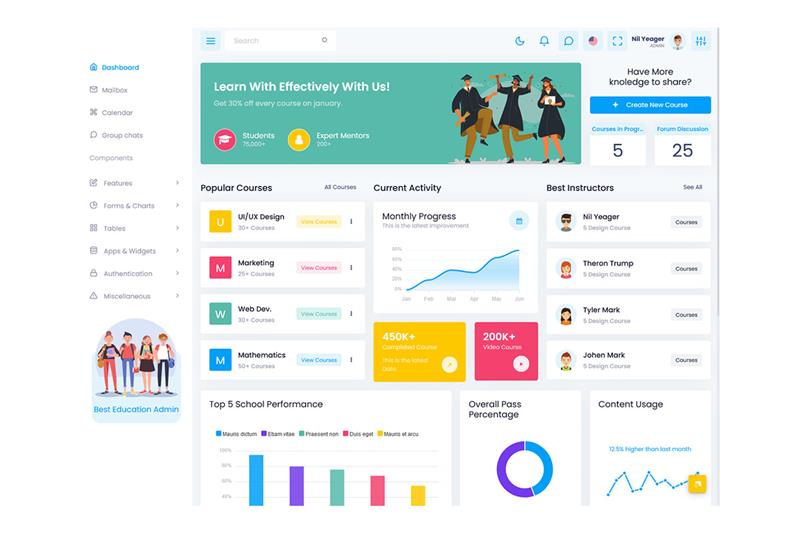
How Corporations Use LMS for Training at Scale
Corporations in Africa increasingly rely on LMS platforms for everything from compliance training to leadership development. A pan-African bank, for example, can roll out financial regulation updates across all branches simultaneously. Similarly, a logistics company can train drivers in multiple cities using standardised safety modules, ensuring consistency.
The flexibility to host various types of content, video lectures, interactive simulations, or live sessions means that LMS tools can adapt to different industries. And with mobile-first design, employees can access training even on basic smartphones, a critical factor given Africa’s mobile penetration.
Cost Savings vs Traditional Training
Traditional training is expensive. It requires physical venues, printed manuals, and travel logistics. By contrast, LMS systems slash costs. Employees access materials online, eliminating travel and accommodation expenses. Trainers record sessions once and reuse them across multiple cohorts.
A report by Sound Idea Digital in South Africa notes that LMS platforms not only reduce costs but also increase training efficiency by streamlining content delivery and tracking learner progress. The return on investment becomes even more apparent when corporations track productivity gains tied to training completion.
Challenges Without LMS
It’s worth pausing to consider the alternative: what happens when schools and companies avoid adopting LMS solutions?
- For schools: Teachers juggle multiple responsibilities, administrative work piles up, and students lack access to consistent resources. Rural students may be completely left out of digital opportunities.
- For businesses: Training remains fragmented, costly, and difficult to measure. Compliance risks grow when employees don’t consistently receive updated information. Talent retention suffers when career development opportunities are limited.
In both cases, failing to adopt LMS platforms widens the digital divide and creates inefficiencies that compound over time.
Key Features to Look For
When choosing an affordable, scalable LMS, institutions should prioritise features that directly address African realities:
- Mobile Access: With mobile devices as the primary gateway to the internet, LMS platforms must be mobile-first, lightweight, and offline-compatible.
- Reporting Tools: Analytics dashboards help schools track student performance and businesses monitor training ROI.
- Integrations: Seamless compatibility with HR systems, student information systems, and payment platforms reduces friction and costs.
- Multilingual Support: Given Africa’s linguistic diversity, platforms should support local languages where possible.
- User-Friendly Interface: Simplicity reduces the need for expensive IT training and encourages adoption across all age groups.
EdiifyLMS incorporates many of these features while staying affordable, making it a practical option for organisations that need to scale without compromising quality.
The e-learning market in Africa is expanding rapidly, with billions of dollars in projected growth. The institutions that act now, choosing platforms that balance cost with flexibility, will be best positioned to prepare learners and workers for the future.
At Vigilearn, we believe solutions like EdiifyLMS offer that balance: affordable, scalable, and designed to grow with you. Whether you’re a school administrator striving to engage students or a corporate leader looking to streamline training, the right LMS can make all the difference.
Explore more insights on our blog: LMS for African Schools: Features and The ROI of Employee Training Through an LMS. To see how Vigilearn can support your institution, visit our homepage or reach out via our contact page.
