
One of the most powerful ways to expand access to learning is through online education. And in Africa, where traditional schooling systems face resource constraints, infrastructure deficits and geography challenges, the promise of remote and digital learning is compelling. Yet implementing effective online education in Africa is far from straightforward.
The continent still grapples with major connectivity hurdles that limit how and when students can access educational content. In many parts of Africa, the idea of logging into a live lecture, downloading interactive modules or participating in virtual discussions remains aspirational rather than routine. For the millions of students in rural regions, irregular power supply, high data costs, poor network speed, and lack of appropriate devices often mean that the promise of online education remains out of reach. This means that for institutions, policymakers, and edtech providers, the core question is not simply whether online education can work in Africa, but how it can work given the realities of connectivity.
At Vigilearn Technologies, we believe online education in Africa can be truly transformative when it is built around local realities and supported by strong infrastructure, sound policies, and practical technology solutions.
Read More: How Edtech Can Help Bridge the Learning Gap in Emerging Markets
Understanding the Connectivity Challenge in African Education
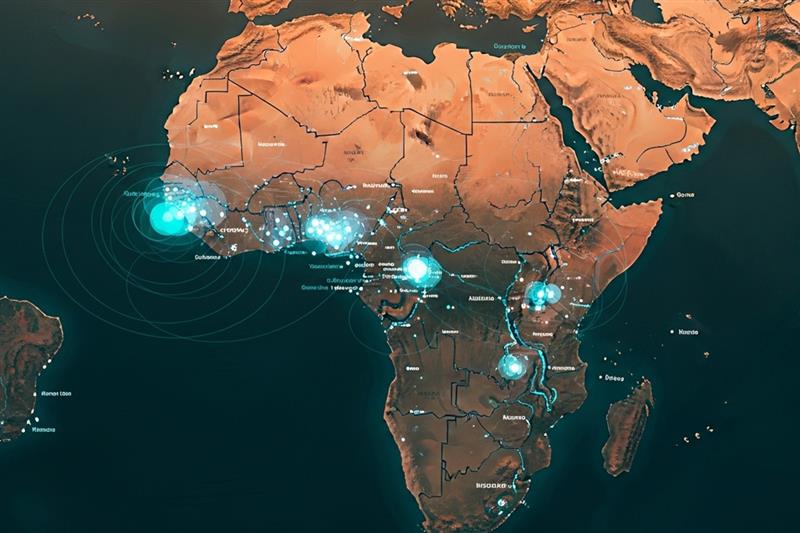
The digital divide in Africa is pronounced. According to a recent report, only about 38% of Africans were online in 2024, compared to the global average of 68%. Internet penetration and broadband access remain significantly behind those of many other regions, with direct implications for online education.
For example, a study published by UNESCO noted that broadband deployment is the “missing link” in enabling equitable access to education globally, and that less-connected regions such as sub-Saharan Africa face the steepest challenge.
Internet usage across African countries varies dramatically. Some countries in the northern and southern parts of the continent have penetration rates above 60-70 %, while others in central or eastern Africa remain under 30 %. For instance, a data table shows that countries like Uganda and Rwanda had internet penetration rates of just over 20 per cent in recent years.
In rural versus urban settings, the gap is even larger. Urban centres often have fibre or 4G/5G coverage, relatively reliable power, and more device availability. Whereas rural areas may rely on very poor mobile network coverage, have erratic electricity supply, low-end phones and high data costs. All of these hamper participation in online learning.
High data costs are a major barrier. According to the World Bank’s Digital Economy for Africa report, in 2019, one gigabyte of data cost on average 10.5 % of monthly gross national income per capita in Africa; and by 2021, this had dropped to around 5 % but that remains much higher than in many developed countries. Unreliable or absent electricity further complicates matters: without a stable power supply, students cannot dependably join synchronous learning or charge devices. Meanwhile, device access is also limited: many families cannot afford tablets or quality computers and rely on low-spec smartphones or shared devices, which may be insufficient for rich online content.
All of these factors combine to create a situation where online education in Africa must overcome not only pedagogical and instructional design challenges but also substantial connectivity and infrastructure hurdles. Without addressing these, efforts to scale online learning risk leaving behind large numbers of learners.
Government and Private Sector Initiatives Improving Internet Access
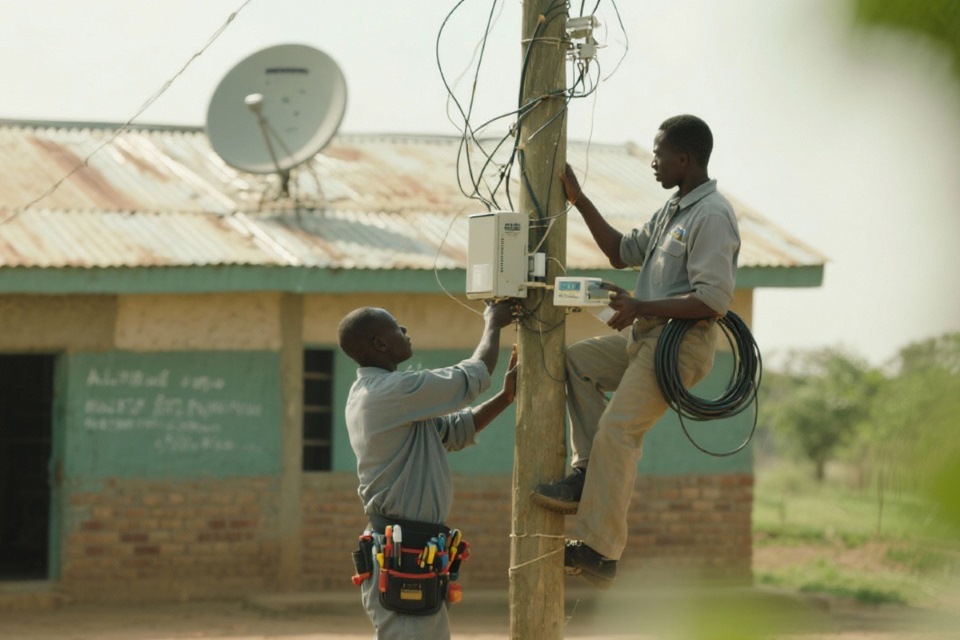
Building the connectivity foundation for online education requires coordinated public and private sector action. Across Africa, several national strategies and collaboration models are already underway.
National broadband/ICT plans
Consider Kenya. The “Kenya Digital Economy Acceleration Project (KDEAP)” is a multi-phase initiative (2023–2028) supported by the World Bank with US$390 million, which aims to expand access to high-speed internet, improve education delivery and build digital skills. Component I of the project explicitly focuses on expanding the national broadband backbone and improving last-mile connectivity for schools and institutions. Similarly, Kenya’s national digital master plan includes deploying 100,000 km of fibre optic infrastructure and 25,000 public Wi-Fi hotspots, among other targets.
In Nigeria, the government launched the National Broadband Alliance for Nigeria (NBAN) under the auspices of the federal Ministry of Communications. It aims to raise broadband penetration to 70% by 2025 and is backed by the National Broadband Plan (2020-2025). As of April 2025, Nigeria’s broadband penetration rate stood at 48.15%.
Private sector & NGO partnerships
Telecoms and technology firms are increasingly partnering with governments and NGOs to drive connectivity for students. Affordable data packages for students or “zero-rated” education services are examples of interventions. NGOs are working in some regions to subsidise connectivity or provide devices for underprivileged schools.
Satellite and other innovative internet delivery models
Emerging methods such as satellite internet are playing a role. While still constrained by cost and regulatory hurdles, satellite services (for example, by providers such as Starlink) are increasingly present in Africa and can serve remote areas underserved by fibre or mobile networks.
Together, these initiatives show that improving connectivity is not simply about laying fibre; it involves multiple actors, policies, funding mechanisms and innovation. For online education in Africa to scale, aligning with these broader connectivity efforts is critical.
Low-Bandwidth Learning Solutions for African Students
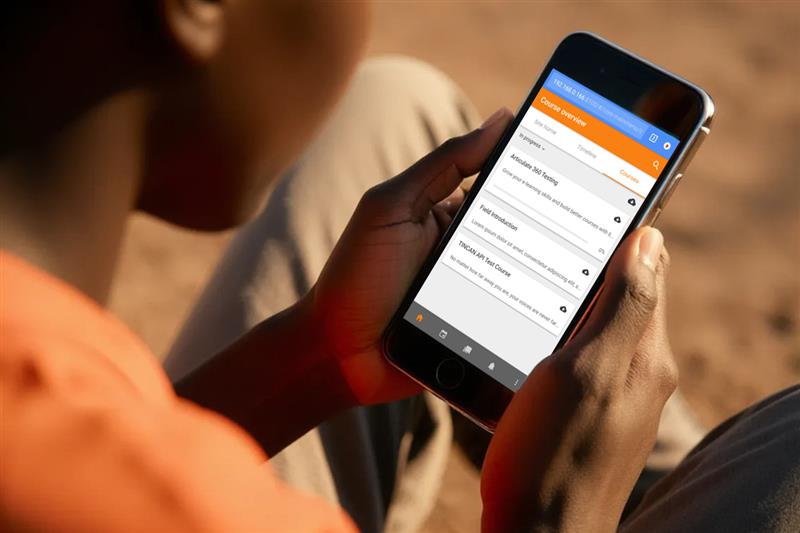
Given that many students in Africa will continue for some time to learn under constrained connectivity conditions, online education in Africa must adapt. Designing learning systems that work under low bandwidth, limited devices, and intermittent power is essential.
Lightweight LMS platforms and mobile-friendly designs
Choosing learning management systems (LMS) and platforms that are efficient in data usage helps. Mobile-friendly design is vital since many students access via smartphones and may have slow networks. Platforms must avoid heavy video streaming by default and instead provide optimised content for low-speed environments.
Offline learning modes and SMS-based platforms
Offline modes are particularly important. For instance, downloadable content that can be accessed without a live connection (USB drives or pre-loaded apps, for example) is one strategy. SMS-based or USSD-based educational platforms, which rely on simple text interfaces rather than full web browsers, also serve learners in very low-connectivity settings.
Examples of edtech tools built for low connectivity
One example is Kolibri, an open-source offline education platform designed to deliver high-quality content in areas without reliable internet. Another is Eneza Education, which delivers educational content via mobile phone and has operated in African markets, focusing on low-data usage. These tools reflect how edtech providers can make conscious choices about connectivity constraints.
Practical design considerations
When creating online education for Africa, some practical design principles include:
- Prioritising text and lightweight multimedia over high-definition video.
- Allowing asynchronous learning so that students can download content during periods of connectivity and study offline later.
- Enabling dynamic caching and local content servers for schools or community centres.
- Building adaptive modules that detect connection speed and adjust accordingly.
- Providing mechanisms for device sharing or community computer labs to broaden access.
By focusing on user experience in low-bandwidth settings, online education in Africa becomes not just feasible but effective. At Vigilearn, we emphasise inclusive design that makes sense for the connectivity context.
Read More: Managing Large Online Courses: Tech Solutions for Student Registration and Tracking
Building Digital Infrastructure for Long-Term Growth

While low-bandwidth solutions help in the short-to-medium term, building robust digital infrastructure is essential for the long term. For online education in Africa to shift from niche to mainstream, investment in infrastructure must accelerate.
Shared data centres, cloud platforms and community Wi-Fi zones
Universities, governments and private providers can collaborate to build shared data centres. These reduce latency, increase reliability and lower cost per user by pooling resources. Cloud platforms tailored to African markets can host learning content closer to students. At the community level, Wi-Fi zones in schools, libraries, and community centres provide hubs where learners can access content even if their home connection is poor.
Public-private partnerships and sustainable funding models
Governments alone cannot finance all infrastructure. Public-private partnerships (PPPs) are critical. Telecom operators, device manufacturers, content providers and local governments need to align incentives. Financing models might include infrastructure sharing, subsidy frameworks for rural connectivity, and performance-based contracts. The World Bank’s Digital Economy for Africa initiative emphasises closing the connectivity gap through investment in open digital public infrastructure (DPI) and enabling private sector participation.
Policy, regulation and enabling environment
Infrastructure investment thrives when regulatory and policy frameworks are clear and supportive. For example, rights of way for fibre, spectrum allocation for wireless networks, universal service funds for underserved regions and tax incentives for edtech device imports all matter. Without a stable enabling environment, connectivity infrastructure remains constrained.
Power and energy infrastructure
Connectivity infrastructure must go hand-in-hand with reliable power. Many parts of Africa face erratic electricity supply. According to research, only about 43 % of Africans have a reliable power supply. Therefore, infrastructure planning for online education must account for backup power, solar solutions and devices that are energy-efficient.
In short, building the infrastructure backbone, connectivity, device access, power, policy, and funding, sets the stage for scaling online education across the continent.
Future of Online Education in Africa: Bridging the Gap Through Innovation
Looking ahead, several emerging technologies and trends offer promise for strengthening connectivity and thus online education in Africa.
5G rollout and next-generation wireless
As 5G networks become more widespread, they offer higher speeds and lower latency, which can enable richer educational experiences such as interactive video, virtual labs and real-time collaboration. However, cost and device compatibility remain issues. Policymakers and providers must ensure that rollout strategies include rural and underserved areas, not just urban centres.
Renewable energy and edge computing
Combining renewable energy (solar, microgrids) with computing at the edge (local servers near communities) can reduce dependence on unreliable grids and long-distance data hops. For example, local caching servers powered by solar can host course materials and deliver them to students without waiting for full internet access.
Local tech startups and content for African contexts
Startups across Africa are increasingly creating locally relevant digital content, mobile-first platforms and adaptive learning systems. These are important because connectivity is only one side of the equation; relevance, language, and pedagogical design matter too. Local solutions ensure that online education in Africa is not just a replica of Western systems but is adapted to the local context.
Data analytics, AI-enabled offline systems
Even in low-connectivity settings, AI-enabled systems that operate offline or semi-offline can personalise learning, provide feedback and monitor progress. As connectivity improves, these systems can synchronise when online. This hybrid model offers a pathway for resource-constrained environments.
Actionable Recommendations
For policymakers:
- Prioritise broadband access targets for rural schools and ensure transparency and accountability of universal service funds.
- Invest in device-access programmes (e.g., subsidised tablets, smartphone lending) and energy infrastructure that supports online learning.
- Develop policies that reduce data cost burdens for students (e.g., zero-rating educational content, data subsidies).
- Encourage open educational resources (OER) and standards that support low-bandwidth delivery modes.
For edtech providers and institutions (including Vigilearn):
- Design platforms from the ground up for low-bandwidth and mobile-first contexts.
- Offer offline access, allow downloads, optimise video size, and make UI lightweight and intuitive.
- Partner with local telecoms/internet providers for student-friendly data bundles and connectivity solutions.
- Work with schools to establish local hubs or community access points so device or home connectivity gaps are mitigated.
- Collect data on connectivity-related impediments (device access, network speed, power outages) to refine the approach iteratively.
Online education in Africa holds enormous potential to transform access, equity and outcomes. But realising that potential requires navigating significant connectivity challenges.
At Vigilearn Technologies, we are committed to making online education in Africa practical, inclusive and scalable. By aligning instructional design to connectivity realities, partnering with infrastructure providers and engaging policymakers, we can help close the gap for African learners. The time to act is now.
Visit our homepage or get in touch to explore how we can work together in Africa’s online education journey.
