
Retention is the quiet crisis facing many universities, especially in Africa, where growing demand and constrained capacity create pressure at every stage of the student life cycle. Students arrive eager but face economic shocks, unclear administrative processes, weak academic advising, poor communication, and systems that treat them like entries on a spreadsheet rather than people with changing needs. Those frictions add up. When a university loses a student, it loses tuition, reputation, and the chance to deliver on its promise to the community.
The data help us see the scale. Gross tertiary enrollment across much of sub-Saharan Africa remains well below global averages; even as access expands, completion rates lag, and dropout spikes in later years are common. Low completion and thin graduation pipelines are not just statistical curiosities; they represent real students who have left their studies, often for reasons that could have been addressed with earlier, more personalised support.
Personalised outreach, timely, relevant, and human, reduces attrition. Institutions that move from reactive casework to proactive, data-driven engagement can significantly improve persistence and attainment. That is where a modern Student Relationship Management system, or CRM for higher education, becomes pivotal: it centralises communication, automates routine support, and turns institutional data into early warnings and targeted actions.
Read more: Integrating Learning Management System with University CRM
Why student retention matters

Retention matters for three interlocking reasons: student outcomes, institutional sustainability, and national development. For students, leaving before completing a credential often means wasted time, debt without a degree, and stalled career prospects. For institutions, every student who stops attending represents lost revenue and a damaged brand; the cost of recruiting a replacement student is usually higher than keeping the one you already have. For countries, the failure to graduate more students undermines workforce readiness and the social returns expected from investments in higher education. Inside Higher Ed and World Bank analyses emphasise that retention is not a soft HR metric; it is core to institutional mission and public policy.
In African contexts, the problem is sharpened by resource constraints. Gross tertiary enrollment ratios in several African regions remain low and uneven, and completion rates are lower than global averages. Those gaps mean that improving retention in existing institutions is one of the fastest ways to increase skilled graduates without multiplying campuses overnight. A targeted retention strategy, therefore, delivers outsized impact.
Role of CRM in student engagement
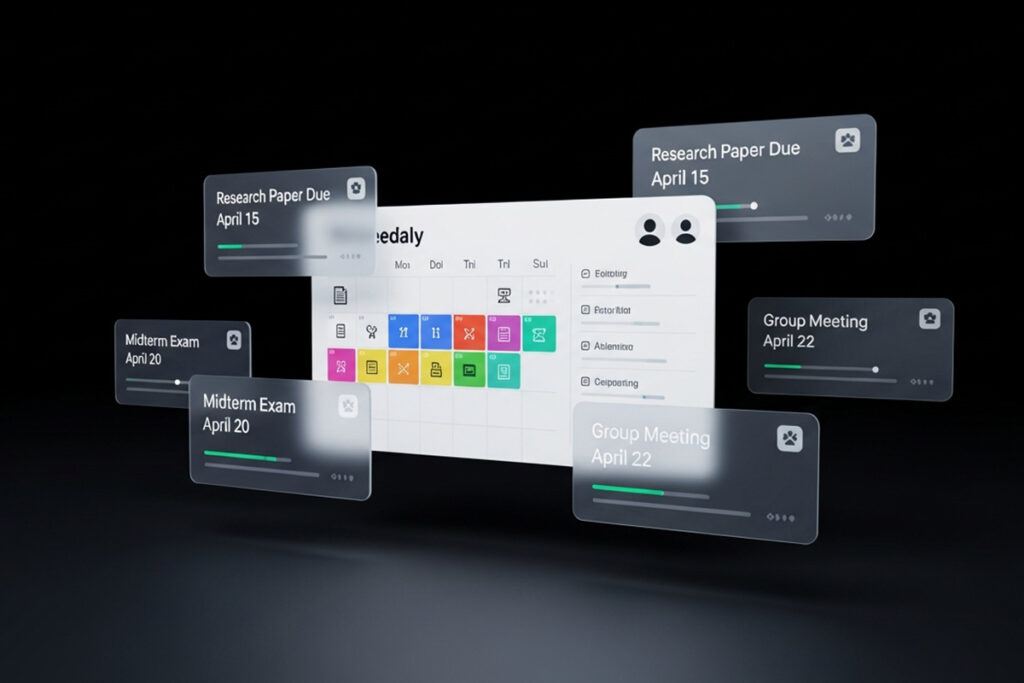
At its core, a CRM for higher education is a single source of truth for student interactions. It collects contact details, communication history, academic records, support requests, event attendance, and behavioural signals, then allows teams to act from that consolidated view.
Centralised communication: email, SMS, WhatsApp and more. Students live in messaging apps. When universities keep outreach siloed, one team using email, another sending SMS from a different platform, and counselling notes saved in a separate folder, messages become inconsistent or missed. Modern CRMs integrate email marketing, SMS gateways, and business WhatsApp so every outreach thread is visible in one timeline. That continuity reduces duplication and keeps conversations human and coordinated. HubSpot and other enterprise CRMs now offer WhatsApp and SMS integrations that feed messages into a shared inbox and log them against student records.
Tracking every interaction for proactive intervention. A registration hold, a failing midterm, or an unreturned counselling form are small signals that, when aggregated, point to risk. CRMs log those signals and make them actionable: advisors can see which students missed onboarding, which students attended tutoring, and which students have not logged into the LMS for several weeks. That traceability enables teams to intervene early and precisely rather than waiting until a student stops showing up.
Automating student support through CRM
Automation is how institutions scale care without losing personal touch.
Academic milestone reminders. Simple automations cut no small figure. Automatic reminders for course enrollment windows, bursary deadlines, clearance checks, and graduation application dates reduce administrative dropout. A CRM can build workflows that send calendar invites, follow up when a student does not respond, and escalate to a human advisor if a task remains incomplete. These workflows protect students from missing critical deadlines.
Chatbots and 24/7 support. Many students need quick answers at odd hours: “When is registration?” “How do I pay my fee?” Chatbots connected to a CRM or to your student portal answer those questions round the clock and create a ticket when a human follow-up is required. They also reduce the burden on call centres and help desks so staff can focus on complex cases.
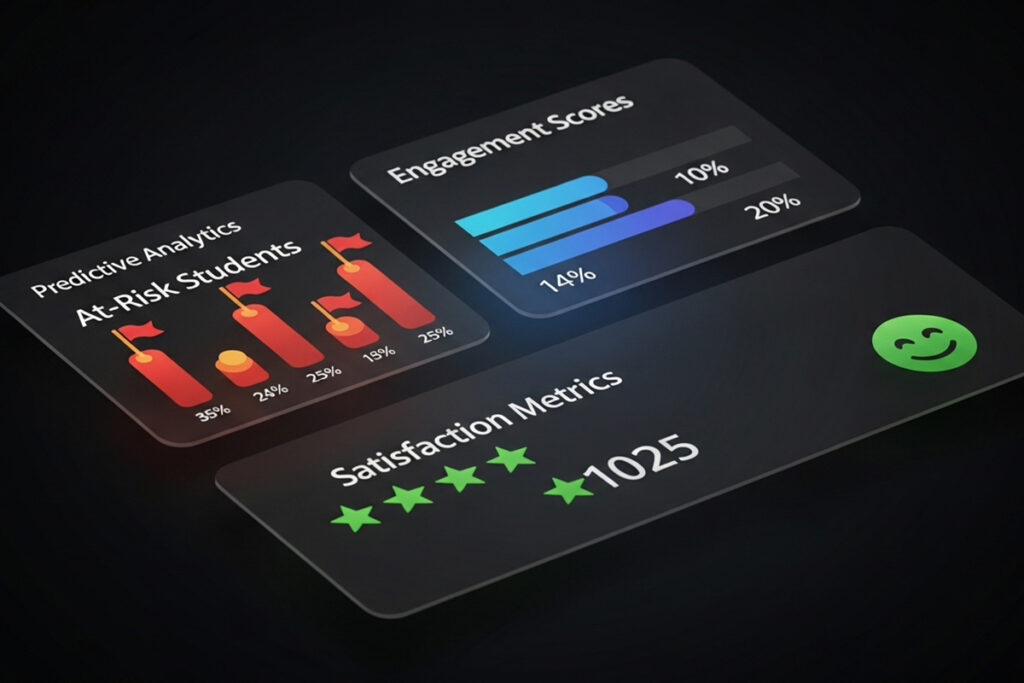
Predictive analytics to flag at-risk students. The step from logging activity to forecasting risk is where CRMs deliver the highest value. Modern systems use behavioural data, grades, attendance, and engagement scores to produce risk profiles and triggers. When a predictive model flags a student as at-risk, the CRM can automatically create an outreach task assigned to an advisor, attach suggested conversation scripts, and record the outcome for later model tuning. Industry analysis shows AI and analytics are increasingly embedded in CRMs to identify warning signs and recommend interventions.
Data-driven insights for retention success

If a CRM is a great filing system, analytics are the lens that turns records into strategy. Institutions should track a small set of actionable metrics and build routines around them.
Engagement score. A composite index combining LMS logins, attendance, event participation, and message response rates. Use it to segment students into cohorts for differentiated outreach.
Satisfaction and experience surveys. Short pulse surveys after registration, midterm, and at semester’s end reveal friction points. Combine survey responses with CRM records to spot systemic problems, for example, if a certain course or section shows low satisfaction and the same cohort shows higher dropout intent.
Attendance and performance reports. Tie attendance data to grade progression. Early-alert systems that blend attendance and assessment outcomes give advisors concrete signals for outreach.
Conversion and intervention tracking. Measure not just outreach volume but outcomes. Which interventions prevented withdrawal? Track the sequence: alert → outreach → support appointment → re-enrolment. That loop lets you learn what works and scale it.
EDUCAUSE’s student success research and tool catalogue provides frameworks for how to measure the right things and design feedback loops that change behaviour rather than just produce dashboards. Integrating CRM data with student success tools and institutional data warehouses ensures decisions are evidence-based and auditable.
Practical CRM workflows that reduce attrition
Here are workflows you can implement in the next quarter.
Onboarding funnel.
When a student accepts an offer, trigger a welcome sequence: a personalised email with next steps, an SMS reminder to upload documents, and a WhatsApp group invitation for peer onboarding. Flag non-responders after seven days for advisor outreach.
Academic risk pipeline.
Grade import triggers a rule: if a student’s average drops below a threshold, assign them to a tutor and schedule a follow-up meeting in the CRM. Log outcomes and close the loop.
Financial check-in.
Students with unpaid tuition after two reminders are nudged by automated messages with payment plan options. If unpaid after a third notification, the CRM schedules financial aid counselling.
Well-being check.
Combine LMS inactivity for more than two weeks and missed assignments to trigger a mental-health check by student services. Record referrals and monitor outcomes.
Implementing CRM: tips and pitfalls
Start with the student journey, not the software. Map the high-value moments, offer acceptance, first assessments, mid-term, financial deadlines, graduation, and ask what data you need to support each moment. Technology must follow clear processes and defined roles.
Integrate, don’t duplicate.
CRMs are powerful when they connect to LMS, SIS, finance, and exam systems. Avoid creating a parallel record system that will quickly get stale.
Governance and privacy.
Student data is sensitive. Define access controls, retention schedules, and consent flows. Ensure your CRM vendor supports role-based access and robust encryption.
Measure impact.
Define KPIs before you start: improved first-to-second-year retention, reduction in no-show at registration, and time to resolve support tickets. Run pilot programs and measure rigorously.
People and culture matter.
A CRM will not fix a culture of silos. Train advisors, faculty champions, and administrative staff. Ensure workflows ease their work, not add steps.
