
Applicant drop-off plays out in many ways, but in most cases, a prospective student fills out an application form, reviews and clicks submit, and then somehow disappears from the admission funnel. No documents uploaded. No payment made. No enrollment. This is one of the most misunderstood problems in university admissions.
Is it a lack of seriousness or commitment on the applicant’s part? That assumption often misses the real issue.
Behind many incomplete journeys is not low intent, but friction. Students start applications with genuine interest, sometimes after weeks of research, conversations with family, or saving for fees. When they stall, it is often because the process becomes unclear, complicated, or overwhelming. Multiple portals, unclear next steps, delayed communication, or manual follow-ups can quietly push even motivated applicants away.
The gap between form submission and enrollment does not come without consequences; universities miss out on potential revenue, and admission teams waste valuable time chasing dead leads. Worse still, leadership teams may underestimate demand, simply because interested students fell out of the system unnoticed.
Understanding why applicant drop-off happens after form submission is the first step toward fixing it. More importantly, it helps institutions redesign their processes around clarity, speed, and trust, which are the factors students care about most at this stage.
Read more: Why Manual Admission Processes Are Costing Universities Time and Money
Where Applicant Drop-Off Happens Most
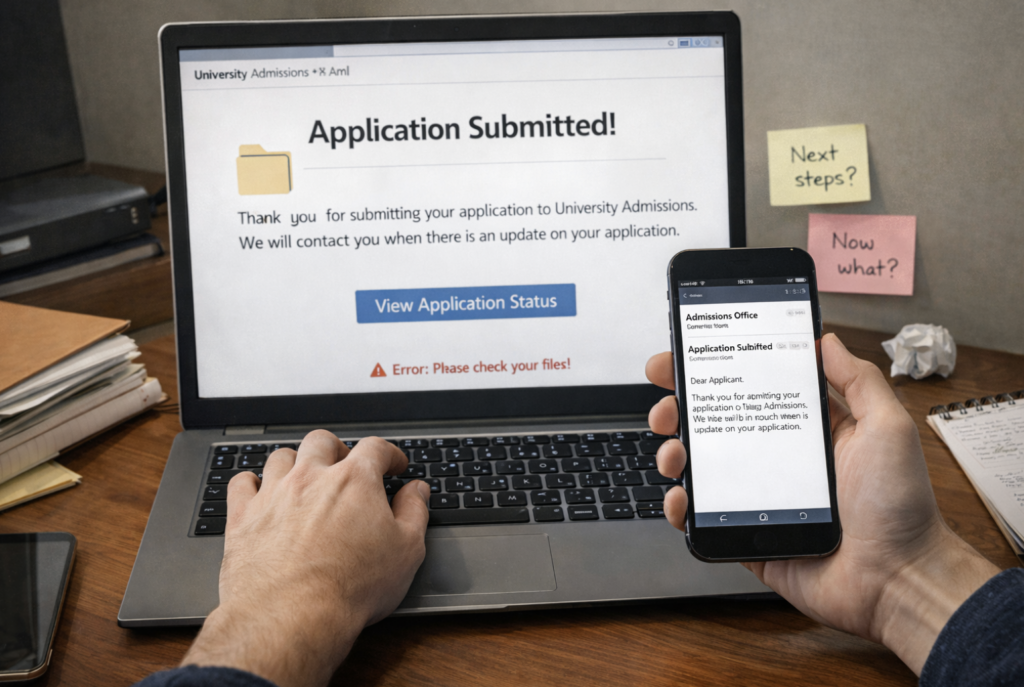
Applicant drop-off rarely happens at random. It follows predictable patterns across the admissions journey, especially after the initial excitement of form submission fades.
Post-form submission stage
One of the most common points is immediately after submission. Students expect confirmation, guidance, and reassurance. When they receive nothing beyond a generic email, uncertainty creeps in. They begin to wonder if their application was received, what happens next, or whether they should be doing something else.
Document upload stage
Document upload is another major friction point. Requirements are often unclear, formats are inconsistent, and portals are not always mobile-friendly. For many applicants, especially international or working students, gathering transcripts, references, and identification takes time. Without reminders or visible progress indicators, student application drop-off increases quietly.
Payment stage
The payment stage is equally sensitive. Unexpected fees, limited payment options, or technical issues can cause hesitation. If a student encounters a failed transaction and receives no immediate support, the application often stalls indefinitely.
Waiting period
Long waiting periods are a recipe for anxiety, which leads to silent exits. When applicants submit everything and hear nothing for weeks, enthusiasm declines. Without follow-ups or status updates, they may accept offers elsewhere or abandon the process altogether.
Why Student Application Drop-Off Increases
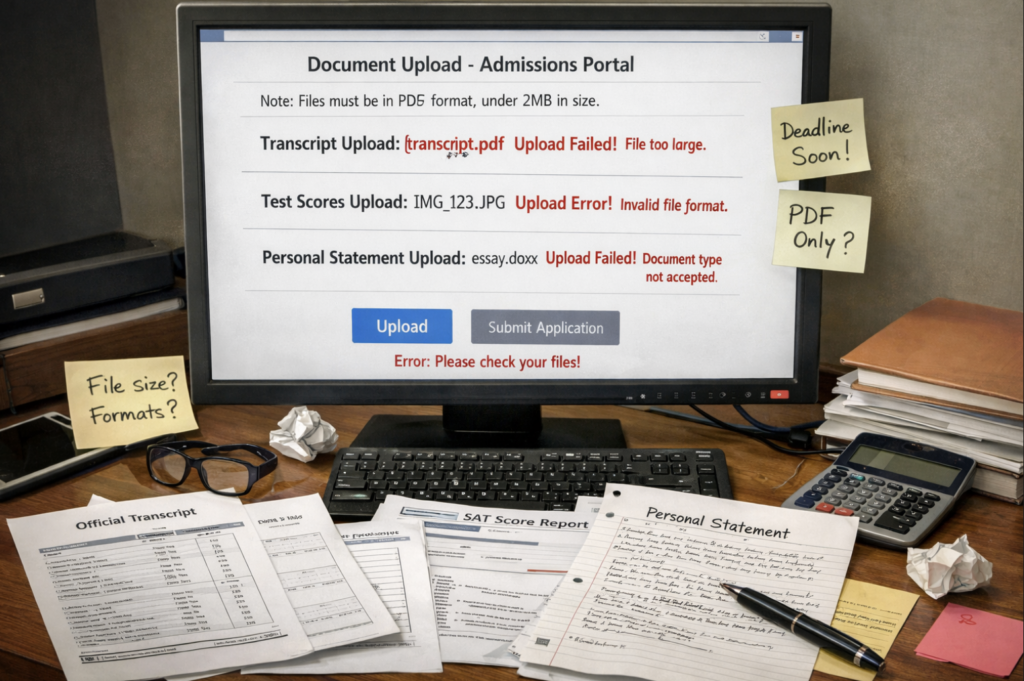
To understand student application drop-off, it helps to look inward at how admissions processes are designed and managed.
Many institutions still rely on manual follow-ups. Emails are sent individually, spreadsheets are updated by hand, and reminders depend on staff availability. When teams are overwhelmed, responses get delayed. From the student’s perspective, silence feels like rejection or disinterest.
Manual status tracking also creates gaps. Applicants cannot see where they stand, what is pending, or how long the process might take. This lack of visibility leads to confusion and anxiety, which contributes directly to incomplete applications.
Complex application steps compound the problem. When instructions are scattered across emails, PDFs, and portals, students struggle to piece everything together. Even highly motivated applicants can lose momentum if the process feels unnecessarily complicated.
At the core of this issue is trust. Students need to feel guided, informed, and supported. When systems fail to provide that experience, admission funnel leakage becomes inevitable.
The Impact of Admission Funnel Leakage

Admission funnel leakage affects far more than enrollment numbers. It distorts the entire admissions operation.
Rising Cost per Enrolled Student
First, lower conversion rates mean higher costs per enrolled student. Marketing budgets stretch further to attract new applicants, while existing leads quietly disappear. This inefficiency is rarely visible at first glance but becomes clear over time.
Burnout and Operational Strain
Second, admissions teams experience burnout. Constantly chasing applicants, responding to repeated questions, and reconciling incomplete data drains energy and morale. Instead of focusing on meaningful engagement, staff spend time firefighting avoidable issues.
Poor Reporting and Unreliable Forecasting
Reporting accuracy also suffers. When incomplete applications are not tracked properly, forecasting becomes unreliable. Leadership teams struggle to plan class sizes, allocate resources, or project revenue accurately.
Missed Enrollment Opportunities
Most importantly, admission funnel leakage represents missed opportunities. Every stalled application is a student who was interested enough to start, but not supported enough to finish.
Read more: Building Trust in Online Admissions: How Universities Can Reduce Fraud
How Automation Reduces Applicant Drop-Off
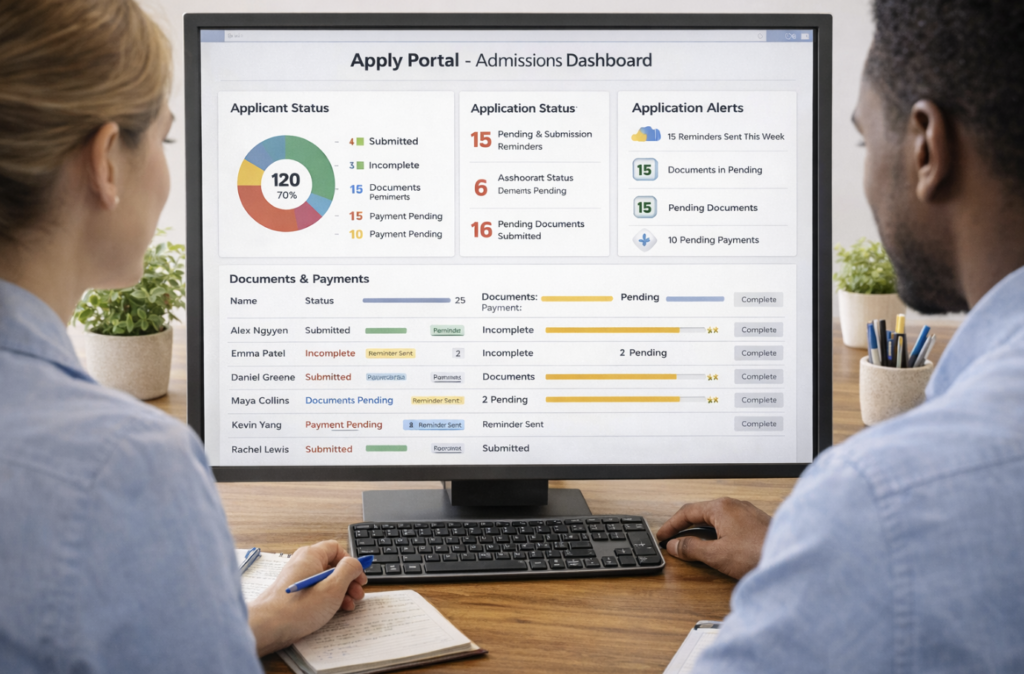
Automation plays a critical role in reducing applicant drop-off. Universities need to work smarter and employ systems designed around the applicant experience.
Automated reminders gently prompt applicants to complete missing steps without feeling intrusive. Timely nudges help prevent applications from going cold.
Clear application status tracking builds confidence. When students can log in and see exactly what has been received, what is pending, and what comes next, uncertainty disappears. This transparency alone significantly reduces the number of incomplete applications.
A central applicant dashboard gives admissions teams full visibility across stages. Instead of juggling tools, staff can see bottlenecks, identify stalled applications, and intervene strategically.
Faster response cycles also matter. Automated acknowledgements and templated responses ensure applicants feel seen, even before a staff member engages personally. Over time, this data-driven approach enables institutions to consistently spot trends, refine processes, and improve outcomes.
How Vigilearn’s Apply Portal Solves Applicant Drop-Off
Vigilearn Technologies built the Apply Portal to address some of the fundamental challenges of applicant drop-off by removing the frictions that plague both prospective students and the institution.
With Apply Portal, applicants do not have to guess where they are in the admission funnel. They receive live status updates and automated nudges that prompt them to complete applications at the right moment.
For administrators, the Apply Portal provides full visibility across every stage of the admissions journey. Teams can track progress, identify bottlenecks, and respond faster, all from a single dashboard. This reduces manual workload and allows staff to focus on high-value interactions.
The result is better enrollment outcomes, cleaner data, and a more professional admissions experience that reflects the institution’s commitment to its students. Learn more about Vigilearn’s broader education technology ecosystem at https://vigilearn.com/ or explore practical insights on admissions and digital transformation on the Vigilearn blog at https://vigilearn.com/blog/.