
A sudden spike in interest is good news. When a recruitment campaign works, when a new program fills press mentions, or when policy changes open doors, institutions see a high application volume, but that success exposes weak processes fast. Manual spreadsheets, email threads, and bespoke PDFs may have carried a small office for years, but the moment tens of thousands of files arrive at once, those stopgaps break. Work piles up, follow-ups slip, and the applicant experience frays.
Admissions teams know how to read people, evaluate fit, and protect academic standards. They are not built to become high-speed data processors overnight. Yet the pressure to keep pace with demand lands on them: more records to verify, more decisions to document, more communications to send. The result is familiar: delayed replies, inconsistent statuses, and staff burnout.
Read more: Building End-to-End Student Automation from Lead to Graduation
The good news is this: growth signals opportunity, and opportunity is manageable. Universities that treat a high application volume as a systems problem instead of a staffing emergency find ways to preserve quality and speed. They redesign workflows, centralise data, and automate repeatable tasks so human expertise stays focused where it matters most.
High application volume signals growth and breaks weak processes
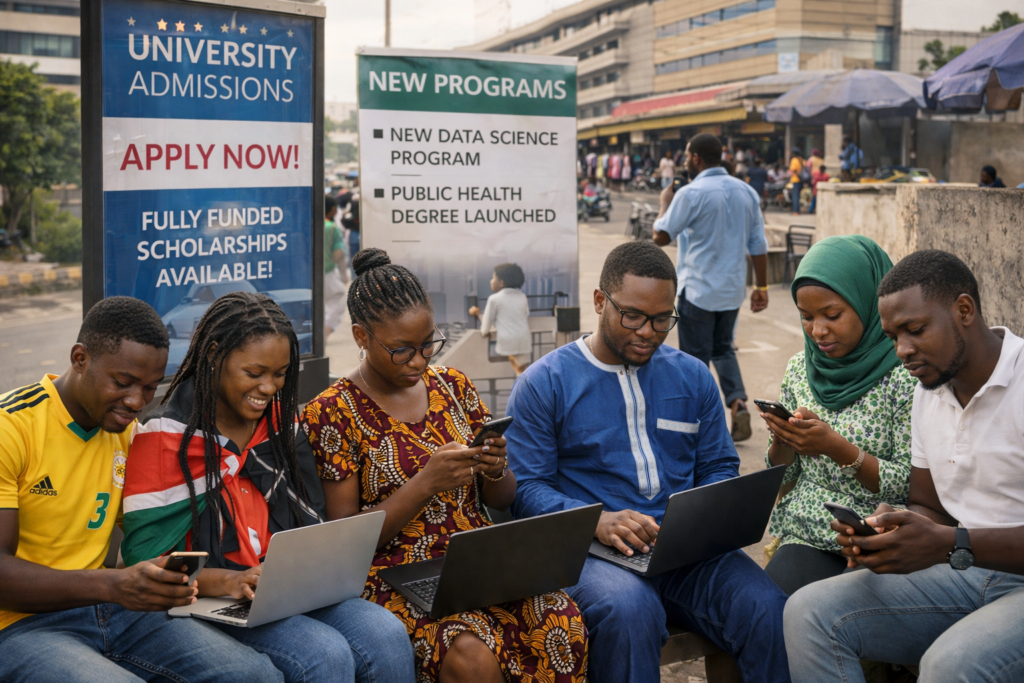
A large number of applications usually means your marketing, programs, or accessibility efforts are working. But growth also functions like a stress test. Manual processes that were once “good enough” begin to cause bottlenecks. Review committees accidentally miss dossiers. Admissions staff spend hours reconciling duplicate records. Applicants receive conflicting messages about their status. All of this damages conversion rates and institutional reputation, sometimes permanently.
Real-world data backs the trend: several large application cycles in recent years show meaningful year-on-year increases in first-year applicants and total submissions, creating real operational strain for universities that were unprepared. Institutions that planned only for steady intake found themselves scrambling when applications scaled rapidly.
What causes a high application volume?
Understanding why applications spike makes the response tactical. Common triggers are:
- New programs and intakes. Launching an attractive major, certificate, or flexible-learning pathway reaches new audiences quickly.
- High-performing marketing campaigns. Targeted digital ads, influencer partnerships, and simplified application forms reduce friction and increase conversion.
- Policy changes. Shifts in financial aid, admission rules, or regional agreements can redirect applicant flows overnight.
- Wider geographic reach. Removing barriers to international applicants or partnering with national platforms multiplies submissions.
Each cause suggests different fixes. A new program may need clearer stage definitions for program-specific checks. A marketing-driven surge requires automated communications to keep prospects engaged.
Problems caused by high application volume

When a large number of applications arrive without proper systems, the following issues commonly appear:
- Missed follow-ups. Incomplete files languish, and applicants withdraw.
- Delayed reviews. Committees get overloaded, and decision timelines slip.
- Inconsistent applicant status. Multiple spreadsheets or human judgment lead to contradictory updates.
- Staff burnout. Repetitive manual tasks drain morale and increase error rates.
These problems are not solved by goodwill; they are solved by process design and technology that supports scale.
Why hiring more staff alone does not solve the problem
The instinct to hire is natural. More hands should move more files. Experience shows otherwise. Hiring adds headcount complexity: recruitment lead time, onboarding and training, payroll cost, and still the same inefficient process to operate. Even a large temporary team will be slowed by manual reconciliation, inconsistent naming conventions, and unclear stage definitions. In short, hiring increases capacity but not necessarily throughput if the underlying system remains broken. This is why universities are increasingly prioritising admissions scalability through technology and process redesign over raw headcount expansion.
Read more: Why Manual Admission Processes Are Costing Universities Time and Money
Systems you need to handle a high application volume

To scale without chaos, institutions need a small set of dependable systems and clear operating rules:
Central applicant database
A single source of truth eliminates duplicate records and conflicting status updates. It should hold application materials, verification flags, reviewer notes, and communication logs. A central database reduces time wasted reconciling spreadsheets.
Workflow automation and business rules
Automate routine checks: document completeness, fee confirmations, transcript receipts, and standard rejection or conditional offer letters. Workflows route only the files that need human judgment to reviewers, preserving expert time.
Clear stage definitions
Define admission stages precisely. What does “screened” mean versus “ready for committee”? Who can move an applicant from “pending documents” to “complete” and under what conditions? Clear definitions reduce errors and speed decisions.
Real-time leadership reporting
Dashboards that show queue lengths, time-in-stage metrics, and conversion rates enable leaders to make operational decisions early. Trend alerts, for instance, a sudden spike in one program allows targeted interventions rather than blanket panic.
These components create admissions scalability. They do not eliminate human judgment; they focus it.
How to implement changes without disrupting current operations
Start with low-friction wins. Automate communications for routine statuses first. Centralise data ingestion next: build or buy an applicant portal that handles uploads, validation, and duplicate detection. Standardise review forms so faculty see the same fields and rubrics. Use dashboards for transparency, not micromanagement. Pilot with one program, measure time-in-stage reductions, capture feedback, and expand.
For evidence and guidance on modernisation approaches and administrative simplification, the sector’s technology and research bodies provide practical frameworks. They consistently recommend simplifying administrative overhead and investing in data-driven systems that reduce manual labour and error.
How Vigilearn Technologies helps universities scale admissions

At Vigilearn Technologies, we built the Apply Portal to meet the exact problems described above. The portal is designed for volume from day one: it centralises applicant records, applies validation rules during upload, and runs automated workflows that send confirmations, request missing documents, and flag priority cases to admissions officers.
Apply Portal’s automated workflows reduce time spent on routine tasks, while real-time dashboards give leadership visibility into pipeline health. That combination turns a sudden surge into a manageable operational event rather than an emergency.
Practical takeaways for admissions leaders
- Treat growth as a system problem. Start with process mapping before approving headcount.
- Centralise data ingestion. Reduce duplicate work and create a single applicant truth.
- Automate repeatable communications and checks. Save staff time for complex decisions.
- Define stages and permissions clearly. Ambiguity is the enemy of scale.
- Use dashboards to monitor time-in-stage and conversion metrics. React early, not late.
- Pilot before you full-roll. Measure impact in one program, iterate, then scale.