
For universities, choosing a learning management system is rarely just a technology decision. It’s a strategic institutional move, one that impacts teaching quality, administrative efficiency, student engagement and even long-term financial sustainability. Universities are complex ecosystems: they serve thousands of students, manage multiple faculties, coordinate adjunct lecturers, and often operate across campuses or regions. A fragmented or underpowered system quickly becomes a bottleneck.
For many decision-makers, the real question is not simply “What is the best LMS?” but rather: What system will serve our institution five to ten years from now? A university LMS platform must do more than host lecture notes. It must integrate with admissions, finance, and academic records. It must scale without compromising performance. It must provide insight, not just storage.
Read more: Affordable, Scalable LMS Solutions for Schools and Corporations in Africa
Core Features Every Learning Management System for Universities Must Have

When evaluating a learning management system for universities, start with foundational academic capabilities. These features determine whether the system supports or frustrates faculty and students:
1. Course Creation and Management
A robust university LMS platform should allow lecturers to create structured course modules with ease. This includes uploading multimedia content, organising weekly lessons, embedding quizzes, and scheduling assignments. Faculty members should not require technical expertise to manage their courses. Intuitive design is essential.
Beyond simplicity, look for flexibility. Universities often run blended programs, online degrees, professional certifications, and short courses simultaneously. The system must accommodate diverse instructional models without forcing workarounds.
2. Assessment and Grading Tools
Assessments are central to higher education LMS functionality. A capable system supports timed exams, objective and subjective grading, plagiarism detection integration, rubric-based marking, and automated result compilation.
More importantly, grading workflows should align with institutional approval processes. Departments often require moderation and result validation before publication. An LMS software for colleges must support these structured academic checks.
3. Attendance and Engagement Tracking
Attendance remains critical, particularly in hybrid models. The system should track live session participation, assignment submissions, and activity logs. These metrics help administrators monitor academic participation trends and identify at-risk students early.
4. Communication Tools
Universities depend on structured communication. Announcements, discussion forums, messaging tools, and notifications must function seamlessly. Students should receive updates on deadlines, timetable changes, and academic notices without confusion.
5. Mobile Compatibility
Students increasingly access learning materials on smartphones. A higher education LMS must provide responsive mobile access or a dedicated app to ensure accessibility across devices. Mobile compatibility is no longer optional; it directly affects engagement rates.
Scalability and Performance in a Learning Management System for Universities

Scalability often separates entry-level systems from enterprise-ready platforms. A learning management system for universities must perform consistently under heavy load.
Handling Concurrent Users
During registration periods or examination windows, thousands of users may access the platform simultaneously. Performance slowdowns during these peak periods can disrupt operations and damage institutional credibility.
Cloud-based infrastructure typically provides elastic scaling, adjusting resources based on demand. On-premise systems, while offering direct control, may require costly hardware upgrades to handle growth. Decision-makers must weigh flexibility against infrastructure management responsibilities.
Read more: How Data Analytics in LMS Platforms Boost Learner Success Rates
Uptime Reliability
According to research shared by EDUCAUSE, digital learning environments are mission-critical services in modern higher education. Downtime affects not only teaching but also institutional reputation. Service-level agreements, backup infrastructure, and disaster recovery plans should be clearly defined before implementation.
Multi-Campus and Distributed Learning
Many institutions operate satellite campuses or remote learning centres. A university LMS platform should support centralised management with distributed access. Administrators should maintain unified control while allowing departmental customisation.
Scalability is not simply about user numbers; it is about institutional complexity.
Integration With Other Higher Education Systems
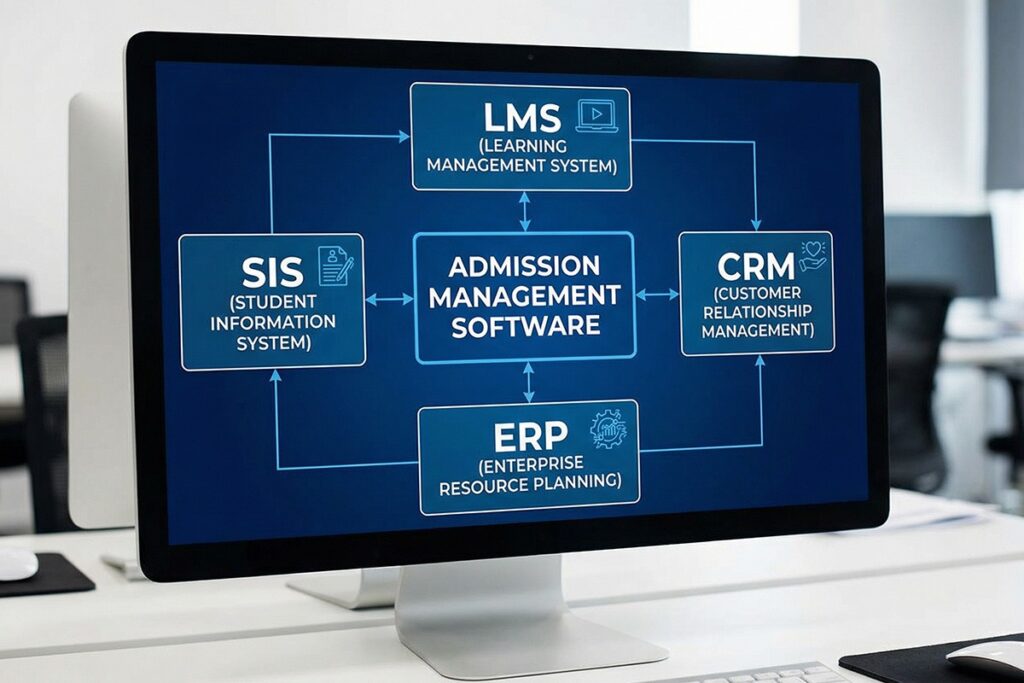
One of the most overlooked considerations when choosing a learning management system for universities is integration. Universities rarely operate with a single software solution. Instead, they use a network of systems.
Student Information Systems and Admissions
A higher education LMS should synchronise seamlessly with Student Information Systems. Course enrollments, academic records, and student profiles must update automatically to avoid duplication and manual errors.
Integration with admissions platforms ensures a smooth transition from applicant to enrolled student. This continuity reduces administrative workload and improves the student onboarding experience.
ERP, Finance, and Billing Modules
Tuition payments, fee tracking, and financial holds often affect course access. When LMS software for colleges integrates with finance modules, institutions can automate access permissions based on payment status. This alignment reduces disputes and manual interventions.
Data Synchronization
Data silos create operational friction. A university LMS platform must offer API capabilities or built-in connectors for smooth data exchange. According to Gartner, institutions increasingly prioritise integrated digital ecosystems over standalone tools. Interoperability reduces long-term complexity.
In short, the LMS should fit into your digital architecture, not force you to rebuild it.
Reporting and Analytics Capabilities
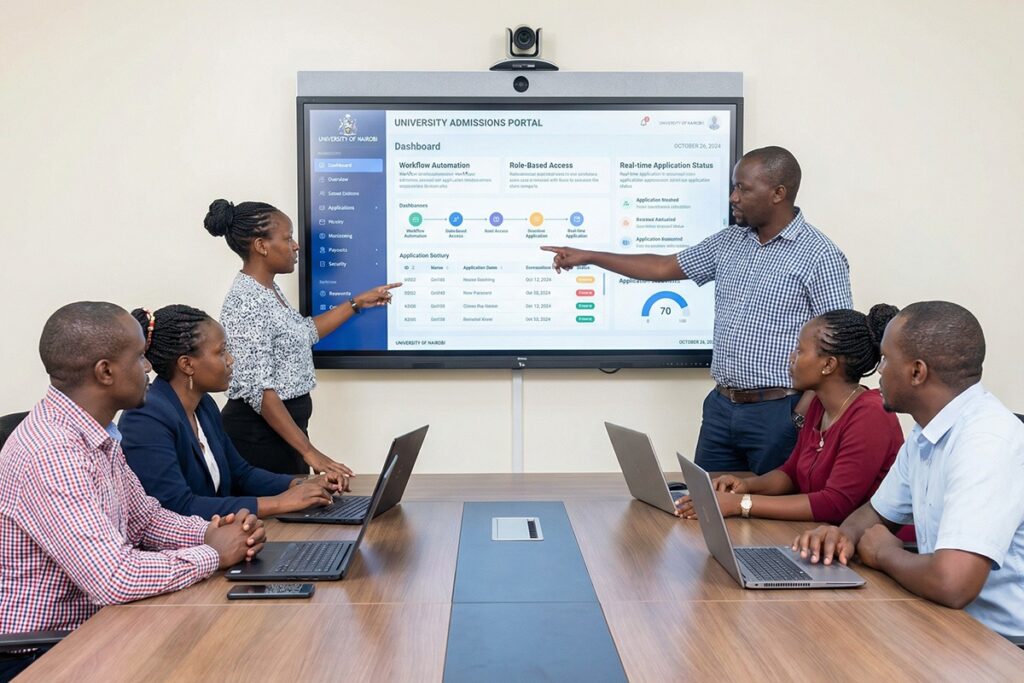
Universities generate enormous volumes of academic data. A modern learning management system for universities must transform that data into actionable insight.
Student Engagement Dashboards
Administrators need real-time visibility into attendance, assignment completion rates, and participation patterns. Dashboards should present trends clearly, not bury them in spreadsheets.
Faculty Performance Tracking
Department heads often evaluate teaching effectiveness through engagement metrics and assessment turnaround times. An advanced higher education LMS provides visibility into course delivery patterns without becoming intrusive.
Completion Rates and Early Warning Indicators
Retention remains a priority for institutions globally. Reporting tools should highlight students at risk of dropping out, missing assessments, or disengaging from courses. Early intervention improves outcomes and protects institutional revenue.
Data should not merely be stored; it should inform strategic decisions.
Data Security and Compliance Requirements
Universities manage sensitive academic and financial information. A secure learning management system for universities must provide robust safeguards.
Role-Based Access Control
Access levels should reflect institutional hierarchies. Students, lecturers, administrators, and finance teams require different permissions. Clear access boundaries reduce internal risks.
Encryption and Backup Policies
End-to-end encryption protects data during transmission. Regular automated backups protect against system failure or cyber incidents. Institutions should review vendor security certifications before adoption.
Regulatory Compliance
Depending on the region, universities may need to comply with data protection regulations. A university LMS platform must align with applicable privacy frameworks and offer documentation to support audits.
Security is not an afterthought; it is foundational.
Cost Versus Long-Term Institutional Value

Budget considerations inevitably influence LMS decisions. However, focusing solely on upfront pricing can be misleading.
Licensing Models
Some LMS software for colleges operates on per-user pricing, while others operate on institutional licensing. Decision-makers should model projected growth to avoid unexpected cost spikes.
Implementation and Training Costs
Deployment involves configuration, data migration, faculty training, and change management. These costs must be factored into evaluation discussions.
Long-Term ROI
An effective higher education LMS reduces administrative workload, improves student retention, and enhances institutional reputation. Over time, these gains outweigh initial expenses. The real question is not “What does it cost?” but “What inefficiencies does it eliminate?”
How EdiifyLMS Aligns With Modern University LMS Requirements
Modern universities require integrated ecosystems, not isolated tools. EdiifyLMS is built with this reality in mind.
Developed within the broader Vigilearn Technologies ecosystem, EdiifyLMS connects seamlessly with admissions, student information management, and examination workflows. This integrated architecture eliminates duplication and creates a continuous admissions-to-learning journey.
Its scalable cloud infrastructure supports institutional growth, whether you are onboarding hundreds or thousands of students. Administrators gain real-time visibility into reporting, while faculty members benefit from intuitive course management tools.
By aligning academic delivery, administration, and analytics in a single environment, EdiifyLMS addresses the core expectations outlined above for a modern university LMS.
For deeper insights on digital transformation in education, explore additional resources on the Vigilearn blog.