
When the Industrial Revolution swept across Britain in the mid-18th century, it reshaped society. Artisans retrained on steam-powered looms, factory walls replaced home workshops, and millions had to learn new skills or face obsolescence.
Fast‑forward to today, Africa, and the rest of the world is experiencing another revolution propelled by artificial intelligence and digital transformation rather than coal and steam. Millions of people enter the workforce each year. Employers are increasingly demanding digital, analytical, and adaptable skills over traditional degrees. Yet the transition isn’t smooth. Infrastructure gaps, inequality in access, and a persistent skill gap slow progress. How can millions gain the right skills fast enough? What will work mean for the next generation of African professionals?
At Vigilearn Technologies, we see this moment as a crossroads. Right now, global companies tap into Africa’s talent via remote work and outsourcing. Enterprises in Nigeria, Kenya or Côte d’Ivoire are racing to build BPO hubs and AI support teams. But unless individuals grasp the evolving skills landscape, they risk being left behind.
Future of Work in Africa: What’s Changing

- Rise of remote jobs and tech‑driven roles
Remote work has levelled geography. More than one‑third (36 %) of global employers now consider updating remote‑work regulations a priority this decade. African professionals can now compete for roles globally, including programming, customer support, digital marketing, and even virtual finance, without relocation. Tech jobs in Nigeria and other markets are booming as global firms offshore work, often integrating AI tools to boost efficiency.
- Shift towards the gig economy and flexible jobs
Short‑term, freelance and project‑based work is surging. Platforms like Upwork and local freelancing sites allow Africans to offer digital services on their own terms. This gig economy demands different resilience, reliable delivery, client‑management skills, and continuous self‑marketing.
- Increasing demand for globally competitive skills
According to the World Economic Forum’s Future of Jobs Report 2025, technical literacy, AI and big‑data skills, and network/cybersecurity are the fastest-growing skill areas globally, including in Sub‑Saharan Africa. Yet many employers in the region still report skills gaps as a major barrier to transformation. Meanwhile, African nations anticipate a population surge; Sub‑Saharan Africa is set to grow to 2.2 billion in 30 years, offering a demographic dividend… if talent is developed.
Top Skills African Professionals Must Learn
- Digital literacy, AI awareness, and data analytics
The digital skills gap in Africa is enormous. The World Bank and IFC estimated that by 2030, around 230 million jobs across Sub‑Saharan Africa will require some level of digital skills; 50‑55 % in Kenya, 35‑45 % in Nigeria, Côte d’Ivoire and Rwanda. Only 11 % of tertiary graduates in Africa have received formal digital training. Employers increasingly look for familiarity with AI tools, prompt engineering, basic data analysis and cybersecurity fundamentals. As the WEF report shows, AI and big‑data skills adoption is speeding up dramatically.
- Communication, adaptability, and problem‑solving
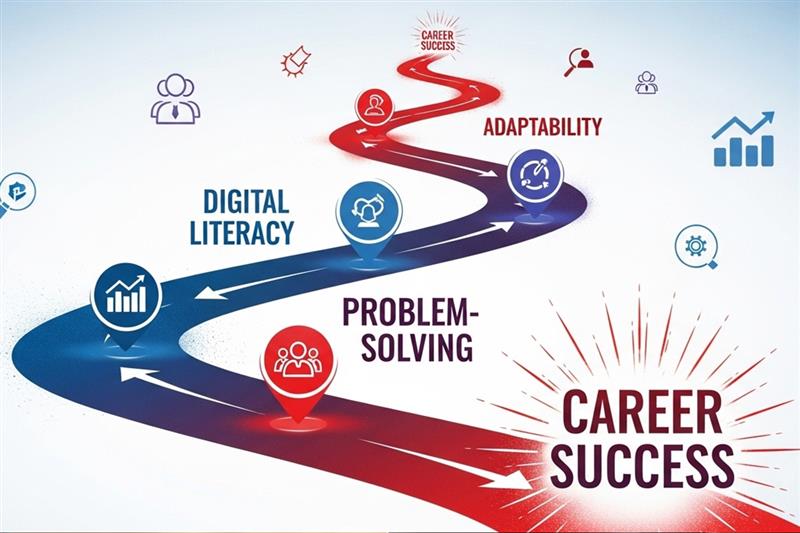
Technical skills alone are not enough. The ability to communicate clearly, solve problems creatively, and adapt rapidly is gaining importance. Globally, business leaders highlight adaptability as the skill that will matter most over the next decade. In Africa’s fast‑changing work environments, emotional intelligence, flexibility, and critical thinking are survival skills.
- Sector‑specific examples (healthcare, finance, IT)
In healthcare, digital skills mean telemedicine setup, electronic records management, and health‑tech adoption. Finance professionals must handle digital banking tools, analytics and cybersecurity protocols. In IT, of course, software development, network security, cloud operations and support remain strong. The shift to green energy also demands technical and vocational skills, for instance, electrical or mechanical roles in renewable projects, skills that are currently scarce in Nigeria and other countries.
How to Learn These Skills Online
- Enrol in short courses or micro‑credentials
Short courses and micro-credentials are designed to help learners focus on specific, high-demand skills like data analytics, cloud computing, or digital marketing without spending years in a classroom. Here are some accessible platforms offering credible short courses:
- AltSchool Africa: Designed specifically for Africans, AltSchool offers beginner-friendly programs in Frontend Engineering, Backend Engineering, Product Design, and Data. Their curriculum blends theory, real-world projects, and internship opportunities, making it ideal for those who want job-ready skills.
- Coursera: Through partnerships with universities like Yale, Google, and Meta, Coursera offers professional certificates, micro-credentials, and even degree programs. Africans can learn Python, data analytics, project management, GenAI skills, and more.
- LinkedIn Learning: With over 17,000 courses, it’s great for soft skills like communication, leadership, or emotional intelligence traits for workplace readiness in Africa. They also offer technical courses in cybersecurity, Excel, SQL, and AI.
- Grow with Google: A completely free platform offering foundational courses in online marketing, career development, and basic coding. It’s particularly useful for beginners and small business owners.
- Join online bootcamps focused on in‑demand skills
Bootcamps in data analytics, cloud, cybersecurity or AI help build job‑focused portfolios. Many include live support, group projects, and career services. They’re an excellent match for Africans seeking skill-building that matters in the global marketplace.
- Platforms offering Africa‑friendly access and pricing
Beyond curriculum and content, access remains a major challenge in Africa, especially in rural areas or for learners without high-speed internet. This is why platforms that prioritise mobile-first design, flexible payment models, and local context are critical. Vigilearn’s EdiifyLMS is designed with this in mind: it supports mobile learning, personalised content tracks, and progress tracking to help users stay consistent in their learning journeys. For many institutions and corporate training partners, Vigilearn enables teams to scale upskilling efforts efficiently and affordably.
Bridging the Skill Gap in Nigeria and Beyond

- Role of companies in upskilling
Employers must invest in employee development. Many global and local firms now sponsor upskilling programmes in digital or green skills. BPO and tech companies in Nigeria increasingly train staff in network security and AI. Employers should partner with providers like Vigilearn Technologies to ensure continuous on‑the‑job learning and re‑skilling strategies.
- Government and NGO‑backed programs
Initiatives like the World Bank’s Digital Economy for Africa (DE4A) support digital skills as a pillar of development. Governments in Kenya, Nigeria, Rwanda and Côte d’Ivoire are working on programmes targeting youth and women. NGOs and foundations run bootcamps, coding camps, green‑skills training and more to bridge gaps.
Successful skill development projects
In Nigeria, public‑private partnerships have launched digital literacy campaigns, coding schools and youth tech hubs. Rwanda has a national digital transformation strategy aligned with WEF’s Africa talent hotspot concept. These efforts include targeted curricula for AI, cybersecurity, and digital service delivery, designed to enhance workplace readiness in high‑growth sectors.
How LMS Platforms Support Future‑Ready Skills
Learning Management Systems have become indispensable tools in the journey toward building future-ready skills. For many African learners, whether students, job seekers, or working professionals, LMS platforms provide an accessible, organised, and scalable way to gain the competencies needed in today’s fast-changing job market. They eliminate many of the traditional barriers to learning: rigid class schedules, lack of nearby training centres, and limited access to quality instructors.
- Personalised learning paths
Modern LMS tailor learning paths based on user assessment, career interests, and pace. Vigilearn enables learners to follow personalised course tracks, combining soft skills, digital literacy, and sector‑specific modules, ideal for workplace readiness in Africa.
- Certification and tracking progress
Learners build verifiable credentials that employers value. LMS platforms issue digital certificates and track progress, giving both motivation and proof. This helps students show readiness for tech jobs in Nigeria or globally.
- Mobile‑first platforms for easy access
With many Africans learning on mobile devices (e.g., 76 % in Nigeria use mobile to access online courses), LMS platforms must deliver engaging, lightweight and offline‑capable experiences. Coursera noted that 76% of Nigerian learners access courses via mobile devices, indicating a flexible, on-the-go learning trend.
The future of work in Africa is not only about jobs; it’s about evolving into a skilled, resilient, and globally competitive workforce. Individuals must invest in continuous learning. Employers and governments must support upskilling through sustainable, affordable programs.
And the time to prepare is now.
