For many institutions, adopting a learning management system for universities felt like a milestone. It promised centralised content, streamlined administration, and a pathway into digital learning. Yet, years later, many university leaders are asking a harder question: if we have an LMS, why aren’t we seeing better learning outcomes?
The reality is uncomfortable but widespread. The system exists, but it is not delivering. Students log in sporadically. Lecturers upload materials, but engagement remains low. Administrators struggle to extract meaningful insights. What was meant to transform education often becomes a passive repository of files. This is not just a technology issue, it is a mindset problem. Universities must move from treating LMS platforms as systems to thinking of them as products designed for users.
Read More: How Data Analytics in LMS Platforms Boost Learner Success Rates
Why Most LMS Platforms Fail in Universities
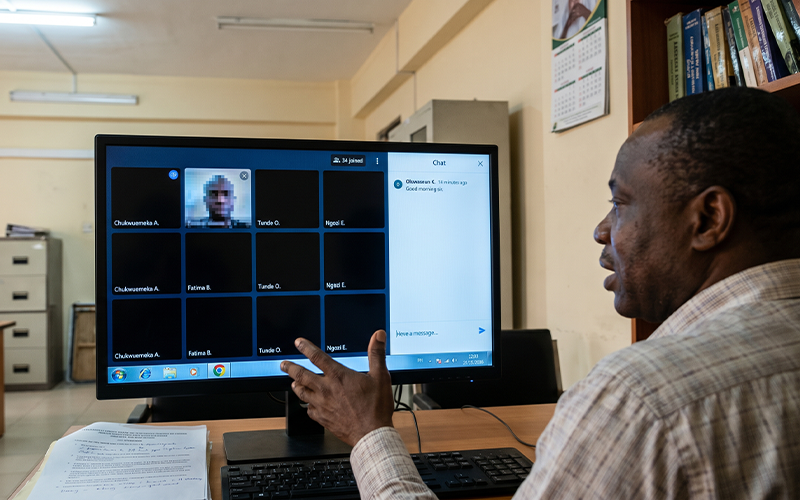
Most failures do not come from lack of investment, but from misalignment between what universities need and what traditional LMS tools offer.
1. Low student engagement
A typical university LMS platform is built around content delivery. Lectures, PDFs, and assignments are uploaded, but interaction is minimal. Students are expected to “consume” rather than participate. According to EDUCAUSE, student engagement remains one of the top challenges in digital learning environments, especially when platforms lack interactive design.
2. Poor user experience
Many systems are unintuitive. Navigation feels clunky, interfaces are outdated, and mobile responsiveness is inconsistent. Students compare their academic tools to consumer apps they use daily, and the gap is obvious.
3. Limited tracking and insights
Universities often cannot answer basic questions: Are students actually learning? Where are they struggling? Which courses are effective? Traditional LMS reporting tends to focus on activity, not outcomes.
4. Disconnected systems
A digital learning system often operates in isolation from other tools such as student information systems or assessment platforms. This fragmentation creates inefficiencies and limits visibility across the learning journey.
The Gap Between LMS Usage and Learning Outcomes
There is a critical misconception in higher education: uploading content equals delivering learning. It does not.
A university may have a fully functional online learning management setup, yet still produce poor outcomes. Why? Because learning is not passive. It requires interaction, feedback, and progression.
In many institutions:
- Students download materials but do not engage deeply
- Lecturers cannot track comprehension in real time
- Feedback loops are slow or non-existent
Research highlighted by Gartner consistently shows that digital tools only improve outcomes when they are designed around user behaviour, not just functionality. Without this, the LMS becomes a storage system rather than a learning engine.
Read More: LMS vs SIS vs ERP: What System Does Your University Need
What Is a Product-First Learning System
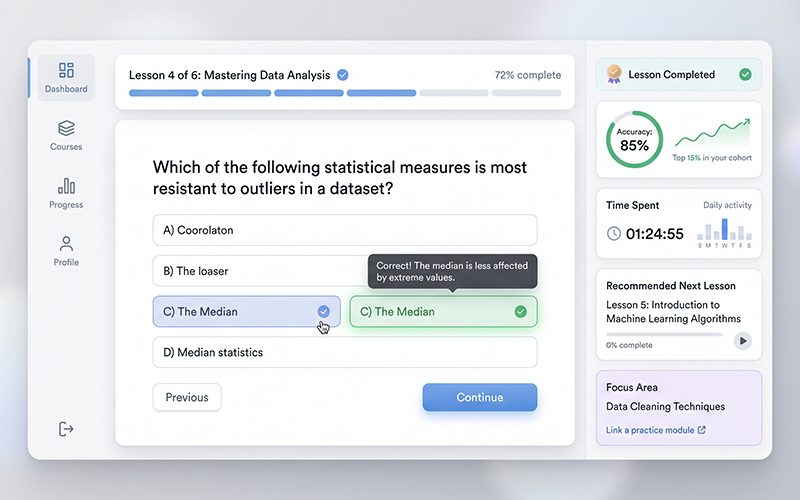
A product-first approach reframes the entire purpose of a learning management system for universities.
Instead of asking, “What features should we include?” it asks, “What experience should students and educators have?”
This shift introduces three core principles:
1. Student-first design
The system is built around how students learn, not how administrators manage content. Navigation is intuitive. Learning flows are structured. Engagement is intentional.
2. Engagement-focused delivery
Content is not just uploaded, it is experienced. Interactive modules, quizzes, discussions, and multimedia elements keep students involved.
3. Data-driven learning
Every interaction generates insight. Institutions can track progress, identify gaps, and intervene early.
This is what transforms a digital learning system into a product, something users actively engage with rather than tolerate.
Key Features of a Modern Learning System
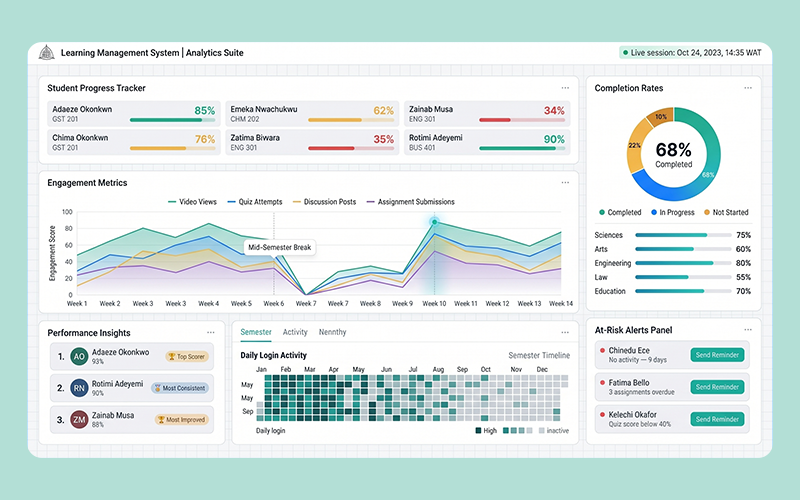
A product-first university LMS platform is defined by its ability to drive outcomes, not just host content.
Interactive learning modules
Courses are broken into structured, engaging units. Students participate through quizzes, simulations, and collaborative tools.
Real-time analytics
Educators can see how students are performing as learning happens. This allows immediate adjustments and targeted support.
Progress tracking
Students understand where they are in their learning journey. Clear milestones improve motivation and completion rates.
Personalised learning paths
Not all students learn the same way. A modern system adapts to individual needs, offering tailored content and pacing.
These features elevate online learning management from a static process to a dynamic experience.
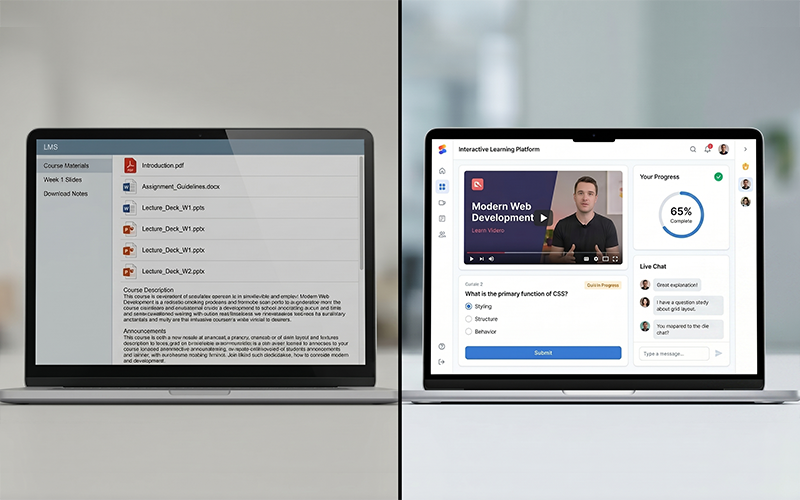
LMS vs Product-Led Learning System
The difference between traditional systems and product-first platforms is not subtle, it is foundational.
Traditional LMS
- Static content delivery
- Limited interaction
- System-centred design
- Activity-based tracking
Product-led learning system
- Dynamic, interactive experiences
- Continuous engagement
- User-centred design
- Outcome-based insights
In essence, one manages learning, the other drives it. A learning management system for universities must evolve into the latter to remain relevant.
How Product Thinking Improves Student Outcomes
When universities adopt product thinking, the results are measurable.
- Higher engagement: Students interact more frequently and meaningfully with course materials.
- Better completion rates: Clear progress tracking and engaging formats reduce drop-offs.
- Improved learning experience: Students feel guided, supported, and motivated throughout their journey.
This is not theoretical. Institutions that redesign their university LMS platform around user experience consistently report improved satisfaction and performance metrics.
How EdiifyLMS Delivers a Product-First Learning Experience
At Vigilearn Technologies, the focus goes beyond providing a standard learning management system for universities. It is built to create a learning experience that is engaging, measurable, and accessible for today’s students and educators.
EdiifyLMS combines the core capabilities institutions expect from a modern platform with features designed around real user needs:
- Modern LMS functionality with an intuitive design that makes navigation simple for administrators, lecturers, and students
- Live and recorded virtual classes with interactive tools such as chats, shared notes, polls, and whiteboards for richer participation
- Advanced analytics and progress tracking that help institutions monitor learner performance and identify gaps early
- Flexible course management that supports multiple content formats, structured modules, assignments, and assessments
- Mobile-first accessibility that allows students to learn anywhere, anytime, across devices
- Built-in communication tools, including forums, announcements, messaging, and feedback features that keep learning communities connected
- Integrated certification tools with QR-code verification for trusted credentials
Rather than acting as a passive repository for course materials, EdiifyLMS functions as a complete digital learning system that helps universities improve engagement, simplify delivery, and achieve real educational outcomes. It is product-first thinking in practice, where every feature is designed to make learning easier, smarter, and more effective.
You can explore more insights on the Vigilearn Blog or learn more on the official website.