
Across classrooms in Africa, students and educators share a concern that rarely appears in glossy tech brochures. It is not the lack of ambition. It is connectivity.
A substantial proportion of learners do not have reliable access to high-speed internet. As of 2025, only about 38 % of Africans use the internet at all, far below the global average, and fixed broadband remains almost nonexistent, with less than 1 % of subscriptions continent-wide. Limited access means that for many students, even loading a heavy learning management system feels like navigating a blocked road rather than opening a portal to opportunity.
This reality has profound implications for institutions trying to deliver education digitally, whether in universities, polytechnics, or secondary schools. For schools serving rural and peri-urban regions, where infrastructure is thin and data costs are high, the wrong digital platform can make learning harder, not easier. What is needed is a low bandwidth LMS that African institutions can rely on, one that works with low internet speed, embraces offline access where possible, and supports students without turning every lesson into a data bill shock.
Why Low Bandwidth LMS Matters in Africa
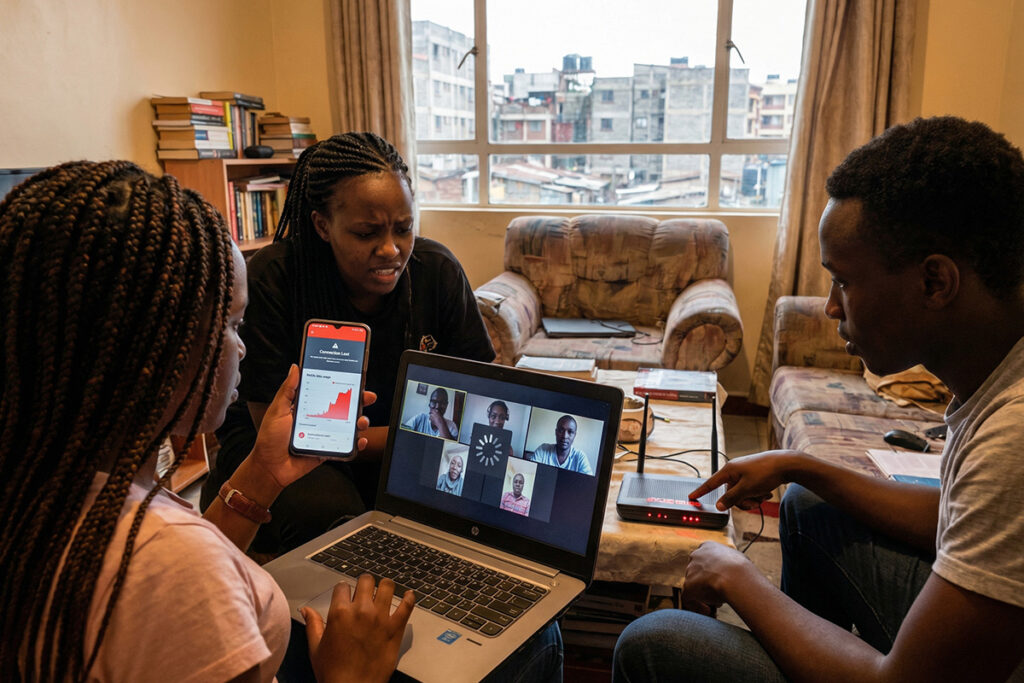
Africa’s digital landscape is evolving, but progress remains uneven. UNESCO reports that internet connectivity in schools is far from universal, only a minority of schools in sub-Saharan Africa have basic internet access at all. Even where there is connectivity, networks fluctuate, mobile data is expensive relative to average incomes, and peak usage times can slow speeds further. Students often rely on mobile broadband, which is less stable and more data-intensive than fixed lines.
Read more: Online Education in Africa: Solutions for Overcoming Connectivity Challenges
These constraints mean traditional learning systems designed for high-speed internet struggle. Lecture videos fail to load. Assignments cannot sync. Live sessions lag or drop out entirely. For learners in low-infrastructure settings, the dream of online education can feel unreachable. This is where a low-bandwidth LMS for Africa emerges not as a luxury, but a necessity for continuity and inclusivity in education technology Africa efforts.
For institutions asking, ‘which LMS works with low internet speed in Africa or how we can support students with poor connectivity’ understanding the infrastructure reality, then aligning tools to it, is the first step toward educational equity.
Connectivity Challenges in African Education
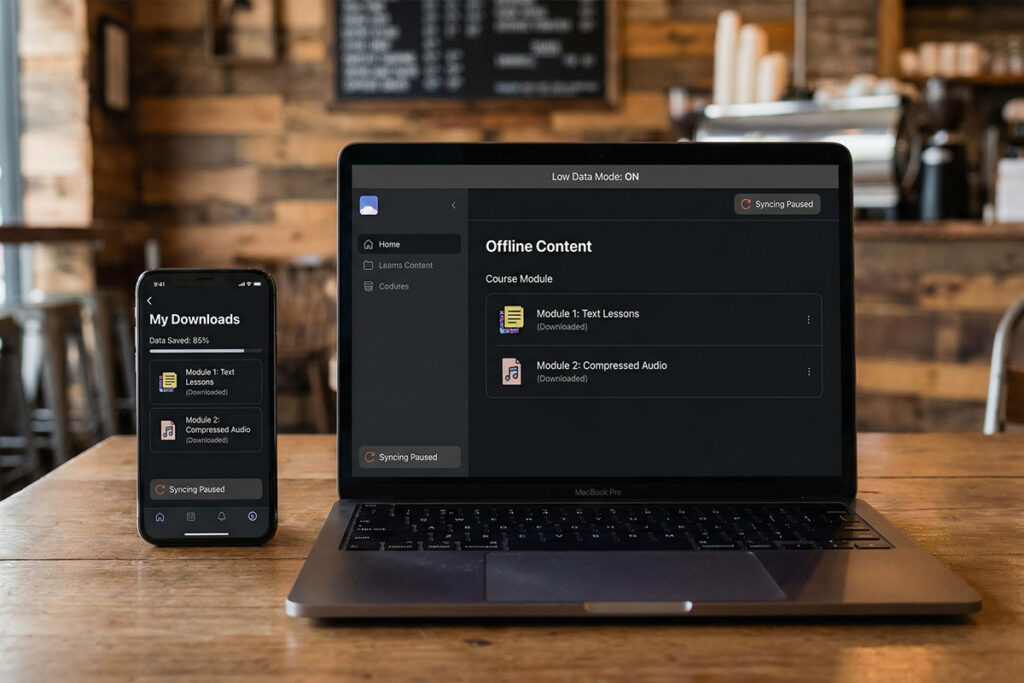
Challenges in connectivity are not theoretical abstractions; they are constraints students and teachers confront daily. Internet access varies significantly by region, with many rural areas still underserved. According to data from the International Telecommunication Union, average internet use in Africa remains around 36 %, reflecting both infrastructure and affordability barriers.
High data costs compound the problem. Reports indicate that the average cost of one gigabyte of mobile data in much of Africa can be a significant portion of a monthly income, far above global norms, making heavy use of data-intensive platforms untenable for many families. A lack of affordable, reliable coverage means students frequently depend on spotty mobile access, limiting how and when they can engage with course materials.
African learners are also more likely to rely on mobile devices than desktop computers. While mobile internet has expanded rapidly, the experience often trades speed and stability for ubiquity. In Rwanda, for example, mobile broadband penetration is high, yet fixed broadband subscriptions remain below one per cent, underscoring the continent’s mobile-first reality.
These infrastructure challenges directly impact how institutions must think about delivering learning. An LMS designed without low-bandwidth environments in mind is less an asset and more a barrier in Africa’s varied education landscape.
Features of a Low Bandwidth LMS

A low-bandwidth LMS Africa platform must be purpose-built to function within the constraints of real users’ connectivity. It cannot rely solely on high-resolution video or constant real-time connections. Instead, it must prioritise flexibility and efficiency.
Lightweight Interfaces
Simplicity matters. Interfaces optimised for slow connections and low memory footprints reduce load times and help learners access content faster. This means HTML-based pages that load quickly even when signals weaken, and dashboards that prioritise functionality over flourish.
Read more: Learning Management Systems Explained and How You Can Pick the Best Fit (2026 Edition)
Offline Content Access
Perhaps the most transformative feature for African contexts is offline learning systems. When students can download lesson packets, readings, or even entire modules during periods of better connectivity, they can study without worrying about network drops. Offline mode also means assessments and progress can synchronise later, bridging the gap between classroom learning and online systems.
Minimal Data Usage
Smart content compression, adaptive streaming, and prioritising text and low-resolution media over heavy video all contribute to reduced data usage. These aren’t tricks to shave kilobytes; they are essential for affordability and accessibility in areas where data buys are limited and prized.
Mobile Compatibility
Given that many learners access the internet primarily through smartphones, an LMS must be fully mobile-responsive. Native apps can help, but if they rely on heavy data, they risk exclusion. A low bandwidth LMS Africa solution embraces mobile first, ensuring students can learn comfortably through the devices they already own.
Problems With Traditional LMS Platforms in Africa
Many learning systems built for high-income countries assume stable, high-speed connectivity and abundant bandwidth. When these systems are deployed in Africa without adaptation, several challenges arise.
Heavy dependence on video lectures or live streaming sessions becomes untenable when broadband is limited. Students often cannot watch long videos without buffering, and synchronous sessions exclude those on unstable networks. Large file sizes further strain data budgets, forcing learners to choose between downloading basic materials and paying for essentials.
Furthermore, platforms that do not prioritise mobile-friendly design can alienate the very learners they aim to serve. Frequent downtime, slow load times, and interfaces that assume always-on connections make participation difficult for students juggling low connectivity with other responsibilities.
How Institutions Use Low Bandwidth LMS Effectively
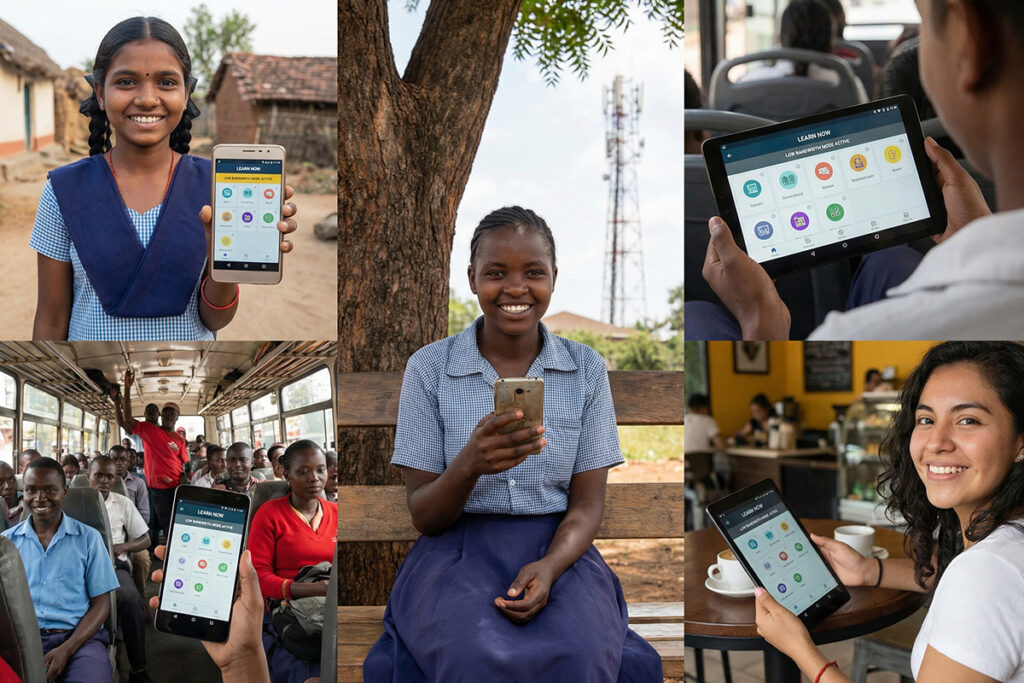
Despite connectivity constraints, African institutions have developed creative approaches using appropriate learning systems. These strategies enable continuity and foster engagement even in low-infrastructure environments.
One effective method is blended content delivery. Institutions curate lightweight modules for basic learning and reserve heavy video content for optional or offline download sections. Where possible, downloadable learning materials allow students to prepare offline and participate in discussions or assessments asynchronously.
Read more: Building End-to-End Student Automation from Lead to Graduation
Asynchronous learning models recognise that students may not be able to join live sessions reliably. Instead, learners access lectures and assignments at their own pace, interacting through message boards or offline uploads when connectivity permits. This approach not only respects bandwidth limits but also accommodates diverse schedules and responsibilities.
Reducing reliance on live sessions and prioritising asynchronous design also helps institutions extend instruction to wider communities. In contexts where sudden outages or seasonal connectivity fluctuations occur, asynchronous LMS usage becomes a form of resilience, keeping learners engaged even when networks fail temporarily.
How Vigilearn Supports Low Bandwidth Learning Environments
At Vigilearn, we design for the realities African institutions face, not ideal connectivity conditions. Which is why EdiifyLMS, is built to function reliably in environments where internet speed fluctuates and data costs matter.
Lightweight and Data-Efficient
EdiifyLMS uses streamlined page structures and optimized content delivery to reduce load times and data consumption. Institutions can deliver text-based lessons, compressed media, quizzes, and structured learning materials without forcing students to stream heavy video files. This makes it a practical LMS for low internet areas where every megabyte counts.
Offline Learning Support
The platform supports offline learning systems, allowing students to download materials when they have connectivity and continue studying offline. Once reconnected, progress and assessments sync automatically. This ensures continuity even during network disruptions.
Mobile-First Access
Recognizing that many learners rely on smartphones, EdiifyLMS is fully mobile-responsive. Students can access coursework, submit assignments, and engage with content comfortably on mobile devices, without requiring high-speed broadband.
Scalable Across Regions
Whether serving urban campuses or rural extension centers, EdiifyLMS enables institutions to scale digital delivery without increasing technical complexity. By reducing data dependency and prioritizing accessibility, Vigilearn helps schools sustain learning across diverse connectivity environments.
For further insights on accessible education technology, explore more topics on the Vigilearn blog and discover practical strategies tailored to your institution’s context.