Walk into any university registry office, and you will see the invisible weight of data.
Folders stacked in cabinets. Spreadsheets saved across desktops. Emails containing transcripts, fee confirmations, and enrollment updates. One department maintains admissions records. Another manages academic history. Finance tracks billing separately. IT oversees learning platforms. Each unit does its job well, yet the institution as a whole often operates with fragmented visibility.
This fragmentation is not just inconvenient. It is risky.
According to research and guidance from EDUCAUSE, institutions are increasingly expected to modernise data governance practices as digital transformation accelerates across higher education. Student expectations have evolved. Regulators are more demanding. Cybersecurity threats are growing. Meanwhile, leadership teams rely on timely and accurate reporting to make strategic decisions.
Read more: Automating Student Records and Transcripts in 2026
For these reasons and more; a student data management system is no longer a back-office utility. It is a foundational institutional asset.
Student Data Management System Defined
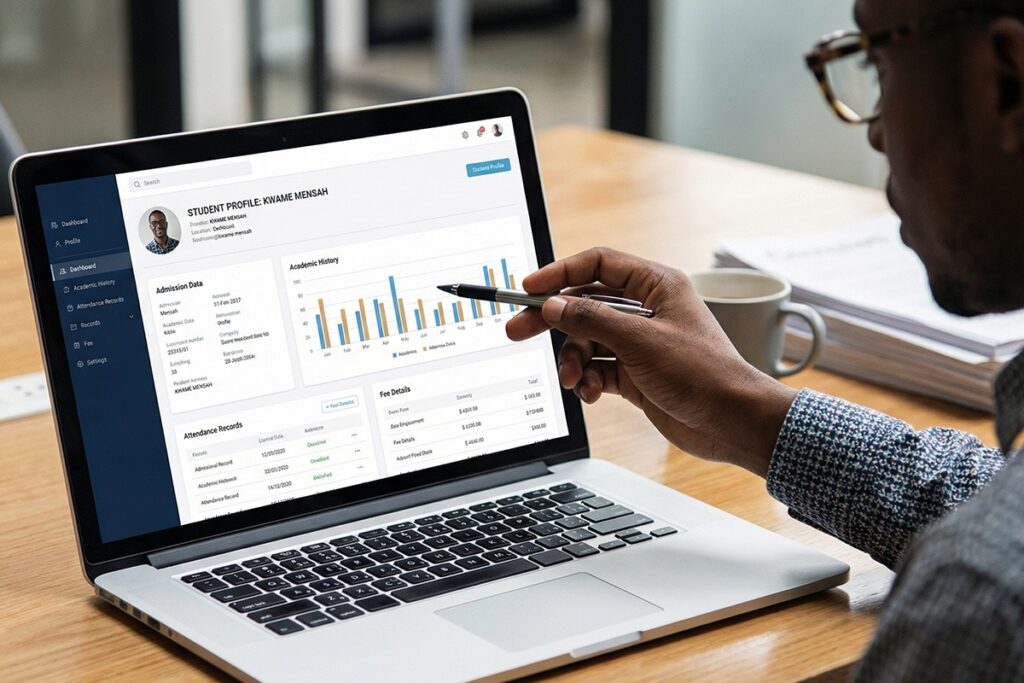
A student data management system is a centralised digital infrastructure that stores, organises, secures, and synchronises all student-related information across the institutional lifecycle.
At its simplest, it replaces isolated databases and spreadsheets with a unified framework. At its most strategic, it transforms data into an institutional advantage.
Many universities operate with multiple systems that do not communicate effectively. Admissions software may not sync seamlessly with academic records. Finance systems may require manual reconciliation. Learning platforms often operate independently from central records.
The result is data fragmentation.
When systems are disconnected:
- Staff duplicate data entry
- Reports require manual consolidation
- Errors increase
- Leadership decisions rely on partial visibility
A robust education data system resolves this fragmentation by acting as a single source of truth. Instead of asking, “Which spreadsheet is correct?” administrators ask, “What does the system show?”
Data stops being scattered information and becomes structured institutional intelligence.
A modern university data platform treats student information not as isolated records, but as an interconnected lifecycle, from application to graduation and beyond.
What a Student Data Management System Covers
To evaluate any student data management system, it helps to understand its scope. It should not be limited to grades or transcripts alone. The true value lies in comprehensive coverage.
Admission Data
The lifecycle begins at application. A centralised system captures:
- Application details
- Supporting documents
- Admission decisions
- Offer acceptance records
When admission data flows directly into the broader education data system, institutions eliminate redundant re-entry during enrollment.
Enrollment Records
Enrollment status, program allocation, course registration, and progression tracking must be managed centrally. Without integrated student records management, discrepancies quickly arise between departments.
For example, finance may reflect unpaid tuition while academic systems still show active enrollment. These inconsistencies create confusion for both staff and students.
Academic Performance History
Course grades, GPA calculations, academic standing, probation notices, and transcript generation all depend on reliable data architecture.
A well-structured university data platform ensures that academic history is chronologically organised and securely stored. It should allow authorised users to generate official transcripts and performance reports without manual compilation.
Attendance and Engagement Tracking
Attendance is increasingly linked to performance monitoring and regulatory reporting. Some institutions also monitor digital engagement through learning platforms.
When integrated into a central student data management system, attendance data becomes actionable. Advisors can identify at-risk students earlier. Departments can analyse participation trends.
Fee and Billing Records
Financial records are sensitive and complex. Tuition payments, scholarships, instalment plans, and outstanding balances must align with enrollment and academic status.
A connected education data system ensures financial data reflects real-time student status. This coordination reduces disputes and improves financial transparency.
Risks of Poor Student Records Management

Many universities underestimate the risks associated with fragmented student records management until a crisis exposes the weakness.
Data Duplication
When multiple departments maintain separate records, inconsistencies become inevitable. A name misspelling in one database. An outdated address in another. Conflicting academic status indicators.
These errors undermine institutional credibility.
Compliance Issues
Universities operate under strict data protection regulations and accreditation requirements. Inaccurate reporting can lead to penalties or reputational damage.
Without a reliable student data management system, compiling compliance reports becomes labour-intensive and error-prone.
Reporting Inaccuracies
Leadership decisions depend on accurate data. Enrollment projections, retention analysis, budget forecasting, and faculty allocation all rely on trustworthy reporting.
Disconnected systems often require manual data merging, increasing the likelihood of inaccuracies.
Security Vulnerabilities
Cyber threats targeting educational institutions have increased globally. The U.S. Cybersecurity and Infrastructure Security Agency, CISA, regularly warns that educational institutions are attractive targets due to the volume of sensitive personal data they hold.
When student information exists across unsecured spreadsheets, email attachments, and local drives, risk multiplies. A fragmented system is not just inefficient. It is exposed.
Delayed Decision-Making
If generating a simple enrollment report requires days of cross-department coordination, institutional agility suffers.
A centralised university data platform reduces that lag, enabling faster and more confident decision-making.
Benefits of Centralised Education Data Systems
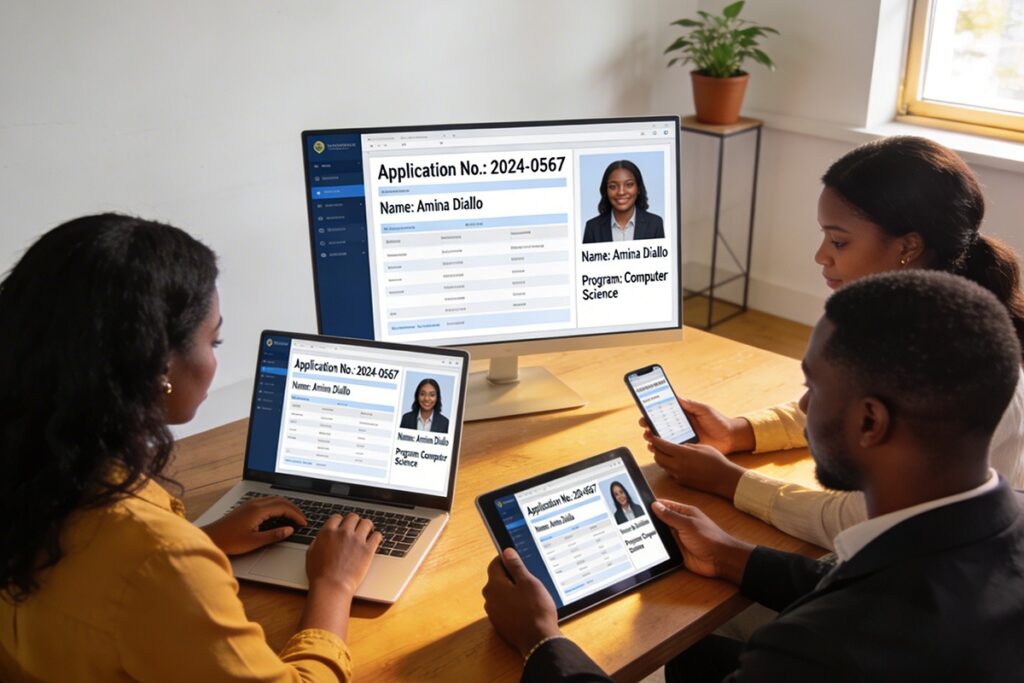
A comprehensive student data management system does more than store records. It creates alignment.
Single Source of Truth
When all departments rely on the same core database, disputes over data validity diminish. Staff confidence increases. Institutional trust strengthens.
This “single source of truth” is foundational to effective governance.
Cross-Department Coordination
Admissions, registry, finance, and academic departments operate with shared visibility. When enrollment status updates, finance sees it immediately. When a fee is paid, the record updates institution-wide.
A coordinated education data system breaks down silos.
Faster Reporting
Dashboards replace manual consolidation. Leadership can access real-time metrics on:
- Enrollment numbers
- Academic performance trends
- Financial summaries
- Retention indicators
This accelerates planning cycles.
Improved Student Support
Advisors and administrators can view holistic student profiles. Academic performance, attendance, and financial standing appear in one place.
A well-designed student data management system supports proactive intervention rather than reactive problem-solving.
Compliance, Security, and Governance
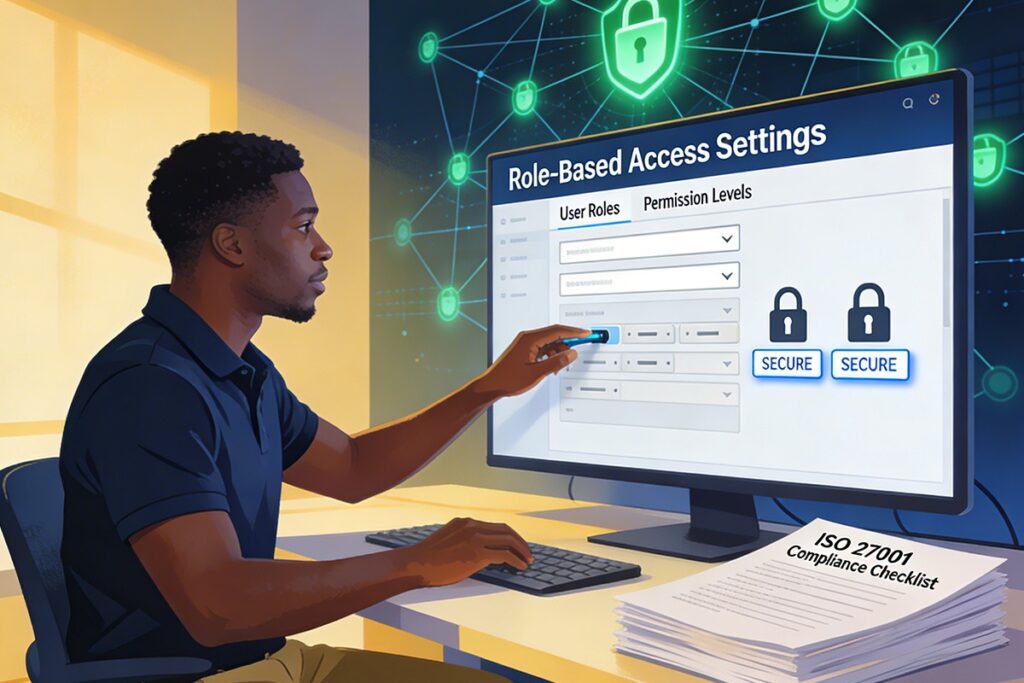
Data centralisation must be accompanied by strong governance.
Role-Based Access
Not every staff member needs access to every record. A secure university data platform should allow granular permission controls based on roles and responsibilities.
This protects sensitive information while maintaining operational efficiency.
Encryption Standards
Student data should be encrypted both at rest and in transit. Secure hosting environments reduce exposure to breaches.
A credible education data system prioritises security architecture as a core design principle.
Audit Trails
Institutions need to track who accessed or modified records and when. Audit trails are essential for compliance and internal accountability.
A structured student records management framework ensures traceability.
Data Retention Policies
Universities must define how long records are stored and when they should be archived or deleted. A centralised system simplifies policy enforcement.
Governance is not optional. It is foundational.
Integration With Admissions and Learning Platforms
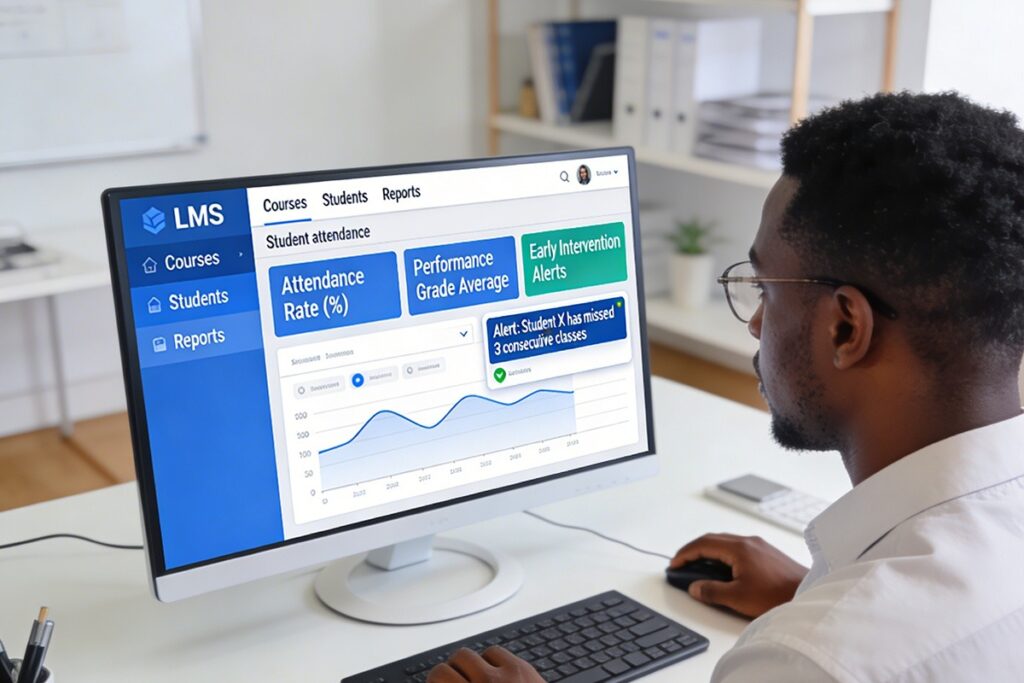
A modern student data management system must integrate seamlessly across the student lifecycle.
Real-Time Data Synchronisation
When a student accepts an admission offer, their profile should automatically update in the academic and finance modules.
Manual re-entry increases errors and wastes time.
Automatic Profile Updates
Course registrations, grade updates, and fee payments should reflect in the central database immediately.
This ensures consistency across the university data platform.
Lifecycle Tracking
From application to graduation, institutions should be able to trace the student journey through a unified interface.
Integration transforms isolated events into a cohesive narrative.
How Vigilearn Enables Centralised Student Data Management
At Vigilearn, we understand that managing student data is not merely about storage. It is about structure, governance, and scalability.
Our approach to student data management system design is built around a unified architecture. Admissions, academic records, and institutional workflows operate within an integrated environment rather than disconnected tools.
Unified System Architecture
Data flows seamlessly across modules, reducing duplication and ensuring institutional consistency.
Secure Data Environment
We prioritise encryption, role-based access controls, and system monitoring to protect sensitive information.
Dashboard Visibility
Institutional leaders gain real-time insight into enrollment metrics, academic trends, and operational performance through structured dashboards.
Scalable Infrastructure
As institutions grow, the system scales with them, accommodating new programs, campuses, and regulatory requirements.
To explore broader insights on educational digital transformation, visit our blog.