
Institutions that thrive today understand that higher education goes beyond admitting students and delivering lectures. It’s a process that guides individuals through a complex, multi-year journey that begins long before enrollment and continues well after graduation. Such institutions recognise that every interaction, from the first website inquiry to alumni engagement, shapes their reputation, revenue stability, and student success.
This is why student lifecycle management, which moves beyond departmental silos and treats the student experience as a single continuous journey rather than as isolated transactions, is essential.
Unfortunately, many universities still operate with fragmented systems. Admissions uses one platform, academics another, finance a third, and alumni relations something entirely separate. Data is duplicated, reporting is delayed, and leadership lacks a unified view. The result is inefficiency, missed opportunities for intervention, and a student experience that feels disconnected. A holistic approach to the higher education lifecycle changes that narrative entirely.
Read more: Student Enrolment Automation in Universities
What Is Student Lifecycle Management?

At its core, student lifecycle management is the strategic coordination of systems, processes, and data across every stage of a student’s relationship with an institution. It is a structured oversight of the full student journey, from inquiry and recruitment to graduation and alumni engagement. It aligns technology, workflows, and institutional strategy to ensure that data flows seamlessly across stages.
The lifecycle typically includes:
- Inquiry and recruitment
- Admissions and enrollment
- Academic progression
- Retention and student support
- Graduation and alumni engagement
When institutions adopt effective student journey management practices, they gain visibility across departments. Leaders can see conversion rates, retention patterns, financial health, and academic performance in one unified view. This systems-level perspective is critical in a sector facing enrollment pressures and increased accountability.
According to reports and research shared by organisations such as EDUCAUSE, institutions are increasingly prioritising digital transformation initiatives that integrate academic and administrative systems. The reason is simple: fragmented infrastructure undermines strategic decision-making.
Let us walk through each stage of the higher education lifecycle and examine how coordinated systems make a measurable difference.
Stage 1: Inquiry and Recruitment

The lifecycle begins before a student ever submits an application. Prospective students interact with institutional websites, social media campaigns, email newsletters, and open day registrations.
Effective student lifecycle management ensures that every inquiry is captured and centralised. Lead capture forms feed directly into admissions databases. Marketing automation tools track engagement history. Recruiters can view communication logs in real time.
Without integration, institutions often face data loss. A student downloads a brochure but never receives a follow-up. An inquiry email sits in a personal inbox rather than a shared system. Marketing teams cannot attribute conversions accurately.
Centralised systems change this dynamic. Recruitment teams gain clarity on where prospects originate. They can segment by program interest, geography, or academic background. Conversion analytics become reliable rather than speculative.
Student journey management at this stage is about building visibility and continuity. When a prospect eventually applies, their data should already exist within the institution’s ecosystem. That continuity builds efficiency and improves response times.
Stage 2: Admissions and Enrollment
Admissions is often where operational complexity becomes most visible. Application evaluation, document verification, interview scheduling, offer letter issuance, and fee confirmation must all work in sync.
With integrated student systems, applications move through predefined workflows. Admissions officers can track status changes instantly. Missing documents trigger automated notifications. Offer letters are generated within the same system that stores applicant records.
Enrollment confirmation is equally critical. Once a student accepts an offer and pays fees, their data should transition seamlessly into the academic and financial systems. If manual re-entry is required, errors are inevitable.
Read more: Building End-to-End Student Automation from Lead to Graduation
Institutions that embrace student lifecycle management eliminate redundant data entry. They ensure that once a student record is created, it evolves rather than being recreated at every stage. This reduces administrative workload and improves reporting accuracy.
More importantly, leadership gains forecasting capabilities. Enrollment numbers update in real time. Fee payment tracking aligns with financial planning. Strategic decisions are made using current, reliable data.
Stage 3: Academic Progression and Engagement
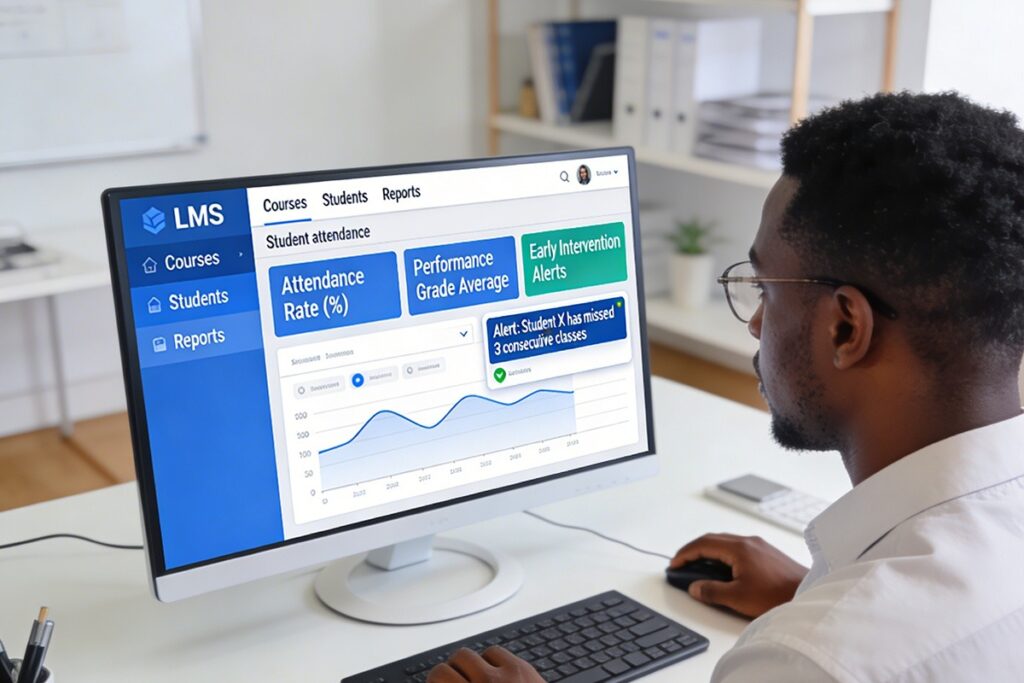
Once enrolled, students enter the academic core of the higher education lifecycle. Course registration, timetable scheduling, attendance monitoring, grading, and performance analytics become central.
Fragmented systems often cause friction here. Academic records may not sync with finance. Attendance may be tracked separately from performance dashboards. Faculty may lack insight into a student’s broader history.
In a well-designed student lifecycle management framework, academic data flows seamlessly. Faculty can view comprehensive student profiles. Administrators can monitor performance trends across departments. Early warning systems flag students at academic risk.
Research and sector discussions published by platforms such as Inside Higher Ed frequently highlight the importance of early intervention strategies in improving retention. These interventions depend on accessible, integrated data.
When student journey management is proactive rather than reactive, institutions can identify attendance drops, grade declines, or engagement gaps early. Advisors can intervene before problems escalate.
Stage 4: Retention and Student Support
Retention is not accidental. It is built through coordinated advising, timely communication, and accessible support systems.
Student lifecycle management allows institutions to combine academic performance data with engagement metrics. Are students logging into learning platforms? Are they attending advising sessions? Have they cleared financial obligations?
With integrated student systems, advisors receive automated alerts when risk indicators emerge. Communication workflows ensure that outreach is documented and consistent. No student falls through unnoticed gaps.
Retention efforts also require cross-department collaboration. Finance offices must know when payment challenges affect attendance. Academic departments need visibility into support interventions. Leadership requires consolidated dashboards to track retention trends institution-wide.
Student journey management at this stage transforms support from reactive troubleshooting into strategic oversight. It aligns institutional responsibility with student success outcomes.
Stage 5: Graduation and Alumni Management
The lifecycle does not end at final exams. Graduation processing, transcript issuance, certification validation, and alumni engagement extend the institutional relationship.
In many institutions, alumni databases operate independently from academic records. This disconnect limits long-term engagement and fundraising potential.
Effective student lifecycle management ensures that graduate records transition smoothly into alumni systems. Career tracking data can be updated continuously. Engagement campaigns can be personalised based on academic history and interests.
Alumni relationships contribute to institutional reputation and future recruitment. Graduates become ambassadors. Their career outcomes influence prospective students. Maintaining data continuity strengthens this network.
The higher education lifecycle, when managed holistically, creates sustained value beyond tuition revenue.
Why Integrated Student Systems Matter
At every stage, the common thread is integration. Integrated student systems create a single source of truth. They eliminate duplicate records. They enable cross-department visibility.
For leadership teams, this integration translates into actionable insight. Institutional dashboards consolidate admissions trends, retention metrics, financial performance, and graduation rates. Strategic planning becomes evidence-based rather than assumption-driven.
Operationally, integrated systems reduce manual workloads. Staff spend less time reconciling spreadsheets and more time engaging meaningfully with students. Errors decrease. Response times improve.
Student lifecycle management is not merely a technology initiative. It is an institutional strategy. It aligns digital infrastructure with long-term goals such as enrollment growth, retention improvement, and alumni engagement.
How Vigilearn Supports Student Lifecycle Management
At Vigilearn, we understand that managing the higher education lifecycle requires more than isolated tools. Institutions need a unified ecosystem.
Through our integrated solutions, universities can connect admissions processes, student information management, academic delivery, examinations, and communication workflows within one coordinated environment. This unified platform approach eliminates the friction that fragmented systems create.
With automated workflows, institutions can track applicants from inquiry to enrollment without duplicating data. Academic progression is monitored through centralised dashboards. Examination processes integrate directly with student records. Institutional leaders gain comprehensive visibility through real-time reporting tools.
Our goal is to simplify student journey management while strengthening institutional control. When systems communicate seamlessly, transitions between lifecycle stages become smooth rather than disruptive.
If you would like to explore how a unified digital infrastructure can transform your institution, visit our products page to learn more about our solutions. You can also explore additional insights on our blog.