



What Should Schools Budget for Management Software?
School management software cost is one of the first questions institutional leaders ask, and it rarely has a single, tidy answer. A private secondary school in Lagos evaluating its first digital register faces a very different bill from a multi-campus university group running admissions, learning, finance and examinations across several states. Ask three vendors for a quote and you will likely get three different structures: some priced per student, some per staff seat, some bundled into a flat annual licence, and some quoted in dollars while your budget is planned in naira, cedis or shillings.
That variation is not a sign of an opaque industry; it reflects genuine differences in what institutions need. Class size, modules required, deployment model, connectivity reliability and level of support all shape the final figure. Sensible buyers stop hunting for a universal price and instead compare total cost of ownership: subscription plus implementation, training, integrations and ongoing support.
Read More: Student Onboarding: How Universities Build a Seamless First 90 Days
What Determines School Management Software Cost?

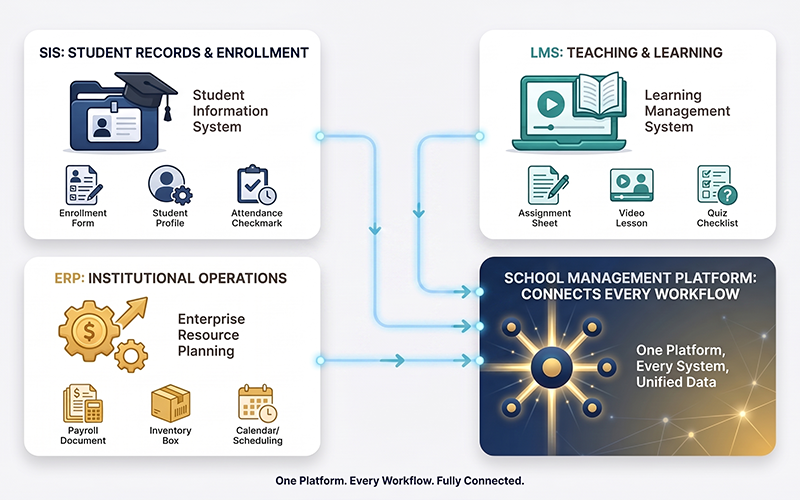
Before comparing vendors, it helps to understand the variables driving school ERP pricing. Most quotes are built from a combination of the following factors.
- Student and staff numbers. Many vendors price per student or per active user, so enrolment size directly affects the bill.
- Modules required. Admissions, attendance, gradebooks, timetabling, finance and communication tools are often priced separately or bundled into tiers.
- Deployment model. Cloud-hosted (SaaS) systems bundle hosting and maintenance into the subscription, useful where schools cannot justify running servers. On-premises systems shift infrastructure costs onto the institution.
- Connectivity and access needs. Institutions with inconsistent internet access may need offline-capable features or lighter mobile apps.
- Storage requirements. Institutions with large volumes of records or examination data may need higher storage tiers.
- Integrations. Connecting the platform to payment gateways, government reporting systems or third-party tools adds setup and ongoing fees.
- Customisation. Bespoke workflows, branding or local regulatory requirements increase development time and cost.
- Implementation, training and support. Onboarding, data migration and helpdesk cover are sometimes included, sometimes charged separately.
| Pricing Factor | Why It Matters |
| Number of students/users | Most common basis for per-student or per-users pricing |
| Modules selected | Determines whether you pay for a full suite or individual tools |
| Deployment model | Cloud vs on-premise changes who bears infrastructure cost |
| Connectivity considerations | Affects whether offline or lightweight access is needed |
| Integrations | Third-party connections often carry setup and maintenance fees |
| Implementation & training | One-off costs that can rival a year’s subscription |
| Support tier | Basic email support vs dedicated account management |
Common School Management Software Pricing Models
Understanding school management system pricing structures helps buyers compare proposals on equal terms, rather than being swayed by a headline number.
- Per-student pricing. Common among SIS and LMS providers; scales predictably but can grow costly for larger institutions.
- Per-user pricing. Charges based on staff or admin seats rather than the whole student body, suiting lean administrative teams.
- Monthly or annual subscription. Annual plans often discount monthly billing but require longer commitment, worth weighing where exchange rates affect dollar-denominated contracts.
- Module-based pricing. Institutions pay only for the tools they use, keeping initial spend low but adding up as needs grow.
- Institution-wide licensing. A flat fee covering unlimited users, useful for larger groups wanting cost predictability.
- Custom enterprise pricing. Negotiated packages for large groups or multi-campus networks with bespoke requirements.
Capterra’s breakdown of school administration software found per-student pricing among the vendors it reviewed typically started around one dollar and ranged up to roughly twenty-two dollars a month, with a median monthly cost per student of about five dollars. These figures come from markets outside Africa and should be treated as rough orientation rather than a quote. Local and regional vendors serving African institutions often price differently, and currency movements, hardware costs and local support arrangements all affect the final number.
No single model is universally cheaper. A small school might find module-based pricing more economical, while a large multi-campus group often benefits from institution-wide licensing that avoids per-user creep as enrolment grows.
Read More: Engagement Tools for Virtual Learning: How Universities Keep Online Students Active and Motivated
How Much Do Individual Education Systems Cost?
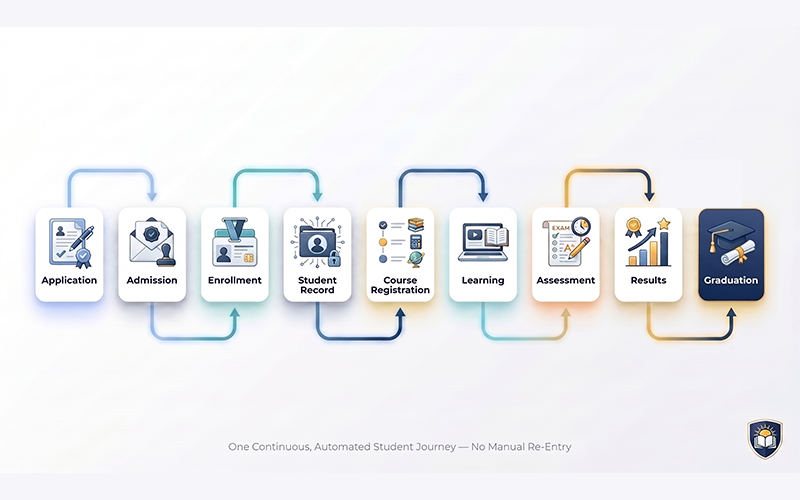
Budgets often need to account for several systems working together, each with its own cost logic.
A Student Information System (SIS) typically prices around enrolment numbers, since it stores records for every learner. SIS software price ranges widely depending on whether admissions, communication and reporting are bundled in or sold separately.
A Learning Management System (LMS) is usually priced per active user or per student, and LMS cost per student varies significantly based on content authoring tools, analytics depth and mobile access. According to Thinkific’s LMS pricing guide, broader market LMS pricing spans from under two dollars per user monthly for basic tools to well over twenty thousand dollars annually for enterprise-grade deployments.
A school ERP tying together finance, HR and academic operations tends to sit at the higher end, reflecting its broader scope.
Examination software, admissions software and communication tools are frequently sold as standalone add-ons. Buying these as disconnected systems adds costs of its own: separate logins, duplicate data entry, and the burden of reconciling records across platforms never built to talk to each other, a heavy tax on the lean admin teams common at many African institutions.
The Hidden Costs Schools Often Forget
A subscription fee rarely tells the whole story. Institutions calculating an education software budget should plan for:
- Implementation and setup, configuring workflows to match academic calendars and terms.
- Data migration from legacy spreadsheets, paper registers or older systems, often the most time-consuming step.
- Staff training, since adoption depends on teachers and administrators using the tools confidently.
- Custom development for features not available out of the box.
- Integrations with payment processors, government portals or existing HR systems.
- Technical support beyond the free tier, especially during admissions or examinations.
- Additional users or storage as the institution grows.
- Upgrades and contract renewal, which can bring price rises not visible in the initial quote, especially where pricing is set in foreign currency.
Thinkific’s pricing analysis notes that the real cost of a platform includes setup, integrations, support, content creation and admin time, not just the advertised subscription fee. Institutions that ask vendors to itemise these costs upfront, and to confirm whether pricing is fixed in local currency, compare proposals far more honestly.
School Management Software Cost vs Building Multiple Systems
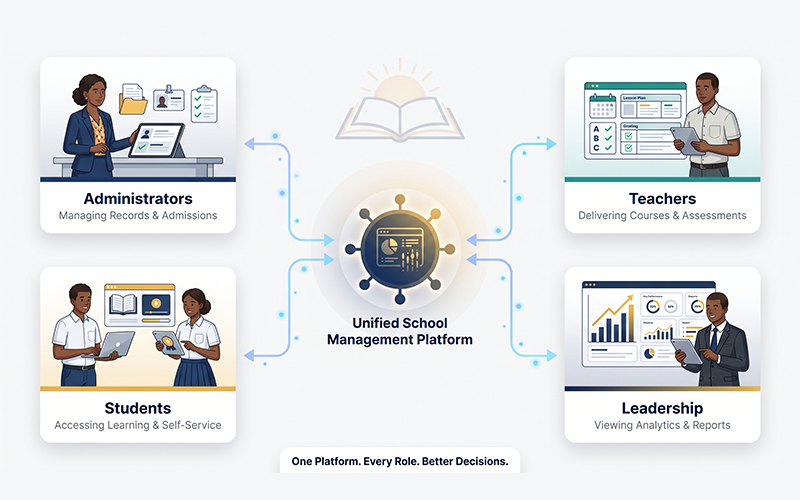
Some institutions try to save money by piecing together several specialist tools: one for admissions, another for learning, another for exams. On paper, each subscription looks affordable. In practice, this often costs more once you add up licence fees, integration work, staff training across interfaces, and the reporting headaches of data sitting in silos.
Education technology vendors increasingly note that institutions are evaluating technology as an ecosystem rather than a collection of standalone applications, weighing how well solutions work together over isolated features. Where systems are not built to work together, 1EdTech’s guidance on evaluating education technology notes that institutions are often pushed into custom integrations that are expensive to build and difficult to replace, a cost that rarely appears in the original sales pitch.
A connected ecosystem, where admissions, records, learning, assessment and communication share the same data, tends to lower the operating cost of running multiple vendors, even if the combined subscription looks similar on paper. This matters most for school groups managing several campuses, where consistent data across sites is often the whole point of going digital.
How to Build an Education Software Budget
A practical, step-by-step approach helps institutions avoid both overspending and under-provisioning.
- Map current processes to see where manual work and paper records still dominate.
- Identify technology gaps against what modern SIS, LMS and ERP tools offer.
- List the modules genuinely required, resisting the temptation to buy everything at once.
- Estimate user and student numbers realistically, including planned growth or new campuses.
- Identify necessary integrations with existing finance or government reporting systems.
- Calculate implementation costs, including migration and training.
- Estimate annual support costs beyond the base subscription, and confirm the billing currency.
- Compare total cost of ownership across vendors, not just headline pricing.
- Define expected outcomes, so the investment can be measured against results.
Questions to Ask a School Management Software Vendor
Before signing anything, institutions should get clear answers to:
- Is pricing per student or per user?
- Which modules are included in the base price?
- Are implementation costs separate?
- Is data migration included?
- What does support cover, and during what hours in your time zone?
- Are integrations charged separately?
- Are future upgrades included in the subscription?
- What happens to pricing when enrolment grows or a new campus is added?
- Is there a minimum contract period, and is pricing fixed in local currency?
- What happens to institutional data if the contract ends?
Understanding Vigilearn’s Connected Education Technology Approach
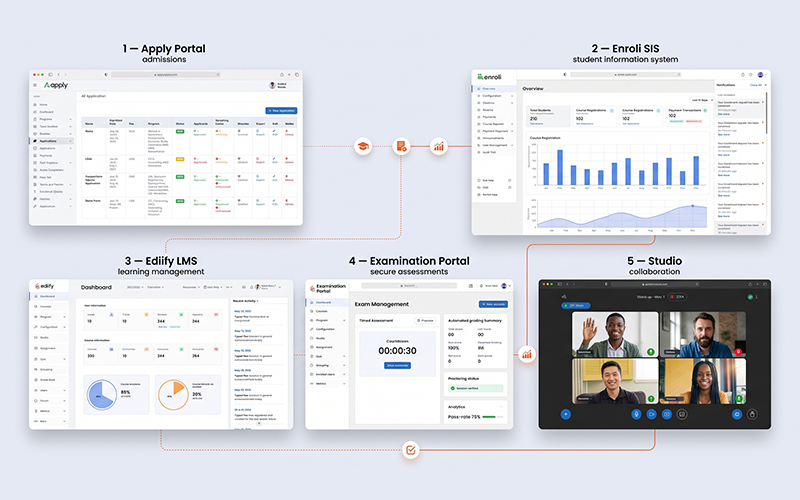
Rather than presenting five disconnected products, Vigilearn is built as a connected infrastructure spanning the full institutional lifecycle: the Apply Portal for admissions, Enroli SIS for student records, Ediify LMS for teaching and learning, the Examination Portal for assessment, and Studio for communication and engagement.
The value of this approach lies less in any single module and more in how the pieces work together. When admissions data flows into student records, when learning activity informs assessment, and when communication tools draw on the same underlying data as the rest of the institution, schools avoid the duplicated effort and reconciliation work that come with stitching together separate vendors, many originally built for markets outside Africa with little regard for local context. Because official Vigilearn pricing is tailored to each institution’s size, modules and deployment needs, the most accurate way to understand cost is through a consultation or demo rather than a published price list, and readers comparing this guidance against real proposals can browse further context on the Vigilearn blog.
There is no single figure that answers “how much does school management software cost?” for every institution, and any guide claiming otherwise oversimplifies a genuinely complex decision, particularly for African schools navigating currency fluctuations, connectivity constraints and rapid enrolment growth. What matters is understanding the variables at play: enrolment size, modules, deployment model, integrations, and the implementation and support work surrounding the software itself. Institutions that map their processes, ask vendors precise questions, and evaluate total cost of ownership rather than headline pricing put themselves in a far stronger negotiating position.
Planning your institution’s education technology budget? Speak with Vigilearn to understand which systems and modules your institution needs and explore a connected approach to admissions, student records, learning and examinations.
Read More: Learning Analytics in Higher Education: How Universities Turn Student Data Into Better Outcomes
Frequently Asked Questions
How much does school management software cost? It depends on institution size, modules and deployment model. Per-student pricing in the wider global market has ranged from roughly one to twenty-two dollars a month, with a median around five dollars, according to Capterra, though enterprise and multi-campus deployments can cost considerably more once implementation and support are included, and African institutions should always confirm pricing and currency directly with vendors.
Is school management software charged per student? Often, yes, though per-user, module-based and flat institutional licensing are equally common. The right model depends on your staff-to-student ratio and how many modules you need.
What is included in school ERP pricing? This varies by vendor. Some bundle admissions, finance, HR and academics into one price; others charge per module. Always ask for an itemised breakdown.
How much does an LMS cost per student? According to Thinkific, LMS pricing spans from under two dollars per user monthly for basic tools to well over twenty thousand dollars a year for enterprise platforms, so LMS cost per student depends heavily on the features and scale involved.
What are the hidden costs of school management software? Implementation, data migration, training, custom development, integrations, additional storage, extra users and contract renewal are the most commonly overlooked education technology costs.
Is cloud school software cheaper? Not necessarily cheaper, but cloud deployment typically bundles hosting, maintenance and upgrades into the subscription, which can reduce unpredictable infrastructure spend, an important factor where power supply and IT staffing are already stretched.
How should schools compare software proposals? Compare total cost of ownership, not just the advertised subscription. Request itemised quotes covering implementation, training, support and future scaling before making a decision.